
Faced with the prospect of Australia’s lockdown laws remaining firmly in place for the next three months, I’ve decided to pluck up the courage, knuckle down and finally bring the next day of our trip to your laptop. I’m actually quite excited to relive our final day at Explora in Torres del Paine National Park. It was a fantastic end to our time in Patagonia and it really set the tone for the grand finale of our adventure (Antarctica if you haven’t quite cottoned on yet). So let me paint the scene of how my family retraced the steps of the ancient tribes of Patagonia and quite literally galloped away into the sunset on horseback with the cowboys.
We were up bright and early this morning as per usual but opted to explore a different avenue of the National Park that morning. As I have mentioned, my family’s trips are typically driven by regions impacted by climate change and magnificent species under the threat of extinction. However, we also share a keen interest in history, particularly in Indigenous cultures. Australia’s Aboriginal peoples are one of the oldest groups of people to have settled outside of Africa and have documented their lives for at least the past 90, 000 years. My family are big fans of Indigenous artwork and have collected many paintings over the years. We’ve also marvelled (and even discovered) rock art in Arnhem Land in the Northern Territory and collected carved spearheads and axes from our paddocks in rural New South Wales. So on our final day in Patagonia we thought we’d take the hike that showcases cave paintings from the Aonikenk People. What’s more, we were almost guaranteed to see guanaco (the llama’s cousin) along the way.

All of our hikes at Explora up until this point seemed to have taken on the form as a private tour. The lodge does have the option to book private trips but we never looked into that. Some of the full day hikes along the W trek tended to be pretty popular and a few couples would band together as one group. Possibly because we were mostly doing half day trips and were a larger group than normal we were often assigned our own guide. Unless the trail was unsafe, everything was always open and there was a vast number of guides to cater for everyone. So today we joined a Spanish family that had just arrived the night before. We thought this would be fabulous, we could talk about our trips and marvel at the world around us but this soon proved fairly difficult. The language barrier was tough so the guide often had to deliver his spiels in Spanish, then English. Soon, our conversations had transformed to a game of charades.
The scenery was spectacular as usual, we got some great shots of snow-capped mountains reflected in ponds and dramatic clouds over lush grass. Our previous hikes had seen us push past trees, walk along the crests of hills and wander amongst stromatolites on the beach but now we had emerged into a series of protected grasslands – very similar to the pampas but not quite as expansive. There were plenty of little wildflowers along the way, numerous types of orchids and all our favourite wild berries to snack on along the way.


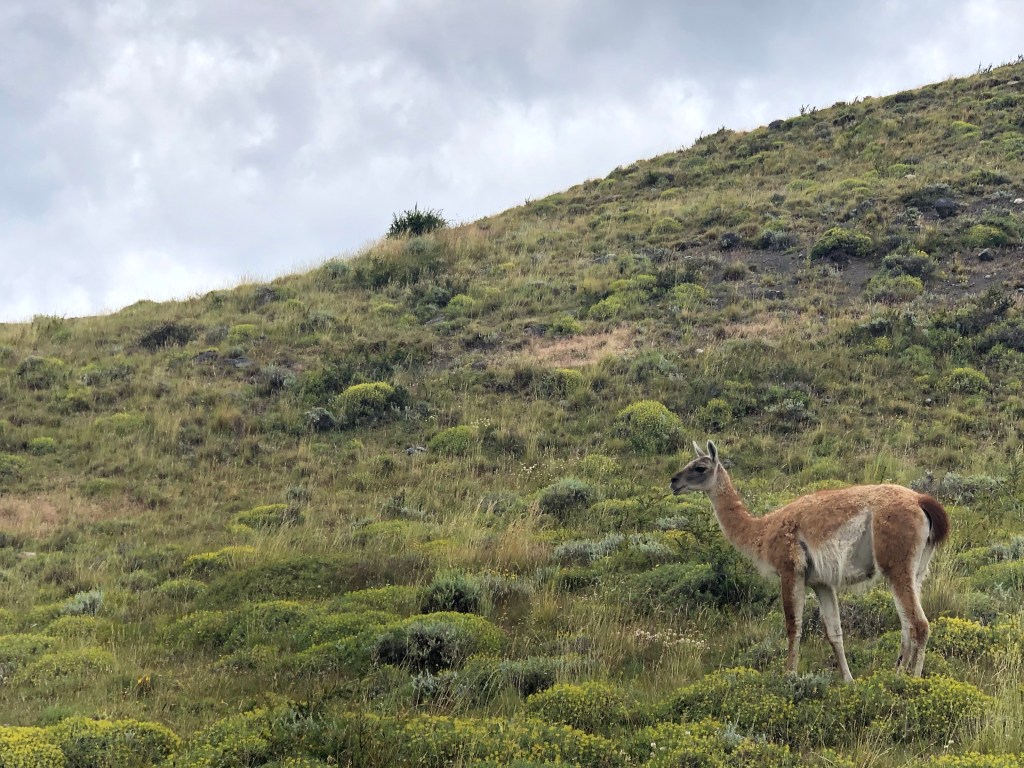
This also made it the perfect home for guanaco. We’d seen a few individuals and small groups from our van’s window as we drove to lodge but hadn’t spotted any since (yet we’d been lucky enough to see a puma the first night). Wildlife spotting, photo ops and Indigenous culture – we were in our element. As we crossed another small hill we saw our ‘first’ guanaco, then a few more and finally a few dozen all grazing peacefully together. They’re fairly tall, almost a metre and a half at the shoulder and pretty hairy. I never thought an animal with a neck that long could run quite so gracefully but they have a skip that reminds me of a deer. The less poetic element to them is that they enjoy their play fighting, which includes males attempting to rid their friends of their manhood. They move fairly quickly and could easily bound over the small wood fences the Park had at its boundaries so thankfully we didn’t get to witness any gory battles. Of course, I took my obligatory selfie with one (at a distance) and it was surprising how close you could get to them, even if you realise they don’t perceive you as a threat. Once everyone had finished jostling for the best guanaco photography positions we started the final climb to the Aonikenk cave.


Our guide explained that there had been four main tribes that occupied the National Park’s territory but over the centuries as the Spanish arrived, disease spread and assimilation occurred, only two remained. The Aonikenk have the highest rate of survival but as with many Indigenous populations, are quickly diminishing. They’re recorded as having inhabited Patagonia some 13, 000 years ago but arrived at Torres del Paine at a later date. When the Spanish arrived they were nicknamed patagones (giants) as they stood at roughly 1.8m! Each of these four Indigenous peoples were very different, some were exceptionally short, others had limbs that seemed out of proportion and the Aonikenk were very tall. The Spanish explorers weren’t all that kind when describing them, being as brutal as to name them ‘ugly’. They were typical nomadic hunter-gatherers and transformed from using stone arrowheads and guanaco tendon in their weapons to becoming skilled horsemen when the Spanish introduced their steeds. The cave paintings we gazed at were estimated to be a few thousand years old, incredible but not a scratch on Australia’s Indigenous people. There was a collection of hand prints and a few guanaco and fish. The cave was situated on the top of a small hill with a great look out over the grasslands so we snapped a few more shots.

That afternoon Mum and I headed out for a horse ride with a gaucho at the lodge’s stables. We donned a big pair of chaps each and took a bumpy five minute ride cross country to reach our steeds. When we arrived there would’ve been a crew (what’s the collective noun for cowboys?) of gauchos outside with a handful of horses. They were all decked out in traditional gear, big chaps and spurs, leather vests and campero, the Patagonian akubra. Their own horses were spectacular, beautifully decorated in pressed silver and soft leather breastplates, bridles and stirrups. Their saddle clothes were all brightly woven patterns, I was having a serious moment of horse envy.
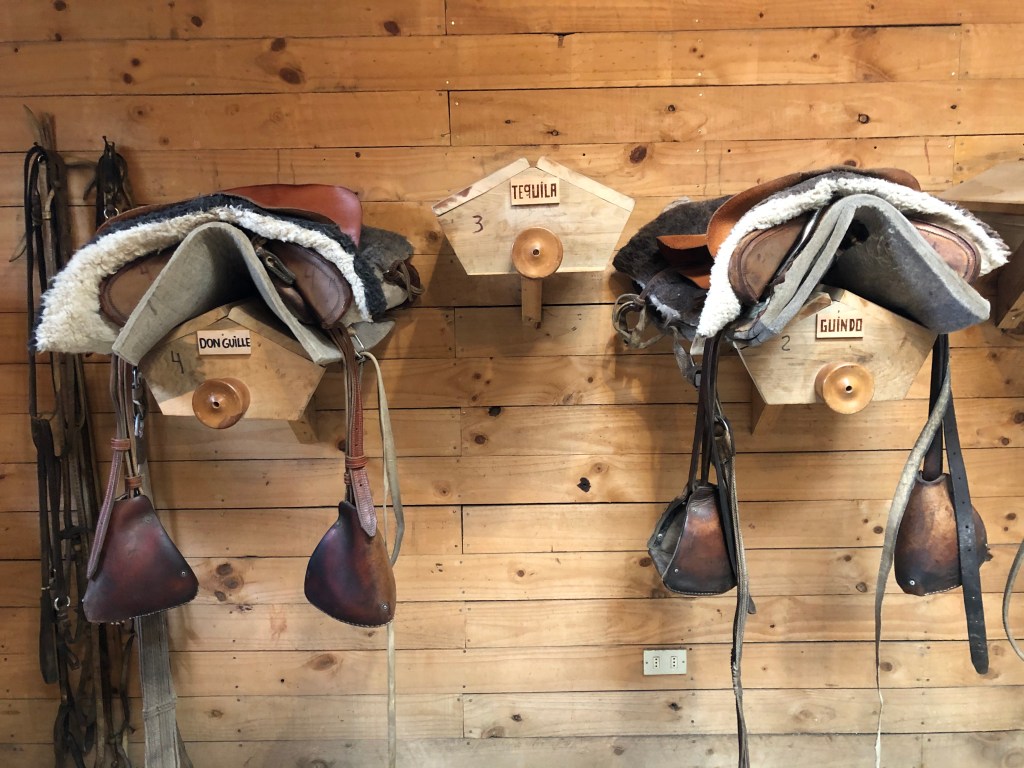
Stepping into the stable and the grandeur just extended. Clean wooden stables with each horse’s name carved into the door, a huge tack room with personalised saddle and bridle racks and a wide hallway down the middle to get tacked up at. I’ve mentioned this before but I always felt guilty going on horse rides on holiday, they felt a bit gimmicky to me but this was a big step up. Mum and I expressed that we ride our own horses at home and wanted to step above and beyond a plodding trail ride. I was matched with my steed Don Guille, who I affectionately referred to as Donkey, and saddled him up in an English saddle which is what I’m used to. Mum rode in a stock saddle but you also had the option to test a gaucho saddle which is fairly similar to a stock saddle but even deeper.

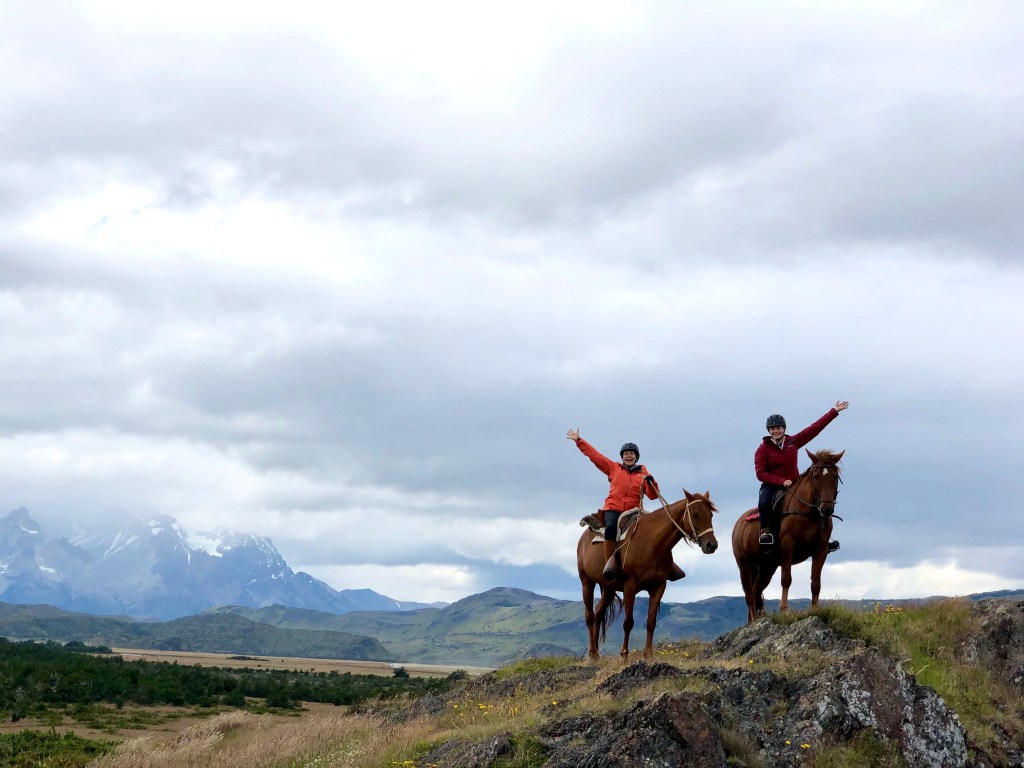
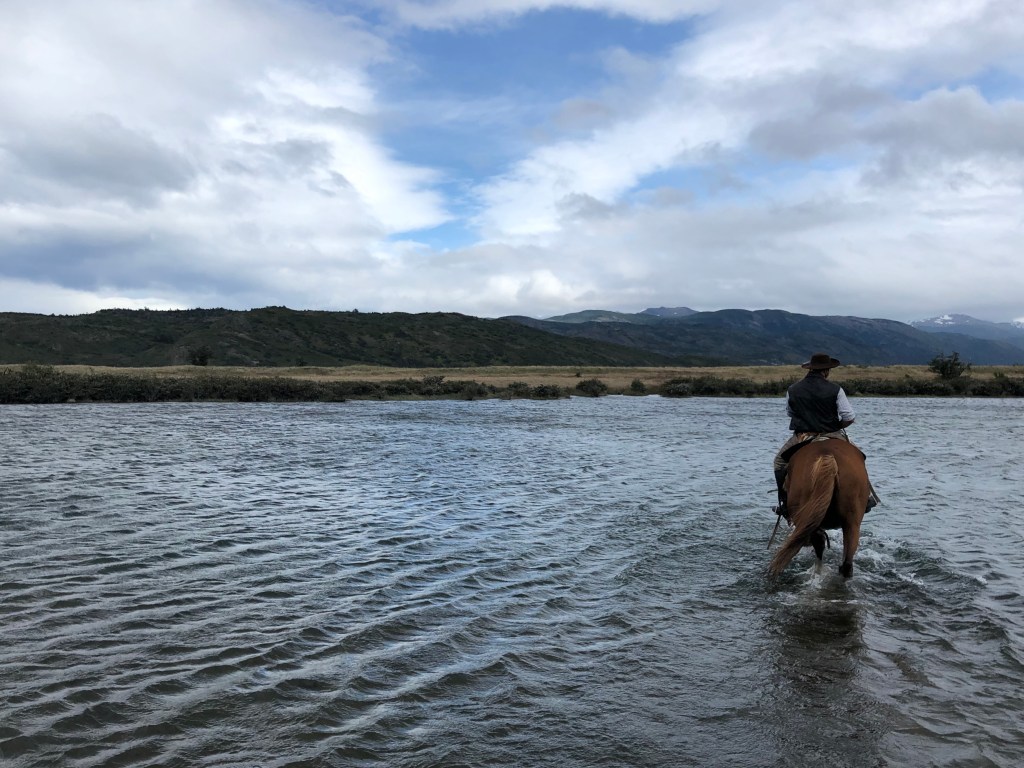
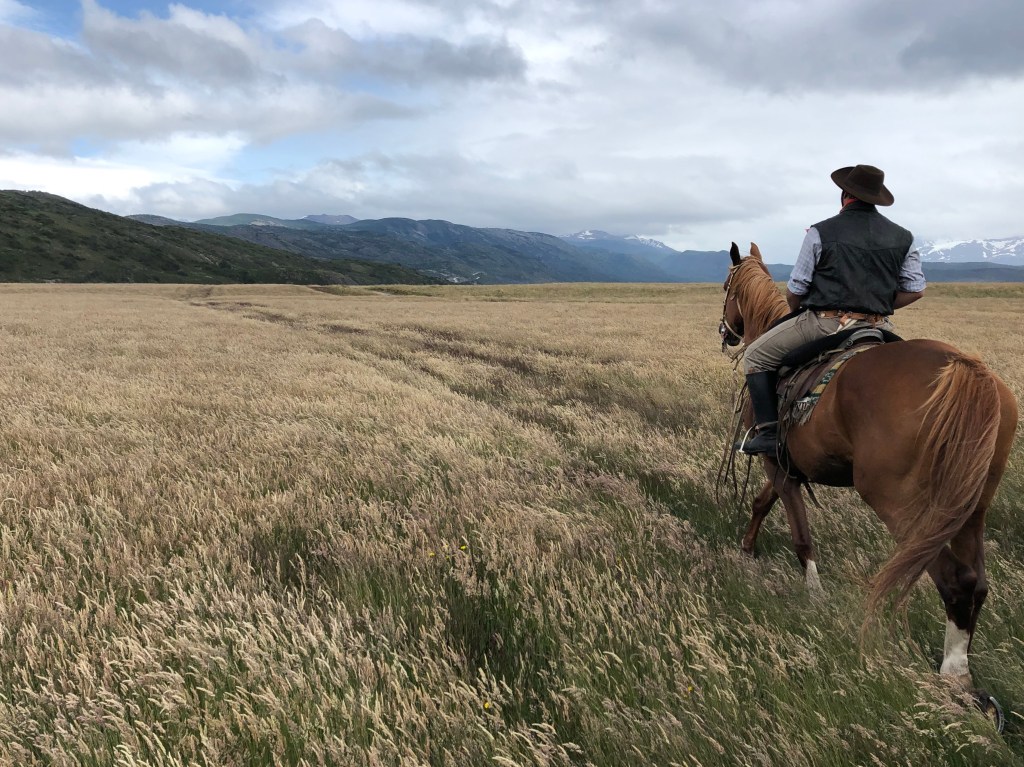
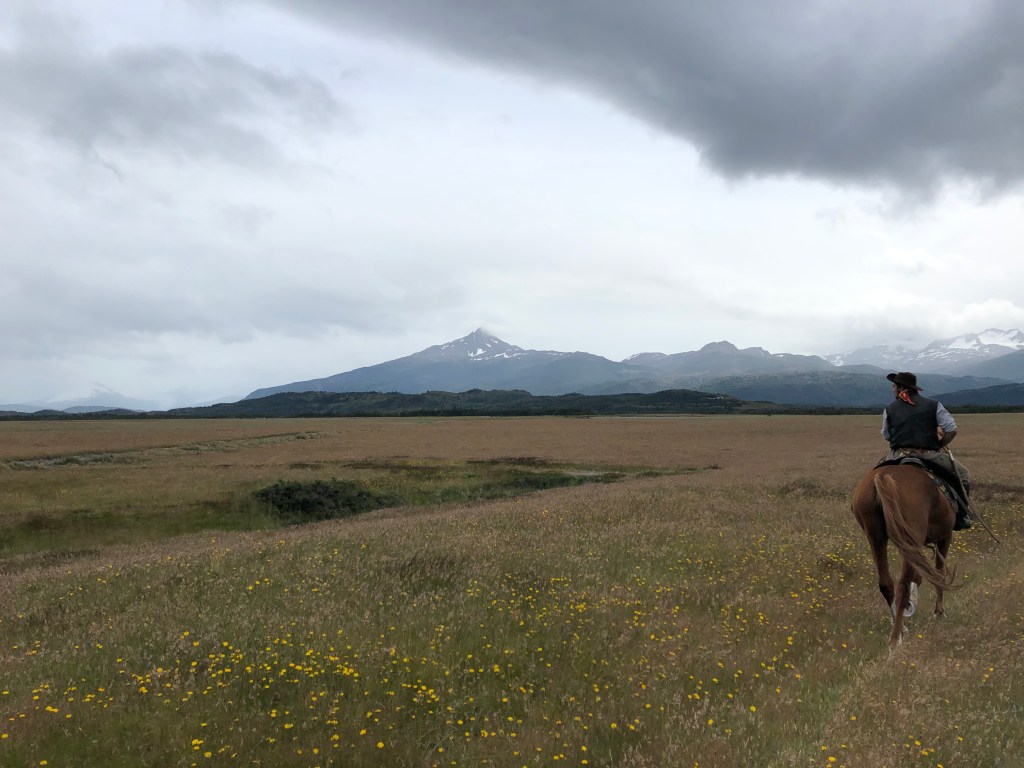
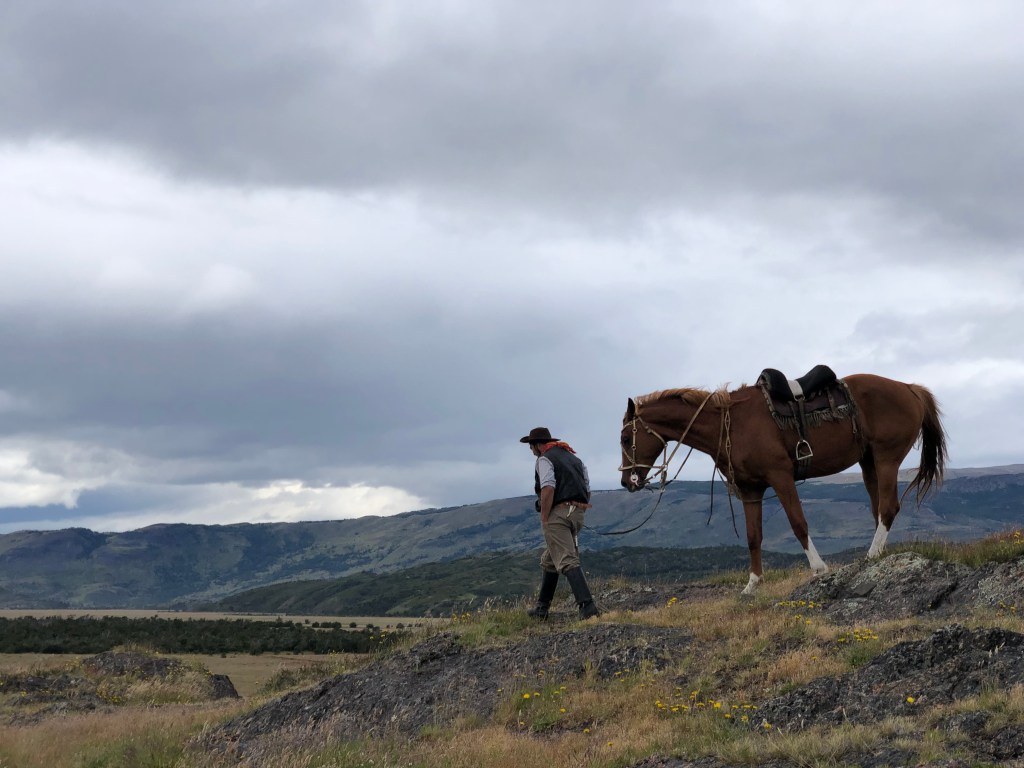
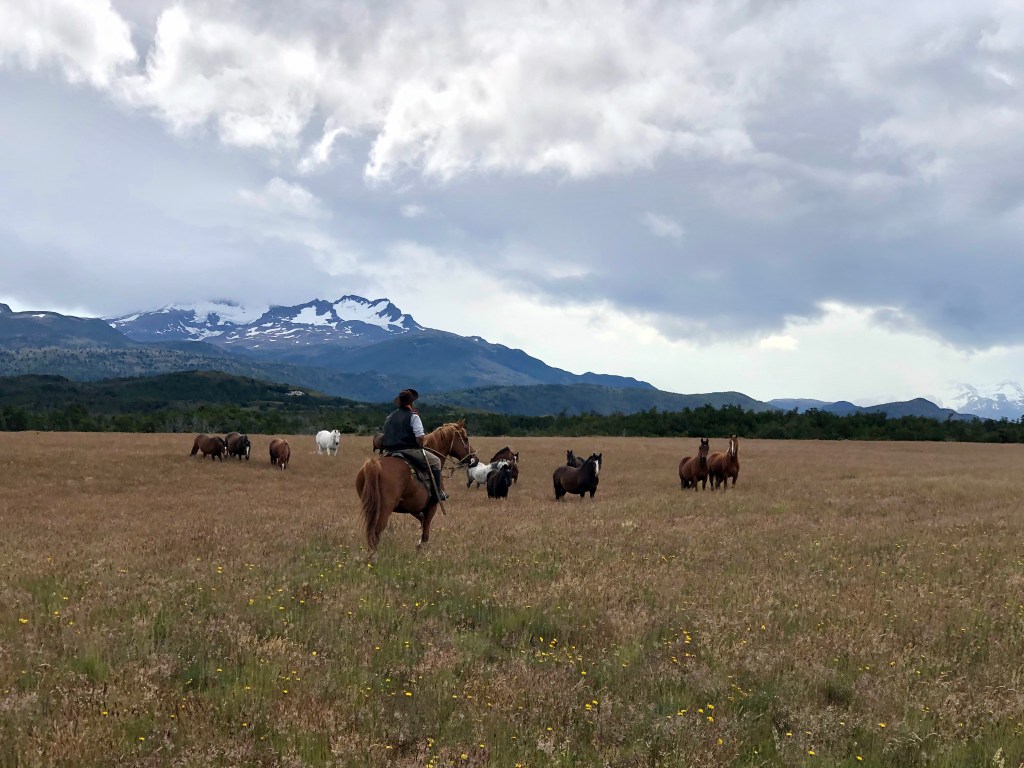
We got going and thankfully had another staff member from Explora join us to act as the translator to our gaucho. My little donkey was fairly quiet but once he picked up on the fact that I had a bit of experience under my belt he perked up quite a bit. Soon we were cantering through orchards, down roads and along narrow winding trails. But then we reached the pampas and that’s where the fun really kicked off. It was like a movie scene, with a little giddyup Donkey was off and galloping across the land with the grass brushing past my stirrups. Occasionally we’d cross a stream or come close to the road and wave at the vans going past. Our gaucho had this beautiful horse, a palomino with four big white socks and a blaze. I suspect she was pretty young because she was always chomping at the bit ready to run. It was a completely different experience gazing out across the snowy peaks as the mist came in and the sun started to set. We moved past the herd of horses belonging to the local village with many of them walking up to meet the muzzles of our ponies. Towards the end we summited a steep hill and took the obligatory photos of our steeds at the edge of the expanse.
When we arrived back at the stables the horses were turned out to a small paddock and we were brought into the kitchen. The gauchos were brewing traditional mate tea (pronounced ma-teh) and handing a few gourds around the room. This was something I hadn’t ticked off my bucket list yet and I’m always keen to immerse myself in real local food when I’m overseas. Before I could take a sip I was told that I needed to understand the strict rules of how to drink it properly:
- Never touch or move the bombilla (metal straw)
- Always pass the gourd back to the person who served it to you, never to the person next to you
- When you have had enough to drink or finish your mate, say thank you to your server
- Never complain about the mate being too hot or cold or too bitter and never ask to add sugar
Breaking these rules is a huge no no. Mate is a huge part of gaucho culture but also the Chilean and Argentinean way of life. It’s very common to see families or groups of friends sharing mate in the park in the afternoon or local markets selling freshly carved gourds. Of course the souvenir shops are full of them too but I never found the courage to buy one because Australian border security is so tight and I’m not the biggest tea drinker in the first place. I think mate tasted a lot like chaff in hot water but it wasn’t completely unbearable. I think the social aspect of it is the most appealing part. Here we got to talk to half a dozen gauchos and a few other riders from Explora as well as witness the stable cat perform his signature trick: jumping through people’s arms. The stable is operated by a top breeder and has won many trophies for endurance races. But what was most alarming about the shelf they stowed their awards on was that someone’s urn was placed in the centre. It belonged to a life-long Explora and horse riding enthusiast from America who would fly over and spend a couple weeks every year at the lodge riding the same horse. In his will he wrote that he wanted his ashes to be scattered at one of the lookouts here. I think that’s the greatest testimony to the power and beauty of Patagonia and the community at Explora and their stable.

We enjoyed our last dinner that night – no pumas – and regretfully packed our bags. That’s always the tricky thing with holidays, you settle in to a beautiful place and its hard to grasp the fact that you’re probably never going to be there again. But sometimes you’re also moving onto something exceptionally special and we were certainly heading down that track. So keep an eye out, follow this blog or subscribe to get email updates so you’re the first person to hear about our final days at the edge of the world before we leap off to Antarctica! Of course, you can always catch a sneakpeak by heading over to Instagram.
 Gab Gets Lost
Nice pictures. My latest film review if you fancy reading. First German film I’ve reviewed on here. Welcome to follow for more. https://monthlycritic.wordpress.com/2020/03/30/system-crasher/
LikeLike