
Before we crossed the border into Brazil we had always been loyal to Argentina and their perspective of the falls. We’d hiked all three trails there and remained firm in our belief that it was superior as it was home to the only resort with views of Iguazú . We still think it was a better idea to hang out in Argentina but the more I look back on my photos I realise that perhaps Brazil was far better than we supposed. Maybe it was the weather, maybe it was the time of day … head over to Instagram and decide for yourself!
Our guide Deborah picked us up early in the morning and our van beetled its way towards the Brazilian border. By departing before 8AM we’d greatly reduced our risk of getting caught in immigration traffic and maximised the time we could spend at the waterfalls and the famous Bird Park.
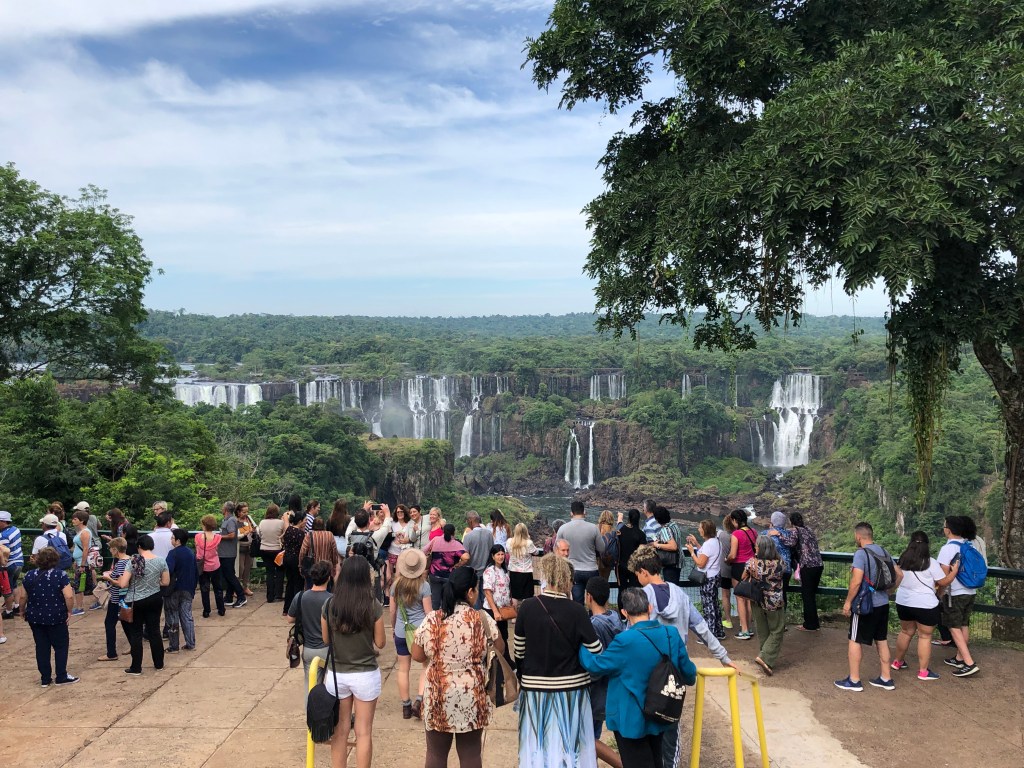
By late morning we arrived at the falls and were only slightly shaken by the bumpy van trip there. Deborah clearly knew what to expect and pointed out the start of the trail. We were like kids in a lolly shop. Photos here, amazed expressions there, very small crowds and a handful of Australians living with water restrictions gazing at one of the lushest scenes you could concoct. There was a board walk over glassy water that lay metres from the feet of the largest falls. It was such an odd sensation, like two worlds colliding. You could hear the roar of the water and feel the mist clinging to your skin but the river beneath your feet was perfectly tranquil. We followed the raised platform out to the Devil’s Throat which highlighted the drama and the sheer size of Iguazú. Just like Argentina, we were dripping wet within seconds. This was one of those occasions when wearing active wear was acceptable.

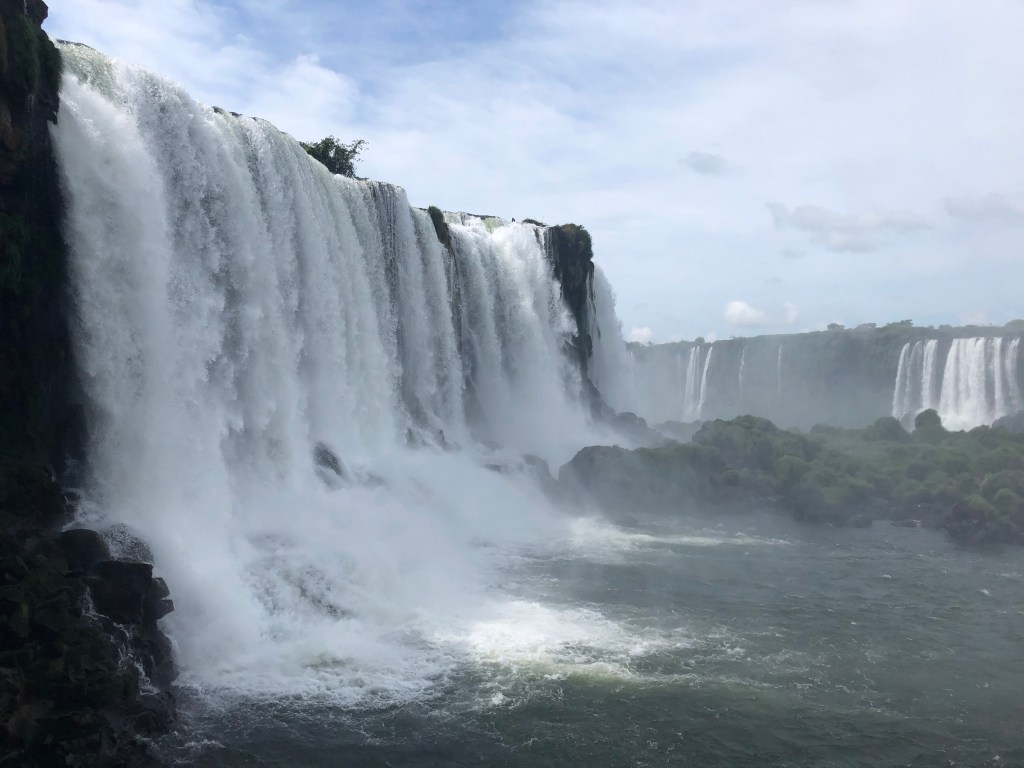

These photos definitely support a visit to the Brazilian border but in order to get a complete picture of Iguazú you really need to visit both countries. Argentina was fantastic for getting close to waterfalls beyond the Devil’s Throat and for seeing wildlife. Our hotel meant we were constantly in amongst the action and could afford to start hiking early in the morning and late at night. The Argentinean half has three trails which are all loops, immediately giving you more variety and ensuring all the pedestrians travel in the same direction. Brazil was a little more chaotic and we found ourselves having some bizarre international conversations with other tourists about the absurdity of the crowds. There was just one track here and it doubled back on itself despite the fact it was only wide enough for one person. However, with the beauty of the falls, we summoned some skinny thoughts and made our way through alive. The Brazilian side was also fantastic for getting a feeling of the expanse of Iguazú. We could see across the cliffs to wide expanses of water just pouring over the side. Small dots of tourists walking the Argentinean trails were also visible and gave us a greater sense of perspective.
Don’t worry – both sides have coatis that are equal parts friendly and curious. It was very hard not to touch one!

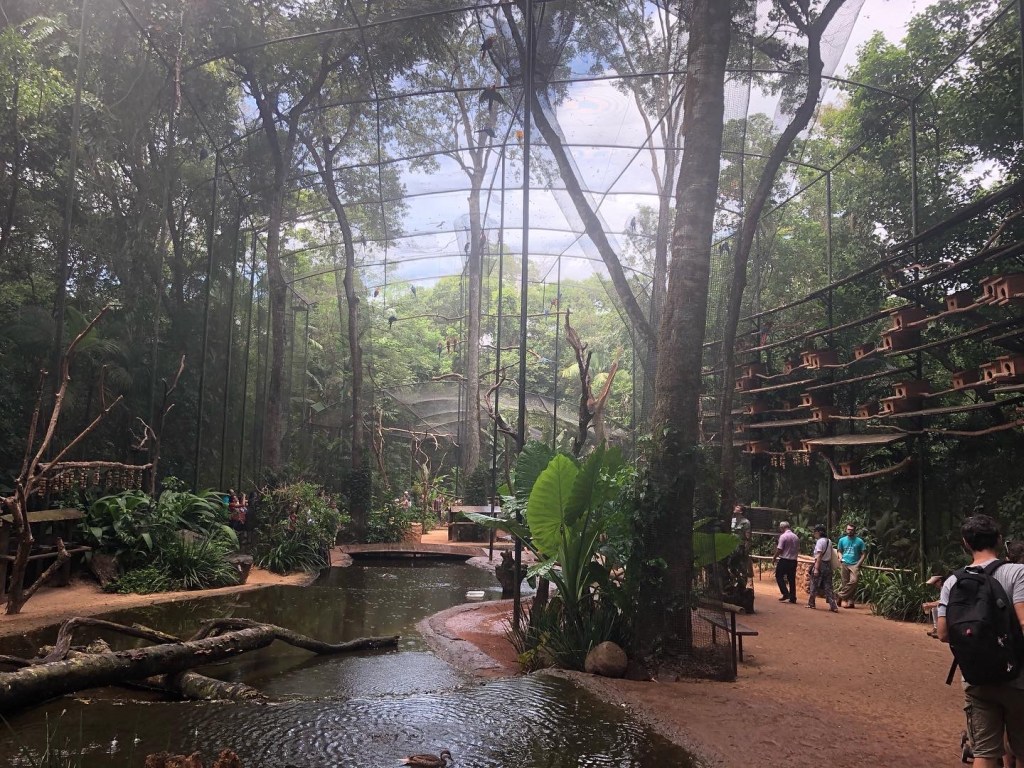
A couple of hours later we emerged from the Brazilian trail to our guide Deborah who looked mildly relieved to see that we had survived the tourist photo war waging on the viewing platforms. We jumped back in our van and pulled into the Brazilian Bird Park. I’d heard some rave reviews about this place so I was keen to step into the aviary and make some feathered friends.
I quickly realised this was like the Hollywood Hall of Fame for birds. Many of the most prominent bird species from across the world were represented here. Rather than being organised according to continent, they were grouped by similar habitat and ecosystem features. Without entirely discrediting any birds, it’s safe to say that the park was organised to save the best for last. First we walked through large open aviaries with moorhens and ibis, then eagles, parrots ad toucans and finally the vibrant macaws South America is so well-known for. Throughout our visit the park was dotted with numerous signs that outlined their approach to combatting wildlife trafficking. One statistic was particularly shocking: more than ninety per cent of illegally trafficked birds do not survive. I found this quite upsetting as most people – including myself – are concerned with the poaching of macaws, but most of the birds who are sold at black markets are smaller parrots. The park not only works to demonstrate the beauty and variety of bird life worldwide but also to educate the public about how to identify illegal trafficking and take action against it.


The park’s grand finale was a huge open air aviary filled with noisy macaws that flew to each side with great energy. Poles at the top of the aviary were fitted with sprinklers so it appeared to be raining the whole time. Although we couldn’t see that many of the birds close up, it was easy to recognise just how varied and colourful they can be. Most people think of the ‘usual’ red or blue macaws, but within this area there were at least half a dozen seperate species. When we left the aviary we strolled through the butterfly house which was dotted with bright wings, flowers and fruit.
This may have been the conclusion of our formal activities for the day however we had plenty of travelling left to do. We crossed back over the border and caught a flight to Buenos Aires for the night. Our original itinerary planned to avoid us doubling back like this but unfortunately South America’s flight times are subject to change until the very last minute so this was our only option. We pigged out at a local parilla or steak house near our hotel in Palermo and prepared for another flight tomorrow morning to El Calafate … bring on Patagonia!
 Gab Gets Lost
Beautiful post. Please have a look at my blog as well.
LikeLike