I was excited that we were arriving in Antarctica by boat rather than plane, it added an extra level of anticipation knowing that we would magically pass through the open seas, spot our first icebergs and finally anchor at an island at the bottom of the world. It painted a great picture of just how isolated we would be, in fact we were told that it was easier to bring an astronaut back from the International Space Station than an individual in Antarctica. In fact, I think traversing the Drake Passage is something you could almost boast about because its recognised as one of the roughest patches in the ocean. I’ve never bode well with motion sickness (ironic for a family into travelling) so I was hoping we’d be lucky enough to score a calm trip. The Greg Mortimer’s high tech also includes fantastic stabilisers that help minimise any rocking and its bow helps cut through the waves instead of riding over the top of them. Thank goodness, it looked like we were in for a pretty calm trip for the next day and a half.
There were plenty of activities to keep us busy while we powered towards the Peninsula and I wasn’t prepared to miss out on them. The captain told me green apples were great for travel sickness so I came back to our room to find there was a few extra in my bowl: perfect. Multiple tours of the ship were being run during this time including tours of the bridge which acts as the control centre. Anyone was welcome to join the captain here during the trip and it was a great opportunity to learn what happens behind the scenes.
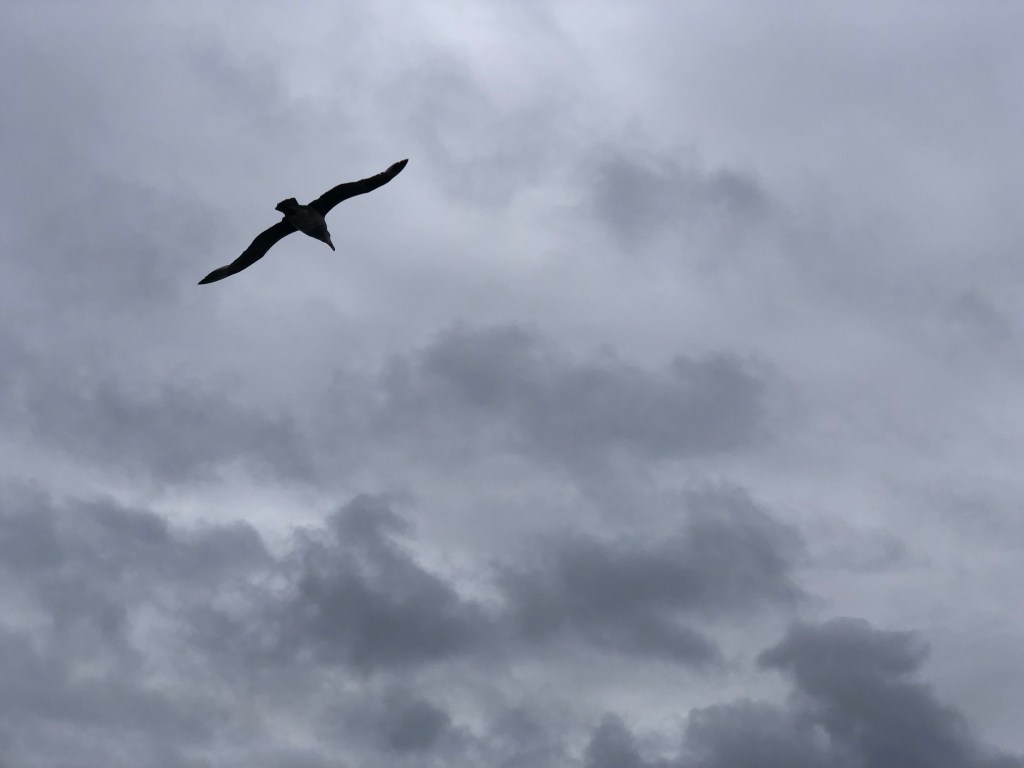
A handful of lectures were given during our time at sea and explored some of the animals we’d meet, the history of the earliest explorers and the politics and international treaties governing Antarctica. One of our more senior guides Heidi was very keen on her birds and introduced us to all the petrels, albatrosses, shags, skuas and gulls. The differences between these birds is fairly subtle but because they often trailed our ship for half an hour or so, we could get a closer look with our binoculars. They never tried to land on the ship and I’m almost sure they liked the company we gave them because we certainly weren’t feeding them! It’s incredible to think that these birds can remain on the wing for so long and have the courage to venture out into some of the world’s most unpredictable environments. The arrival of these birds signalled the start of our wildlife checklist, a communal sheet where everyone could tick an animal or plant species seen that day.
Spotting Antarctic birds
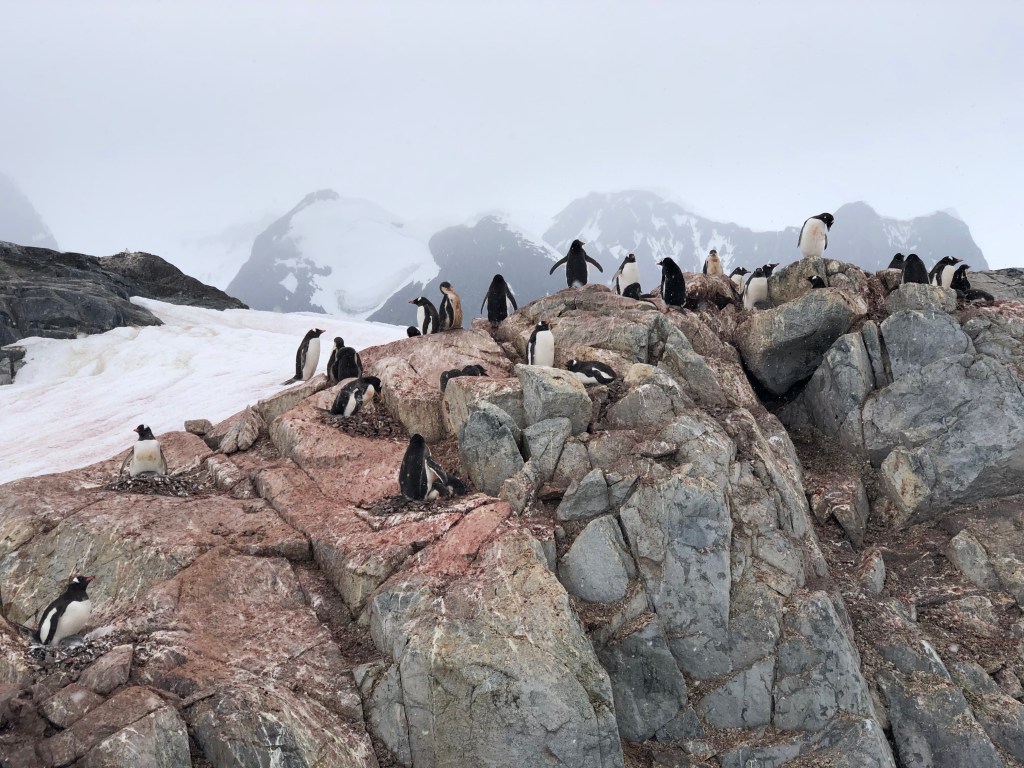
We learnt about the International Association of Antarctic Tour Operators (IAATO) which highlighted the primary biosecurity concerns of visiting the continent and the wildlife watching rules we needed to follow. Unfortunately we weren’t allowed to touch the penguins or go swimming with the whales. A five metre distance between ourselves and any penguins needed to be upheld at all times, which is actually further than you think and we quickly realised this was impossible because they’re such curious creatures. We had to remain twenty metres from elephant seals because apparently they can move pretty quickly (seems unlikely). Whales were a little trickier as they moved around a lot and many were inquisitive and came up to us but I think fifty metres was the general rule. The second half of this briefing was a practical component that mimicked any episode of Border Control. We had to bring any backpacks, shoes, jackets, pants or beanies that we intended to wear over the next ten days to the lecture theatre to be vacuum cleaned. To my embarrassment I had a few nuts from Explora left in my backpack but I eventually earned the all-clear.
Social distancing from the fur seals on Penguin Island
The kayakers were also called downstairs to the lockers to get their outfits sorted. I really don’t exaggerate here, it couldn’t be described as anything other than a costume. But I’ll leave that for my next post.
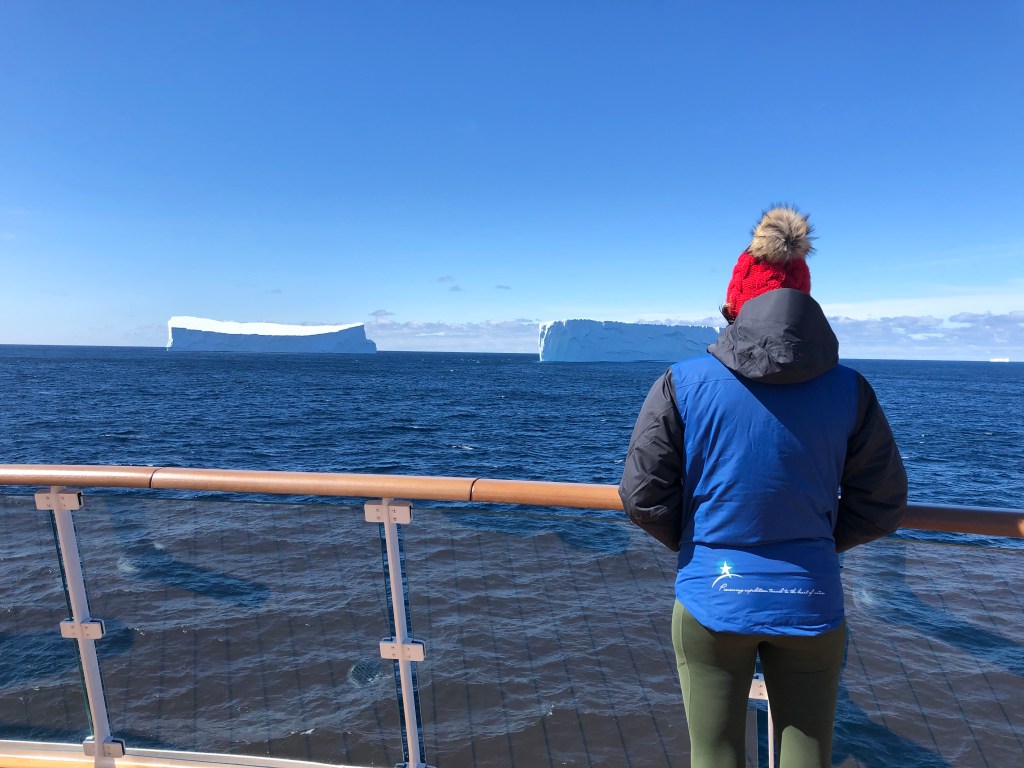
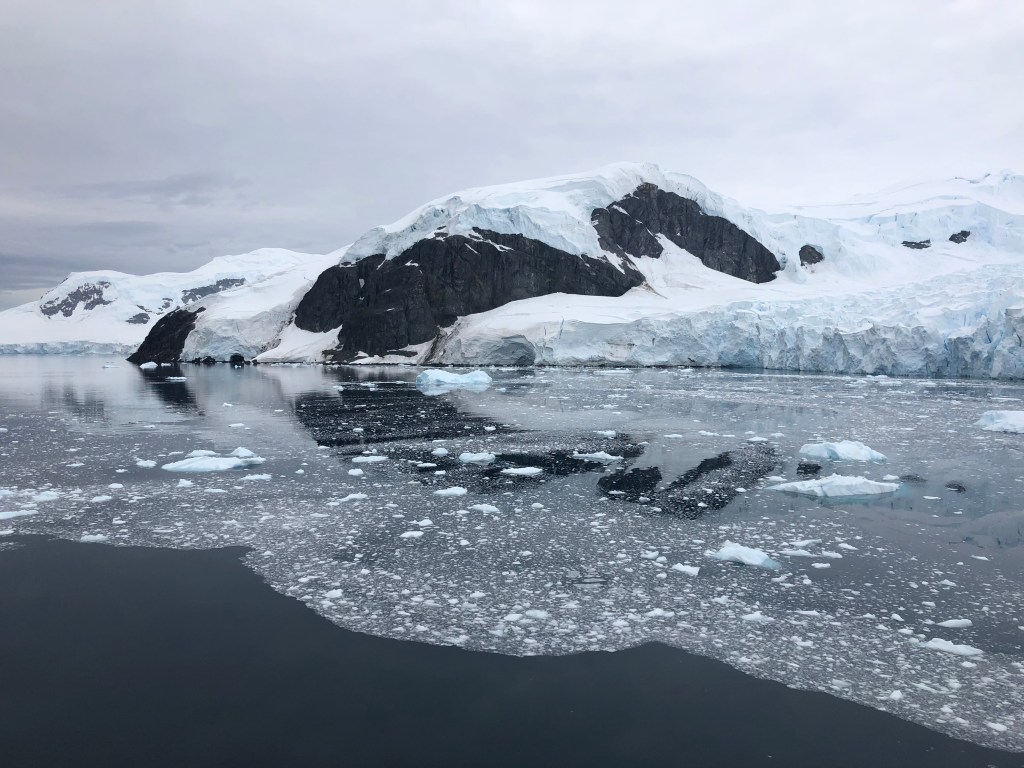
We were informed that a couple of important lists had been added to the bar on Deck Eight. No, it wasn’t the special cocktail list of the night. We’d been at sea for one day but kickstarted an iceberg guessing competition. Everyone was encouraged to place their bet on a time and place where the first berg would be spotted. If you’ve followed along on Instagram then you’ll have noticed that the slabs of ice we first spotted weren’t all that similar to the bergs among the islands. The variety spotted out at sea are tabular and characterised by their gigantic rectangular size and sharp corners. These bergs have fragmented from an ice shelf, which helps give them their geometric shape because the ice has a longer time to set compared to glacial bergs. They can be tens of kilometres across, if not a couple hundred. Given only ten per cent of these giants are above the waterline, it’s nearly impossible to imagine just how much ice lies below the surface.
Spotting our first icebergs!
As we started to approach the islands near the Antarctic Peninsula we began to see smaller icebergs with much more abstract shapes. These were the bergs I was looking forward to seeing. However, emerging from the Drake Passage wasn’t exactly what I thought it would be. I imagined coming out of a tunnel and being caught in a blizzard with penguins waddling around in the snow, glaciers in the background. I’ll admit that for a day or two it was pretty similar to that, but our first glance of the continent was a plain rocky island. Penguin Island would be our first point of exploration and it was great fun to kayak around with chinstrap penguins and fur seals. It really subverted my idea of Antarctica, I thought maybe climate change had claimed all the ice (not really) or we’d actually travelled to South Georgia or even a typical English beach.
First kayak at rocky Penguin Island
Keep an eye out for my next post on: kayaking! I can safely say this will be an instalment not to miss, it really made our trip extraordinary.
Before I get too stuck into the Antarctic portion of this blog I thought I should draw some attention to the Greg Mortimer and Aurora. Of course they’ve received plenty of attention from the Australian – and international – media during their efforts to repatriate their passengers while stationed off the Uruguayan coast so I won’t dwell on that. I know Aurora markets ‘once in a lifetime trips’ and unfortunately COVID-19 has crushed that opportunity for passengers at the time and for voyages in the near future. I can only speak from my experiences on board the Greg Mortimer which they were overwhelmingly positive and only possible with a crew of highly experienced individuals from all across the globe. I know that the passion and commitment of the team will have driven them to find the best possible solution to protecting their customers from this unfolding pandemic and that Aurora will continue to deliver spectacular adventures across the world’s greatest landscapes.
On a brighter note, welcome to the first Antarctic blog! Its been a highly anticipated moment but we’re finally here. I have mentioned it before but I’ll say it again, the structure of these remaining blogs is going to be a little different, focusing on main activities as opposed to days. That being said, there’s a lot of background info about how we embarked and crossed the Drake Passage and what life was like on board. I’ll break that down into three parts as well otherwise you might be chained to your computer screen for a while! If you’re a complete newbie to cruises like myself then you might find this interesting but even if you’re a seasoned veteran this is a completely different experience.
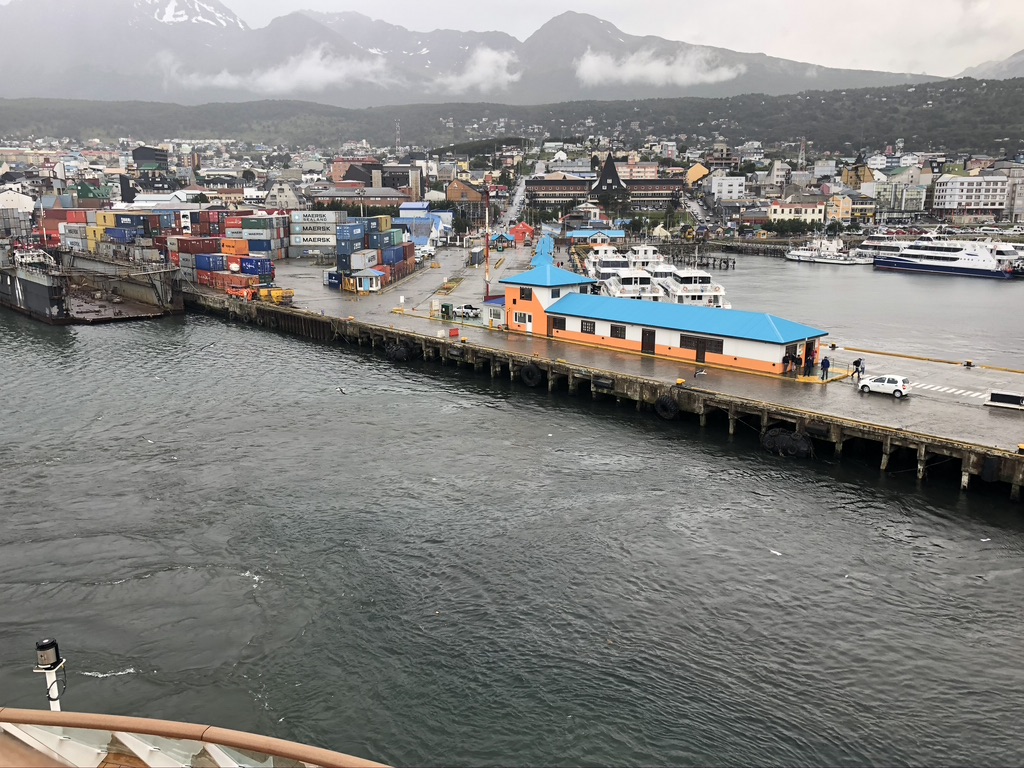
As we had an extra day in Ushuaia we’d pretty much ticked off all the sightseeing we could do. Aurora had organised a tour of the Old Prison and Maritime Museum late that morning but as we had already visited we decided to do some last minute shopping and photo grabbing. After lunch we met the Aurora team at the Maritime Museum, hopped on a bus and were driven down the hill to our boat. Considering it would’ve been a five minute walk this was total luxury or perhaps this was an indication of the age of the clientele!
One of the crew members grabbed our photo as we boarded and we quickly realised that this would form a passenger directory. Our names and pictures were proudly displayed on one of the central decks and definitely made life a little easier if you had forgotten someone’s name or wanted to have a bit of a stickybeak.
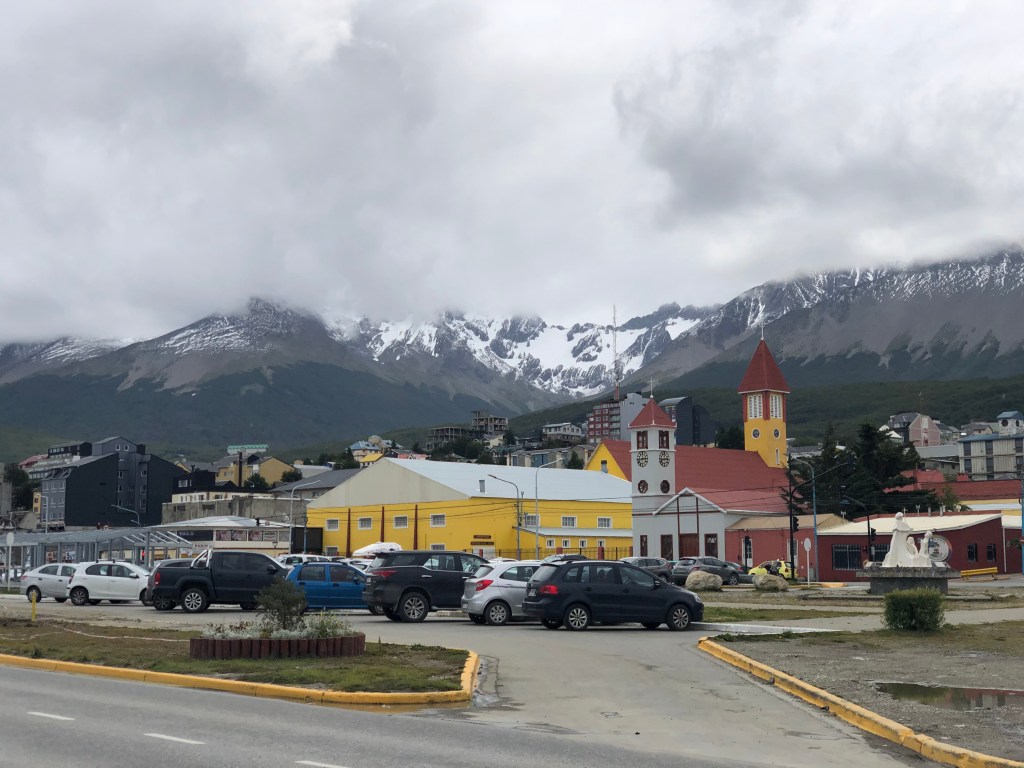
Leaving Ushuaia behind
Our family was lucky to book in early for the trip and secured two rooms at the top of the boat which had fantastic views of the water (and later a lot of ice and wildlife). Everyone received a polar fleece liner and a windbreaker with Aurora branding as well as a drink bottle and thermos which was very handy for a much needed coffee after bracing the cold outside.
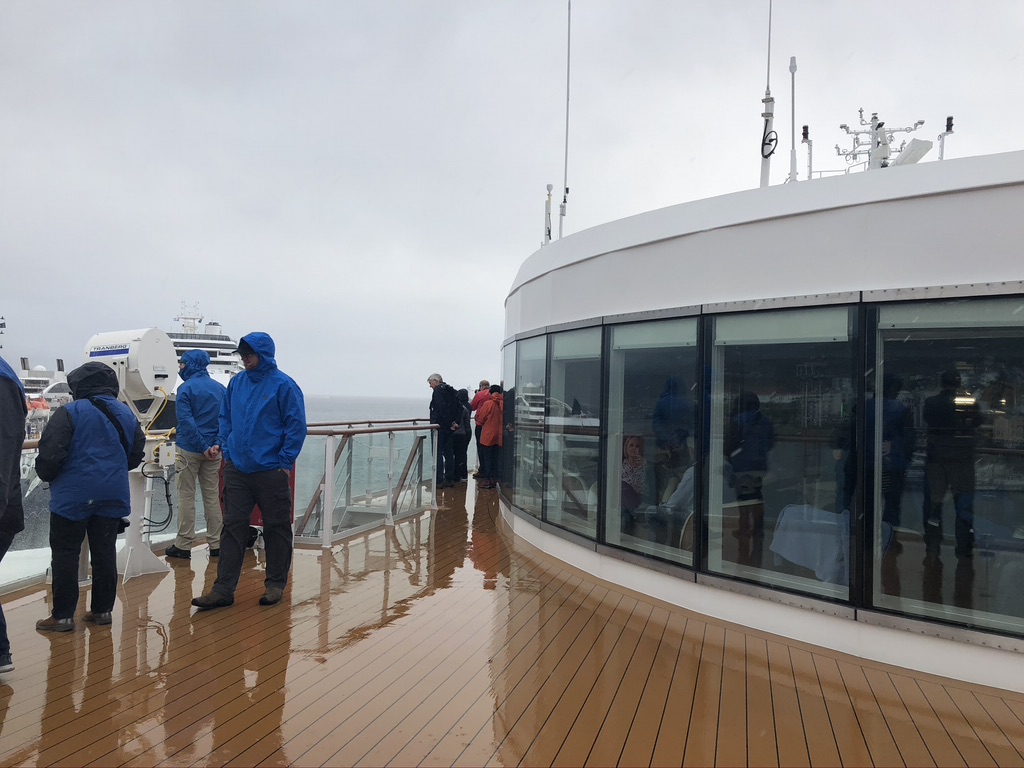
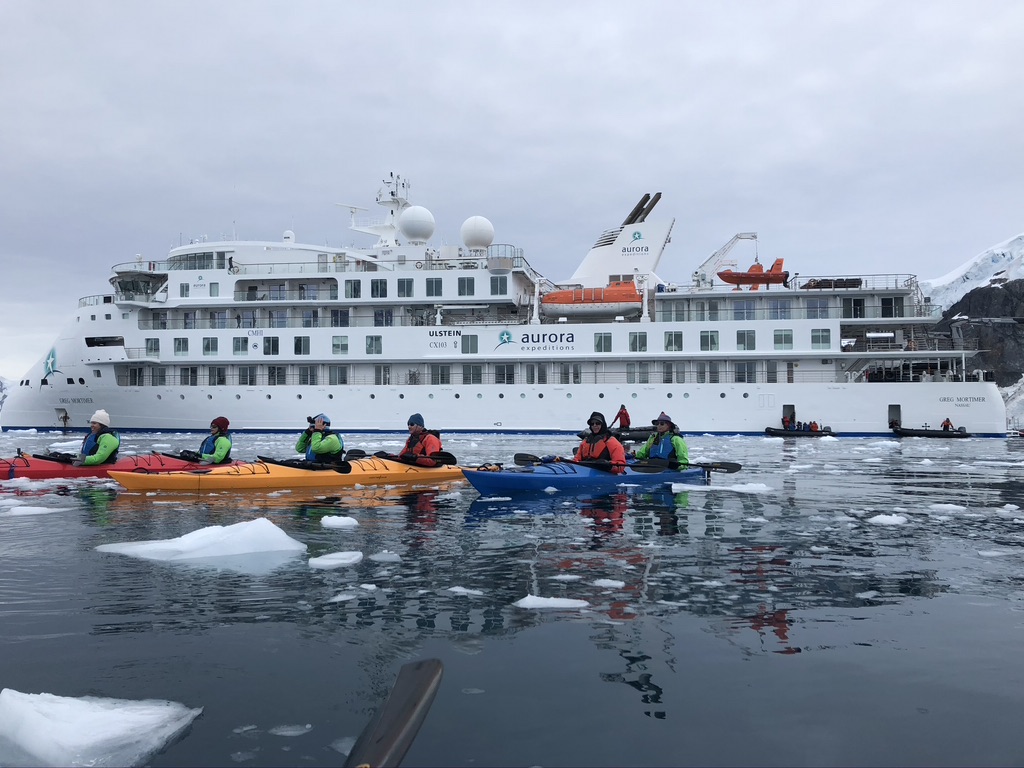
Before we get too far ahead, I want to outline a few of the ship’s main specs, you can read the rest here. The Greg Mortimer is the first passenger ship to have an Ulstein X-Bow, which cuts through swells exceptionally well, making trips faster, more comfortable and more fuel efficient. Unfortunately its rather unusual shape does encourage a few people to question its aesthetic. But if you suffer from motion sickness like I do, this X-Bow is a saving grace. The boat also carries fifteen zodiacs and you can board them through four specific doors at the rear of the ship which helps to minimise the chaos of a crowd of people excited to spot their first penguin. A pontoon extends from the rear of the ship where the kayakers are dispatched and has a seperate ‘preparation area’ to reduce any confusion. Something pretty cool on board are the hydraulic viewing platforms which can be extended from the side of the ship and provide you with another perspective of viewing your surroundings and capturing the perfect panorama. It’s a significantly smaller ship than most other cruise vessels, in fact it was the smallest commercial passenger boat travelling to Antarctica. There’s about 120 passengers on board so you really do get to know the majority of them, some better than others. It has all the usual ‘necessities’: a gym, sauna, spa, library, a main dining room, large observation decks and a few living areas and bars.
Panoramic views on Deck Eight
Before we’d finished unpacking our bags we were all called to the front deck to watch the boat leaving port. This was such an exciting moment, it really signalled that we’d reached the pinnacle of our trip and I thought there’d be a huge hoorah. But it was quite quiet, the rope wasn’t even thrown from the dock and it was slowly reeled in by the crew, I guess I forgot that a boat that size can’t move particularly fast. We headed downstairs for a briefing in the lecture theatre. We settled in with a hot thermos of coffee and were given the official welcome, a run down of our schedule and notified that there’d be a safety drill shortly afterwards. The alarm sounded and everyone flooded out of their rooms with a bulky yellow jacket on their shoulders and lined up next to a life raft. They didn’t look all that comfortable, just giant hard plastic capsules packed with people bouncing around in the waves.
Our lifeboats
During a delicious introductory dinner we met the primary crew onboard as well as the 22 Aurora guides who have extensive backgrounds in history, biology, kayaking, photography and commercial travel. They outlined our route for the week with the caveat that it could all completely change at a moment’s notice if the weather got wild. In fact, not only was there a Plan B, there were likely a handful or two alternate paths we could’ve taken, one day actually saw us reach Plan I. However we were particularly lucky with the weather and only needed to reschedule once or twice.
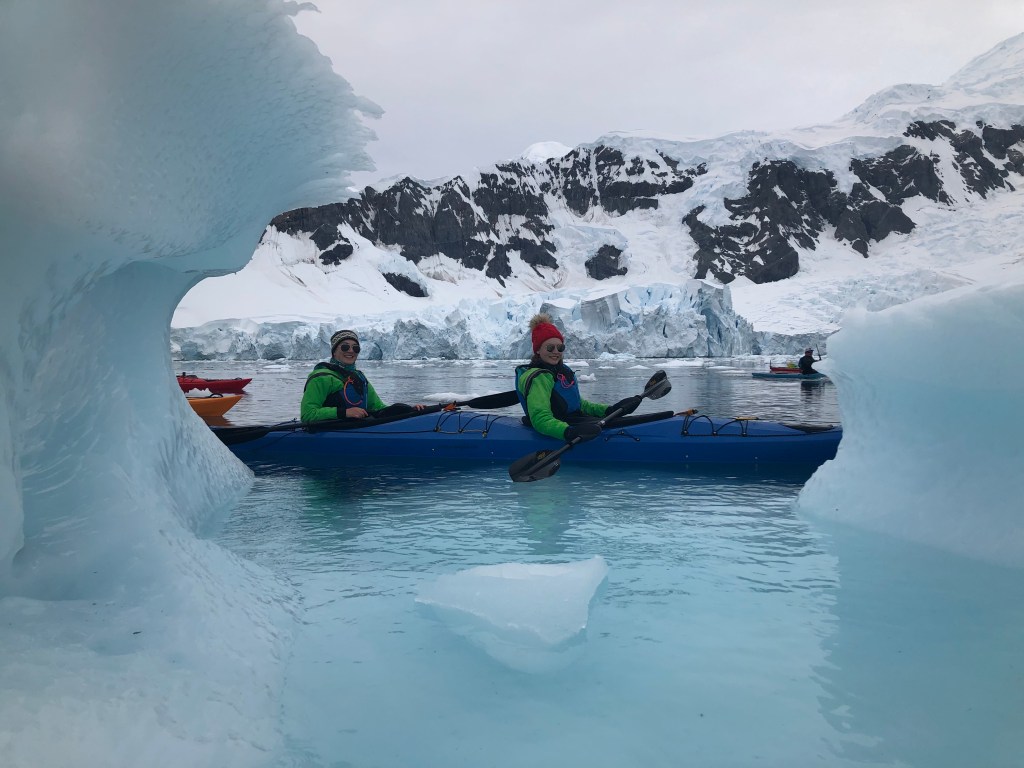
Following this briefing, the kayakers were asked to stay behind. As a “fit” family that always try to throw themselves into their holidays (proof: climbing active volcanoes the day after an eruption), we were pretty excited about this opportunity. But with the majority of Antarctic action happening on the ice with the penguins, we thought kayaking would only really feature a few times over the week. Oh boy, were we wrong and thank goodness we weren’t the only ones who realised this. Our expert kayaking guides led with an introduction that we would be kayaking two to three times a day, every day, for several hours at a time. The vast majority of ‘paddlers’ as we were affectionately called, negotiated a deal which typically saw us kayak once a day so we could still explore the ice. Depending on the locations we visited, we sometimes paddled twice a day, or not at all – Antartica was quite flexible in that regard. Kayaking was certainly a unique way to explore the world around us and it would’ve easily been my favourite part of the trip if penguins weren’t such funny characters. Look out for the kayaking blog if you’re a keen adventure traveller, in the meantime catch a sneakpeak on Instagram.
A heads up on what’s to come!
That night we explored the ship and quickly discovered that the Elephant Bar on Deck Eight gave us the best panoramic views of the Beagle Channel and the seabirds. Looking over our shoulders we could see the Argentinean mainland disappearing, it really was clear that civilisation was far behind us now. Keep a keen eye out for the next Antarctic post about our crossing of the notorious Drake Passage!
Here’s where the concrete day-by-day blow structure I’ve had running starts to dissipate. This post is going to encompass four days – brace yourselves! They were certainly busy but there was a good deal of travelling, souvenir browsing and coffee shop hopping done. If you’ve been following along on Instagram you may also recall that there was some local beer drinking too. At this point we were leaving Patagonia behind and travelling further South to Ushuaia where we’d board our boat to Antarctica. We were a little tentative about rushing our trip there as some South American airlines aren’t all that reliable and the weather can change fairly quickly. Nevertheless, it actually worked in our favour because we got an extra day to unwind before heading out to sea.
Safe to say we were pretty sad to leave Patagonia and the team at Explora behind, I really can’t stress just how fabulous our time there was. But we grabbed our little packed sandwiches and loaded our suitcases into the van that would take us to El Calafate. Suddenly we found ourselves in the same predicament as when we had arrived at Explora: our driver could not speak any English. He really did try very hard throughout to trip to check if we were happy (thumbs up, thumbs down, big smile or frown) and when we drove past flocks of rhea and herds of guanaco. If you want to read more about the scenery of this five or six hour drive or our trials and tribulations of crossing Argentinean and Chilean borders, head over to this post. There were a few cool moments along our drive though. When we’d emerged from the mountains and drove back along the plains we spotted a real (!) gaucho moving his sheep down the road. I just couldn’t believe that you’d have the courage to wear that if it was just a normal day, there’d definitely be a lot of upkeep. He gave us a big wave and we pressed on.
Gaucho on the go
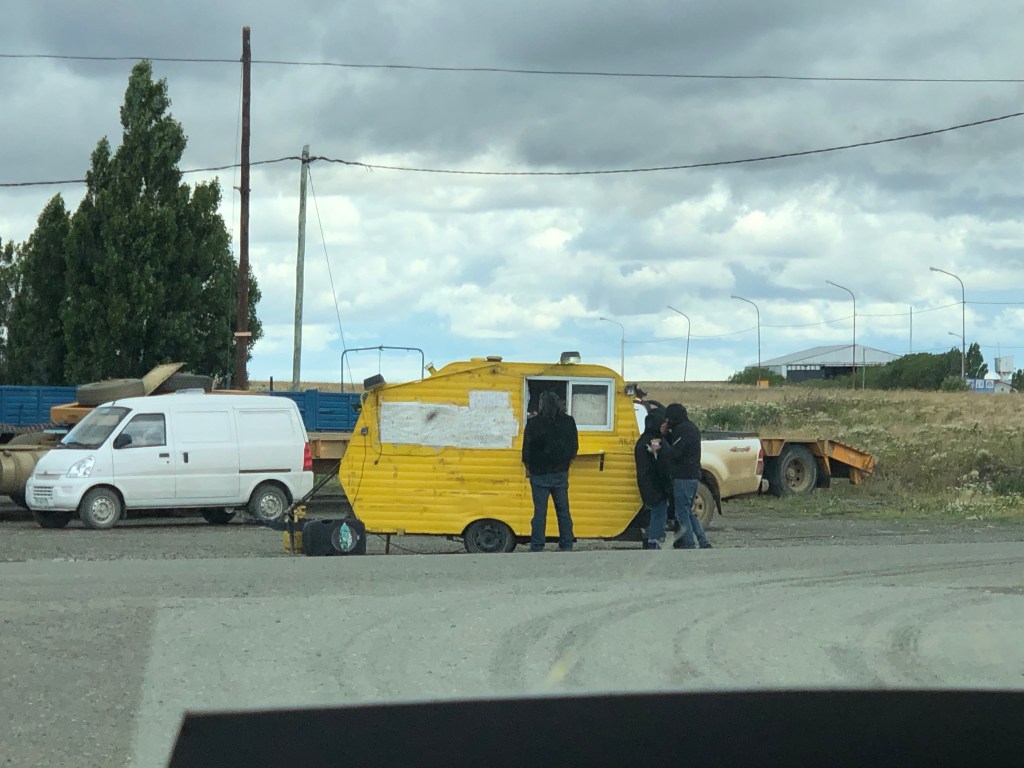
You’d expect that if you were driving along a flat plain that you could easily anticipate the weather. So did I, but I was wrong. Within five minutes the sky had transformed from perfectly clear, to very dark and it started to snow quite heavily. Ten minutes later and we came out from underneath that cloud and I could’ve drawn a straight line in the dirt where the snow stopped and started. The funny little village we pulled into for lunch was still exceptionally odd, lots of bikies and a small caravan blasting music and selling food next to the servo. Remarkable.
A small yellow caravan, a boombox, a bikie group and a lunchbreak
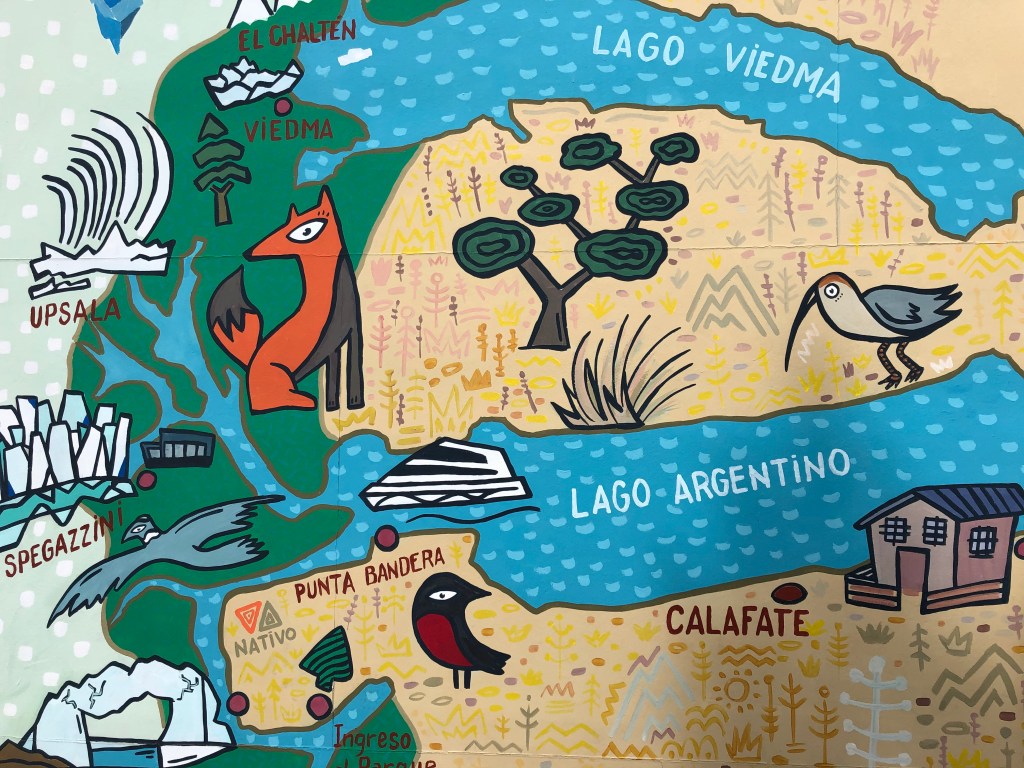
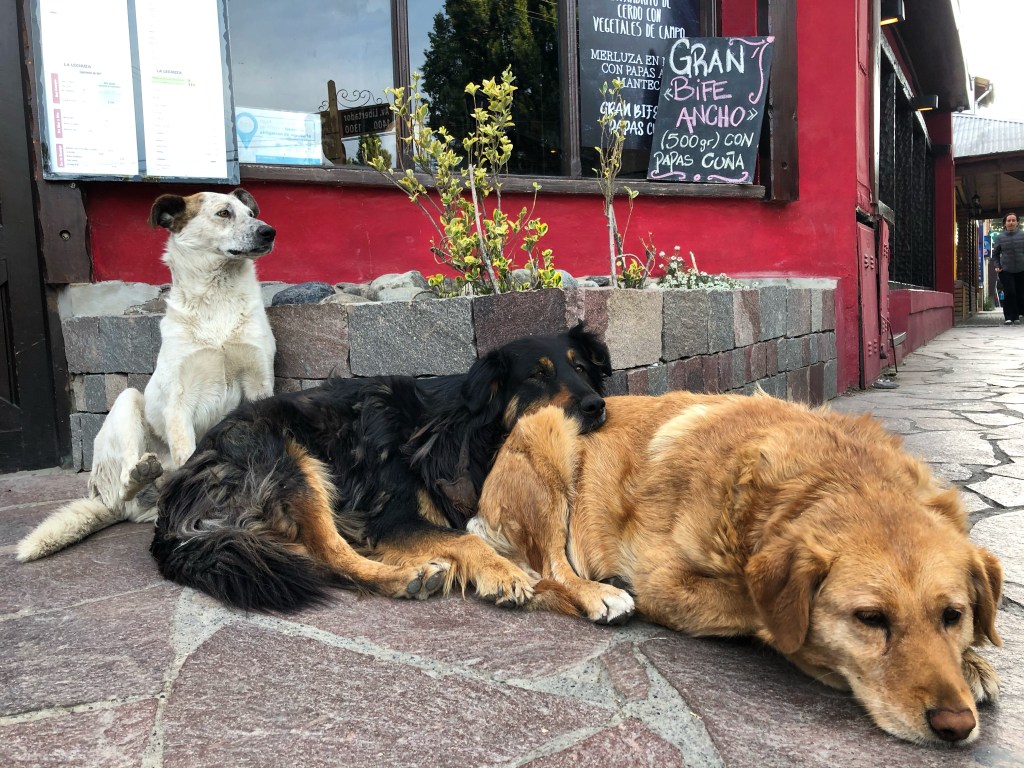
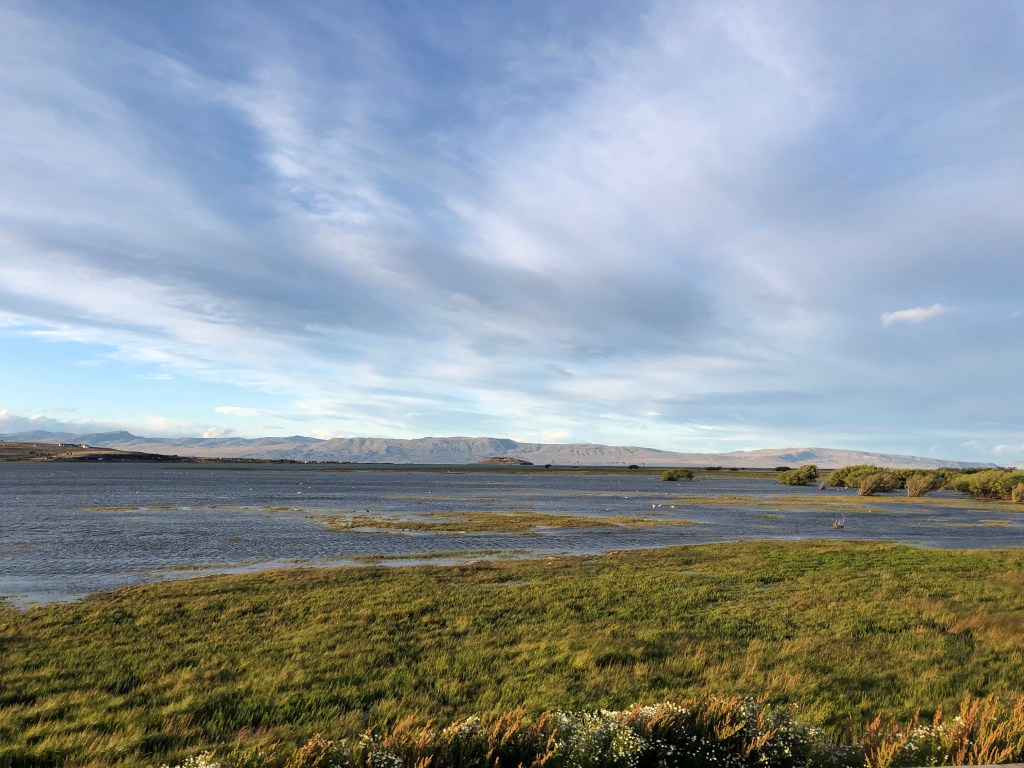
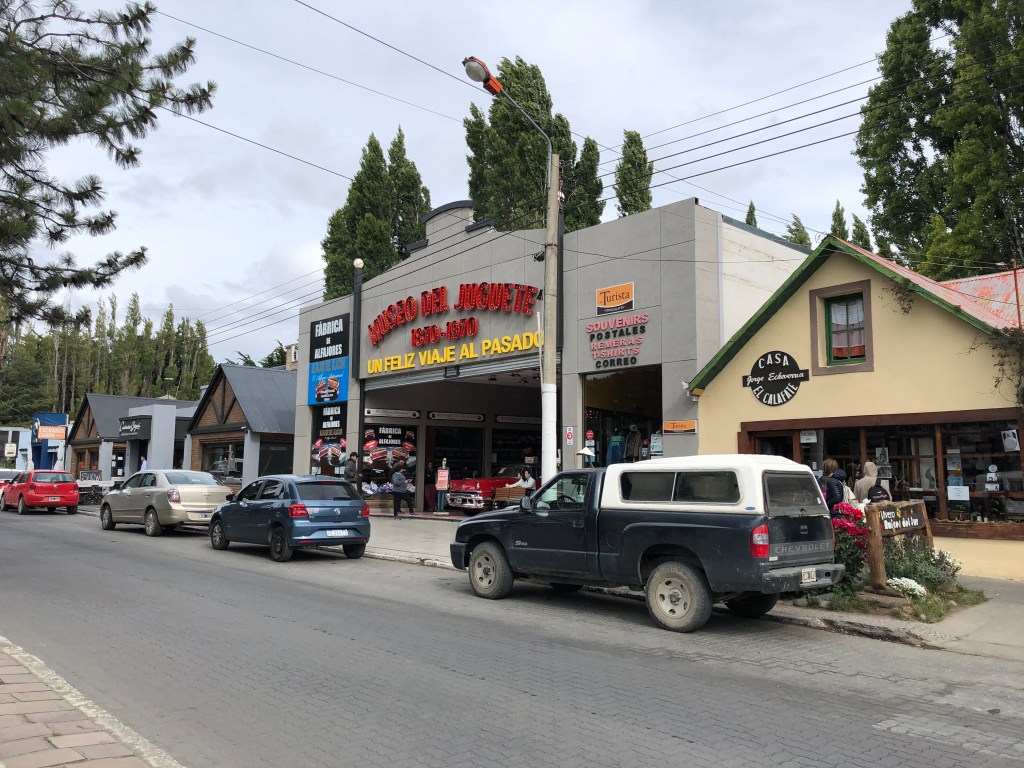
We arrived at El Calafate that afternoon and took ourselves for a walk around town. Our hotel was about a twenty minute walk from the main street so that was a good excuse to get some exercise in the brisk air. El Calafate sits on the Southern border of Lago Argentino, a lake so large that it could surely pass as an inland sea. Walking along there we spotted quite a large flock of flamingos who seemed totally out of place to me. The town is a key destination for fit young backpackers and adventure travellers who are heading to Patagonia for the W trek or working their way down to Ushuaia. Unfortunately this means the town has lost most of its original charm in order to line its streets with major Western brands. It felt pretty similar to a ski town (without the snow) with all of its alpine trees and stone cobbling. There were a lot of stray dogs too and not just little scruffy things, but mixes of big breeds like St Bernards, Labradors and German Shepherds. Apparently the town has an unspoken rule to look after them where restaurants will throw them their scraps. They were always in packs of about three. Often they’d be sitting outside of a restaurant for half an hour, and then for no obvious reason, jump up barking at a certain car or motorbike. These ‘attacks’ were always very persistent, they were never afraid of being run over and would hold up the traffic for ten minutes at a time. It was really bizarre, I’m not sure if it was out of boredom or they were expecting food.
El Calafate in a nutshell
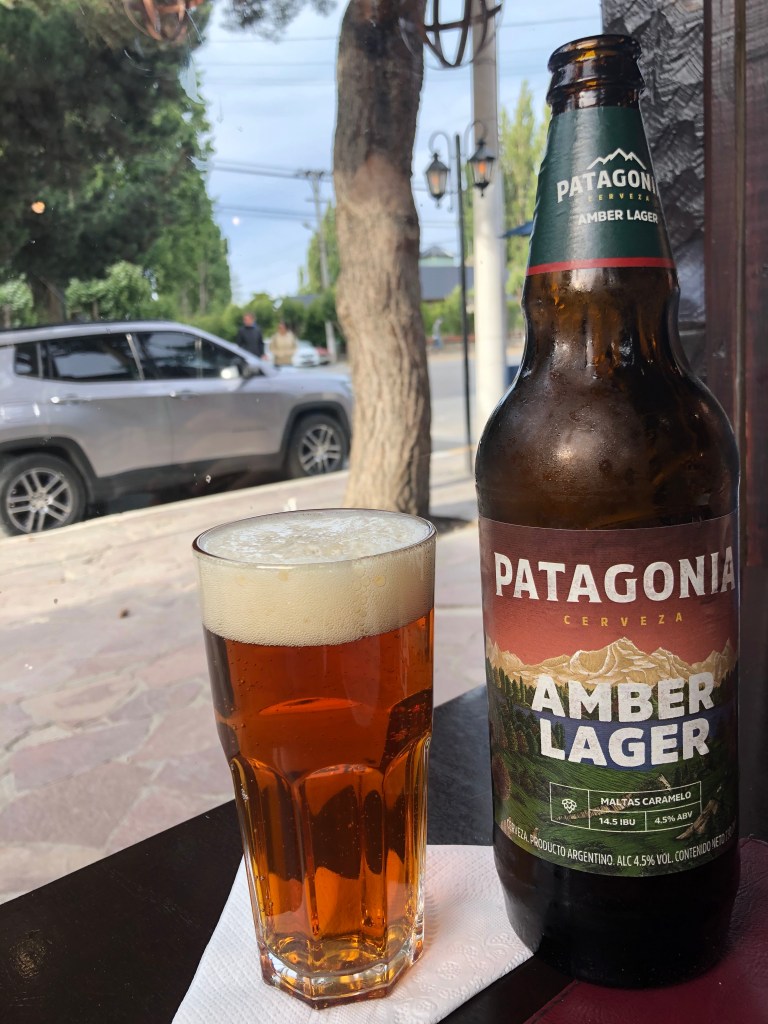
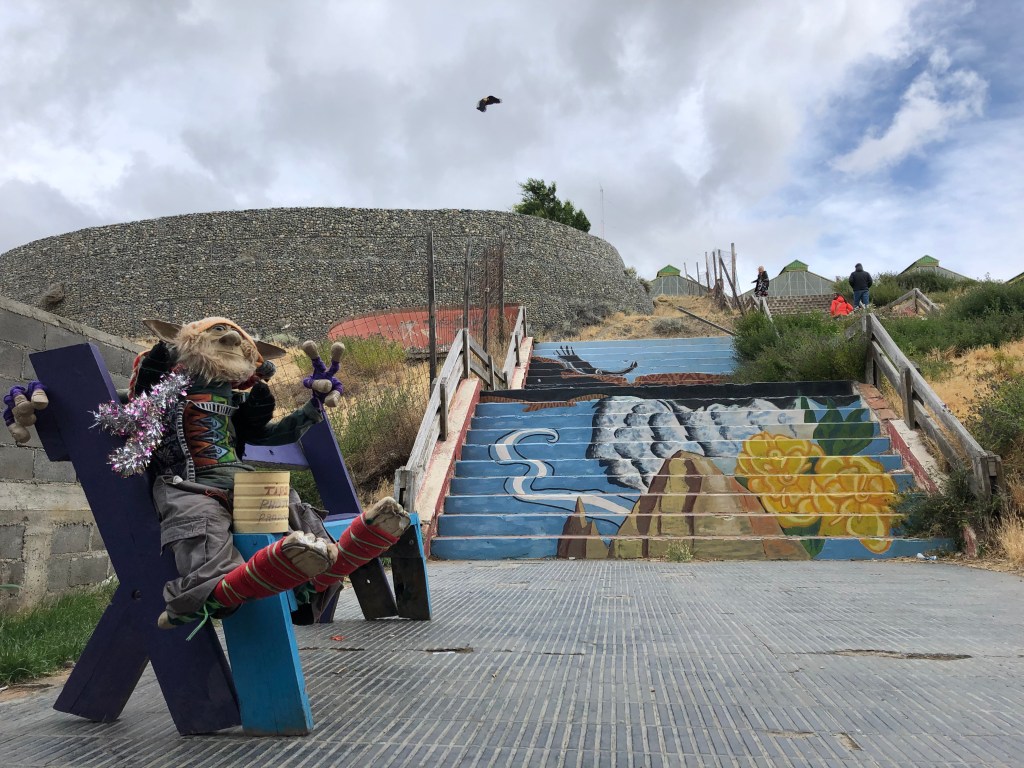
We explored the local markets as well and I seriously contemplated buying a real gourd. I came to my senses eventually and realised I’d probably never use it. What was a little odd were the dolls or gremlins stationed everywhere. If I recall correctly, they’re attached to old superstition and they warn off bad spirits. That evening we grabbed a beer at the Patagonia brewery, a very popular beer here. The major difference between your ‘typical’ Australian beverage and the South American variety is that they often like to add honey for sweetness and you can buy a bottle two to three times the size of a regular one. We tucked into some pizza, pushed past the dogs on the way out and got ready for our flight out the next morning.
One of the many superstitious gremlins getting around El Calafate
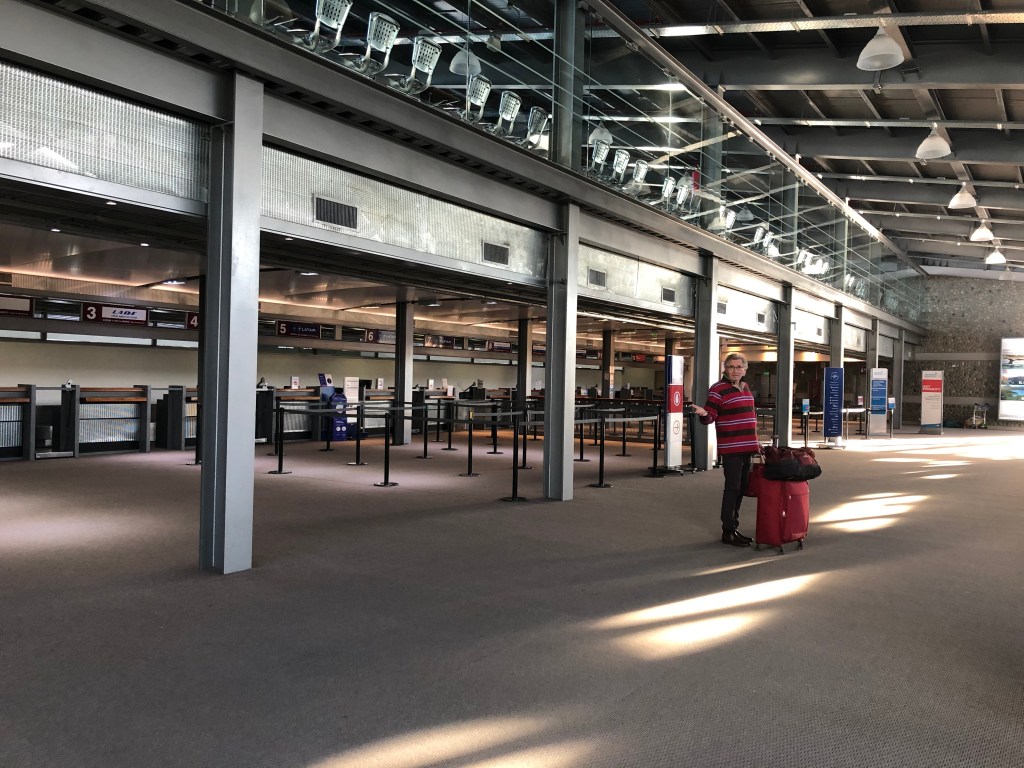
Domestic flights in South America still require you to be at the airport a couple of hours early and with their haphazard scheduling, delaying and cancelling we thought we’d stick to our usual routine of getting there no later than required. We were booked for a 9:30am flight. Here’s what the airport looked like at 7:30am …
Ready for take off!
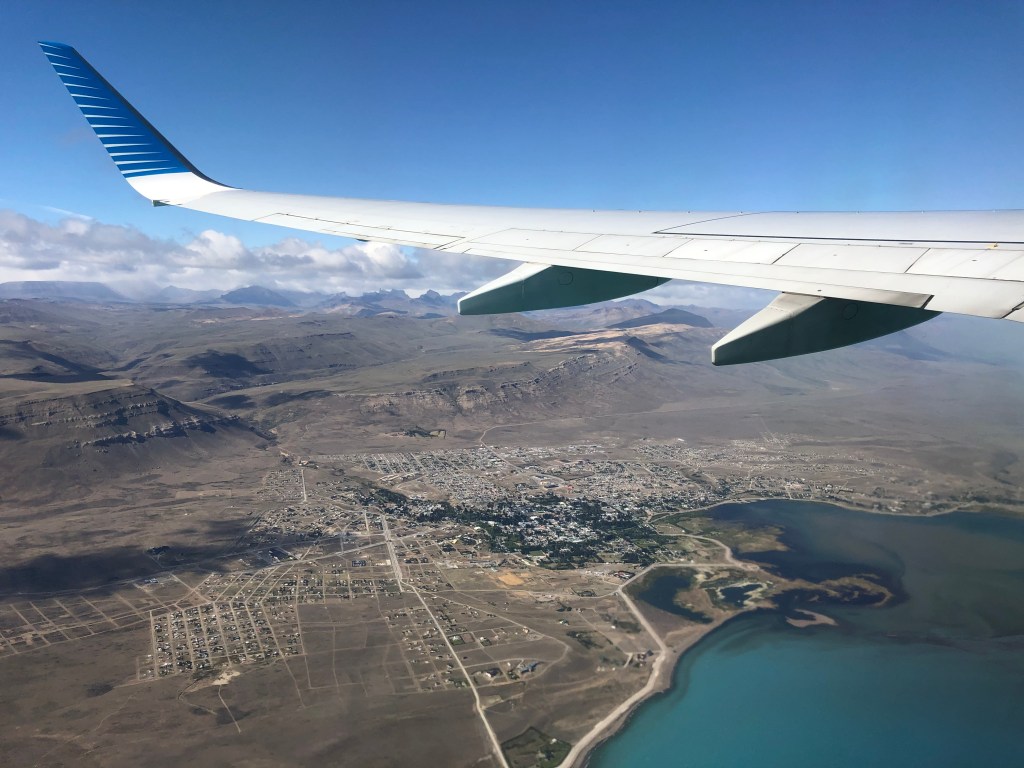
No queues of passengers checking in, no airport staff, no security … we (and a backpacker sleeping in the corner) were the only people around. By 8 o’clock the first check in chick had walked in and started prepping her station. By 8:30 we were ready to go and the crowds were getting larger. We were pretty chuffed with being at the head of the line but that failed when our hostess’ computer took half an hour to process our tickets and we had to find someone who spoke a bit of English. While we waited there was a very funny custom that appeared. The baggage handlers, who were all male, were very relaxed about their job with a new assistant turning up every ten minutes. He’d arrive, kiss girl number one, kiss girl number two, kiss girl number three – all five or so of them – then shook each of their friends hands. The girls didn’t look too pleased about it, it disrupted their chain of work and the boys seemed to spend the vast majority of their time talking anyway. Eventually we made it onto the plane and flew out over Lago Argentino before landing in Ushuaia. When we landed it was pouring with rain, our suitcases were soaked and we ran through the parking lot with a crazy Dutch man who’d take us to our hotel.
El Calafate from above
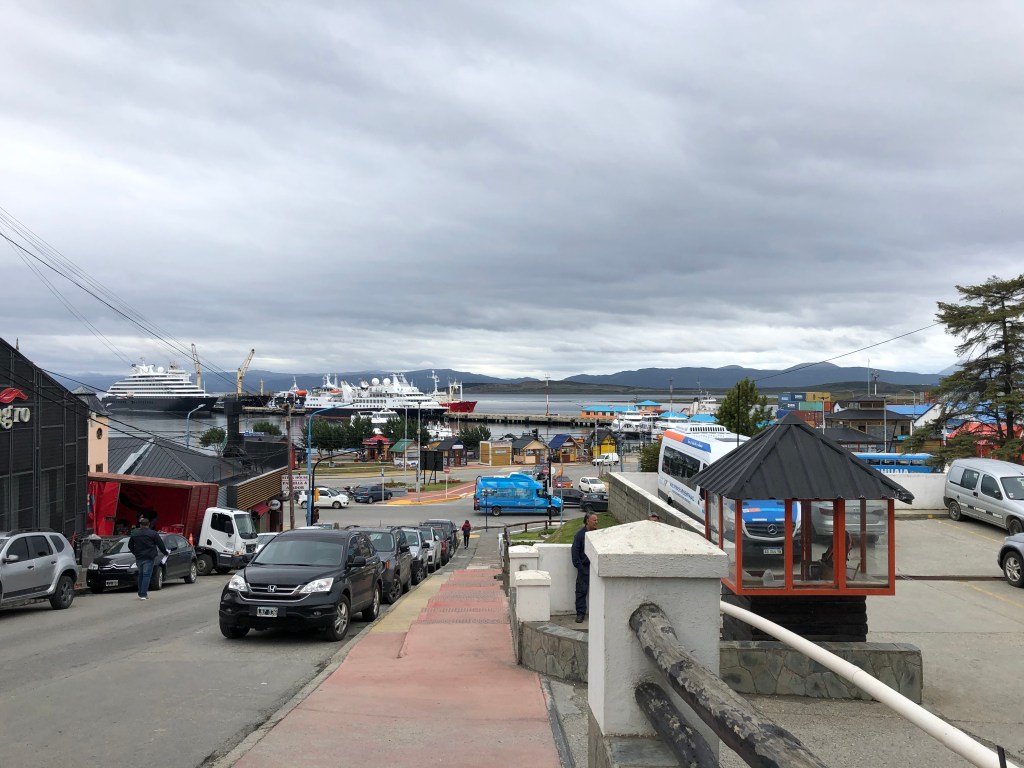
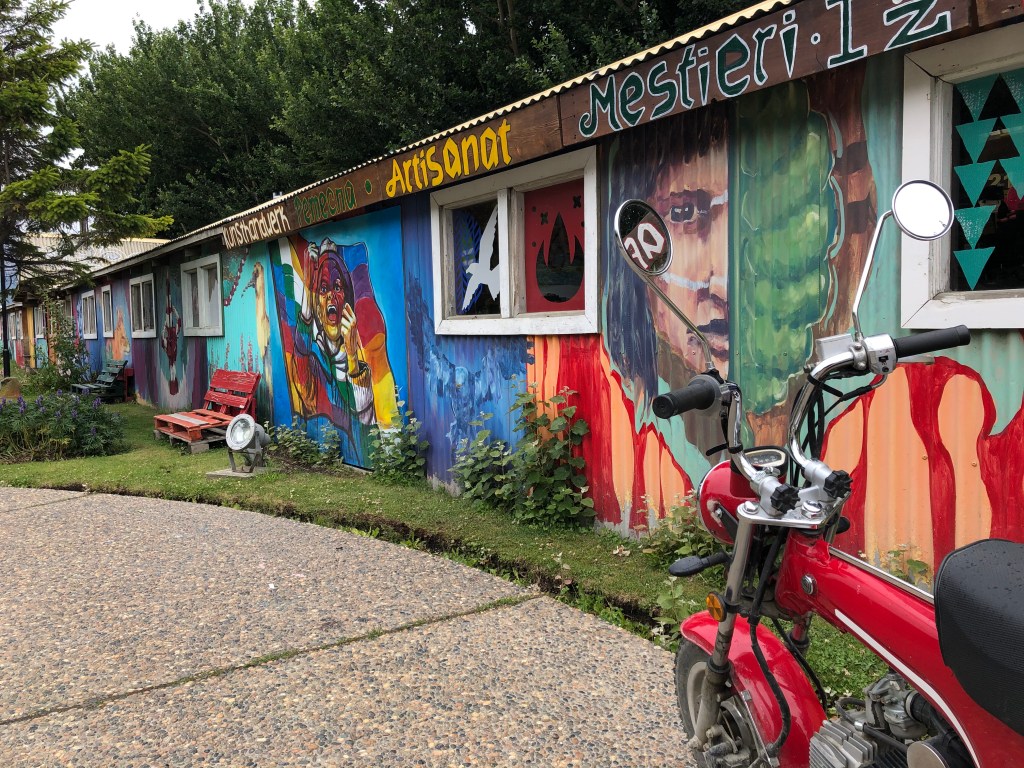
Aurora has been booking people into the Albatross Hotel for at least the last twenty years (my parents stayed there before their Antarctic trip) because it only takes a couple minutes to wheel your luggage down to the dock. We had an extra day in Ushuaia before we’d meet up with the rest of our passengers and get on board the Greg Mortimer so there was plenty of time to explore. It had a similar ski village feel to El Calafate with all the same adventure and hiking shops and bars and restaurants, but on a much larger scale and with the gate to Antarctica at the edge of the town. We found a small arcade with a few lunch spots inside so we ordered what we thought would certainly be our last empanadas. They definitely weren’t in the same league as our first ones in San Telmo but they’re always delicious. We gave in to the fact that we were tourists and spent most of the afternoon taking pictures of the streets and buying souvenirs. I like to collect sew on patches of countries and unique places I’ve been to so I’m always on the look out for a new addition to add to my denim jacket.
Dinner that night was certainly not what we’d expected. We found a very well hidden local bar called Kründ which always had live bands playing and plenty of craft beer. It was fairly new in town so I’m not entirely sure if we were intruding as tourists but we only stayed for one drink. It was a pretty cool place so if you’re a young backpacker I’d suggest going along and staying for one of their events. Given Ushuaia is a coastal town, they’re known for their seafood, especially their King Crab. We wanted to put this to the taste test so we walked in and got a table at a joint near the port. Our waiter didn’t speak English and the menu was all in Spanish so we had a hilarious time trying to play charades guessing what our meals were going to be and trying to figure out if anyone had ordered the crab. What was even more bizarre was the lobster costume that sat empty at the table behind us. I asked a member of staff if they could put it on and I could get a photo of it because it really did look strange and they were more than happy to comply. I later learnt that some poor employee has to stand outside the restaurant every day in this suit trying to convince people to come inside. The food was fantastic so I’m not entirely sure why they’d need to be pushing more people through their doors.
Just a normal dinner
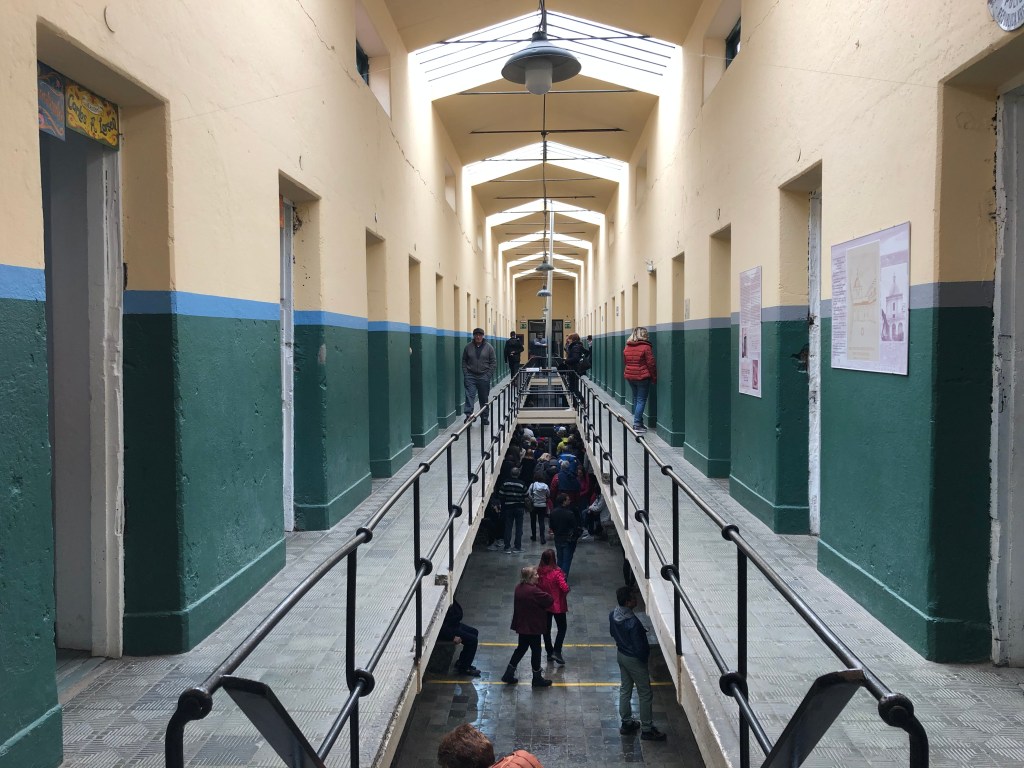
The following morning we visited the Maritime museum in the old prison and learnt all about the history of Ushuaia, its prisoners and the number of successful and doomed boats that made the trip down to Antarctica. It’s certainly a good idea to visit as you get a better idea of how a town right at the edge of the world could really exist and just how brutal the Beagle Channel and the Drake Passage crossing would be. The museum is only about a ten or fifteen minute walk from the centre of Ushuaia and there is so much information there that you can renew your ticket free of charge for a second day. Its a big cold concrete building so inmates there certainly didn’t have it easy. Argentina established Ushuaia as a penal colony in 1896 and transported many of their most dangerous criminals there. They were responsible not only for building the town’s basic infrastructure but also their own prison. Eventually there were so many inmates here that they began to move their families over and they established their own economic system. The prison was designed in the panopticon fashion, with guards being able to watch over everyone from a central location without being overt as to where they were looking. In many ways it reminded me of Australia’s own penal colonies but I don’t think our convicts would’ve come close to experiencing the freezing temperatures in Ushuaia.
The cold hallways of Ushuaia’s historic prison
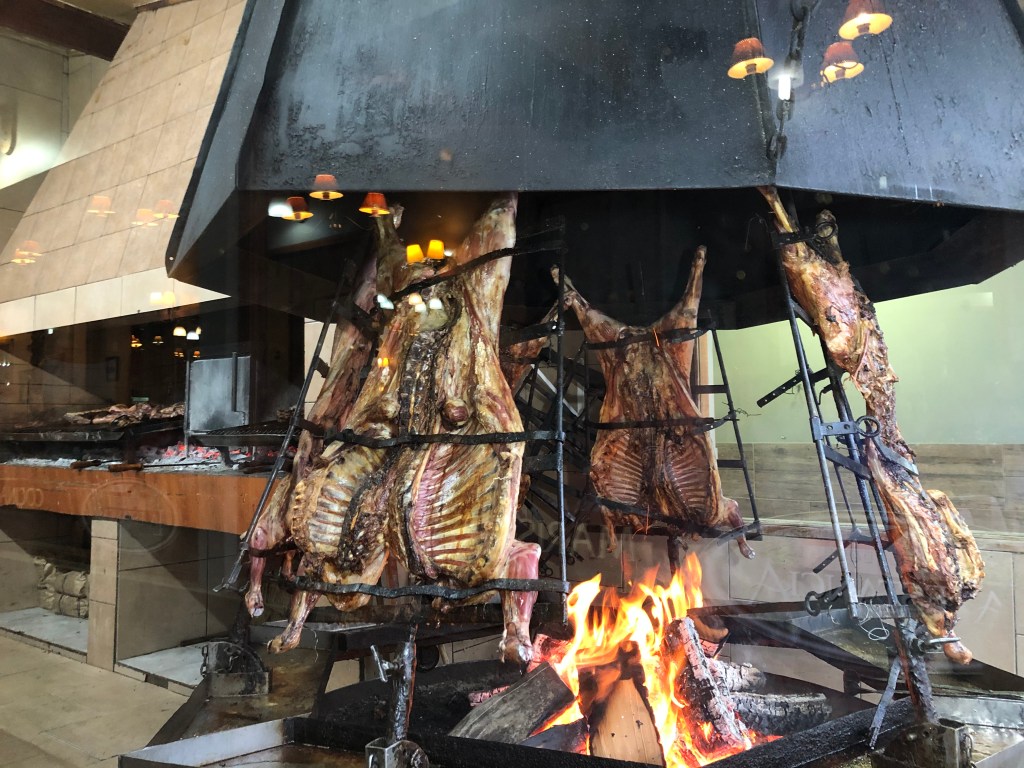
We tucked into a big dinner that night because we were still hunting for the perfect parilla, a restaurant that slow cooks its meat over the coals for several hours and delivers unimaginable portions to your table. Take a look at the photo here and you’ll see that we were in luck, I even got invited in to grab a photo with the lamb! Our meal that night certainly didn’t disappoint, we ordered what we were told was enough for four people but I don’t think we got through even half of it. The previous evening we had an accordion player come through the restaurant busking for some money and tonight the same guy appeared again, which he found hilarious, and he’d brought his friend along to film his performance. It was just a great atmosphere and got us that more excited to get on the boat the following afternoon.
A girl on the grill!
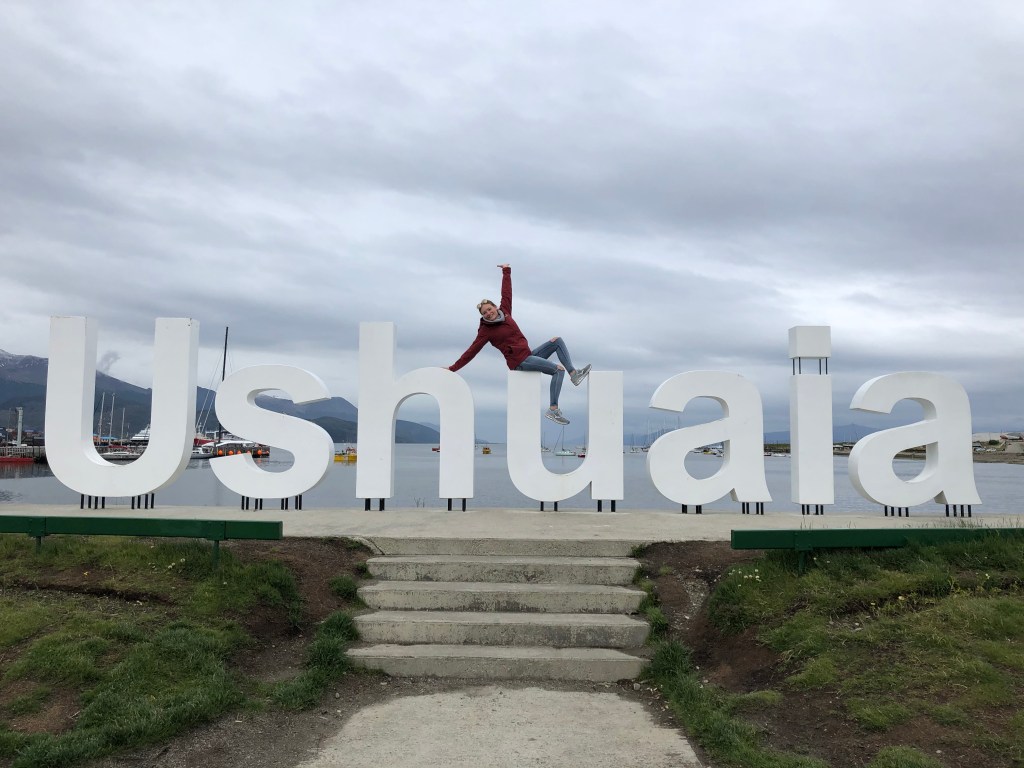
That morning we definitely had a sleep in and took some last photos of Ushuaia in between coffee shops. I tried a popular drink, a submarine, where you’re presented with a hot glass of milk and a chocolate in the shape of its namesake to swirl in the milk. It was definitely creamy and something I hadn’t seen before (it was listed on every coffee shop menu) but I think you’re better off ordering a normal hot chocolate and saving yourself the hassle.
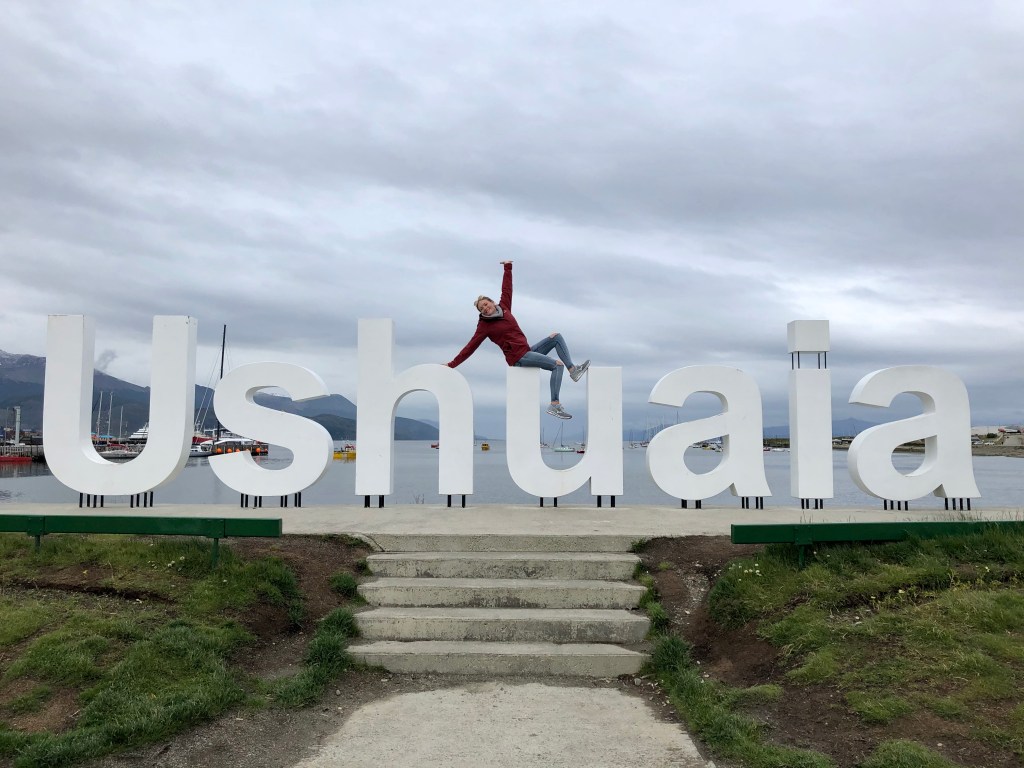
Last minute tourist snaps at the Ushuaia sign
I’ll save that afternoon for my next post: the first instalment of Antarctica! Its been a long time coming, I’m looking forward to reliving the little things I’ve had in the back of my mind the last couple months and sharing some fantastic stories and photos with you. I’m in the process of downloading photos I’ve taken on my little camera as well as collecting the many memory cards from my mother’s big Canon. There’s a good chance that after I reach the end of the Antarctica chronicles I’ll need a seperate post or page with our top shots. If you’ve reached the end of this post, congratulations, and keep an eye out for the next one!
Faced with the prospect of Australia’s lockdown laws remaining firmly in place for the next three months, I’ve decided to pluck up the courage, knuckle down and finally bring the next day of our trip to your laptop. I’m actually quite excited to relive our final day at Explora in Torres del Paine National Park. It was a fantastic end to our time in Patagonia and it really set the tone for the grand finale of our adventure (Antarctica if you haven’t quite cottoned on yet). So let me paint the scene of how my family retraced the steps of the ancient tribes of Patagonia and quite literally galloped away into the sunset on horseback with the cowboys.
We were up bright and early this morning as per usual but opted to explore a different avenue of the National Park that morning. As I have mentioned, my family’s trips are typically driven by regions impacted by climate change and magnificent species under the threat of extinction. However, we also share a keen interest in history, particularly in Indigenous cultures. Australia’s Aboriginal peoples are one of the oldest groups of people to have settled outside of Africa and have documented their lives for at least the past 90, 000 years. My family are big fans of Indigenous artwork and have collected many paintings over the years. We’ve also marvelled (and even discovered) rock art in Arnhem Land in the Northern Territory and collected carved spearheads and axes from our paddocks in rural New South Wales. So on our final day in Patagonia we thought we’d take the hike that showcases cave paintings from the Aonikenk People. What’s more, we were almost guaranteed to see guanaco (the llama’s cousin) along the way.
If its a hotspot for guanaco then its a hotspot for pumas. Remember to pick your children up (image 3)
All of our hikes at Explora up until this point seemed to have taken on the form as a private tour. The lodge does have the option to book private trips but we never looked into that. Some of the full day hikes along the W trek tended to be pretty popular and a few couples would band together as one group. Possibly because we were mostly doing half day trips and were a larger group than normal we were often assigned our own guide. Unless the trail was unsafe, everything was always open and there was a vast number of guides to cater for everyone. So today we joined a Spanish family that had just arrived the night before. We thought this would be fabulous, we could talk about our trips and marvel at the world around us but this soon proved fairly difficult. The language barrier was tough so the guide often had to deliver his spiels in Spanish, then English. Soon, our conversations had transformed to a game of charades.
The scenery was spectacular as usual, we got some great shots of snow-capped mountains reflected in ponds and dramatic clouds over lush grass. Our previous hikes had seen us push past trees, walk along the crests of hills and wander amongst stromatolites on the beach but now we had emerged into a series of protected grasslands – very similar to the pampas but not quite as expansive. There were plenty of little wildflowers along the way, numerous types of orchids and all our favourite wild berries to snack on along the way.
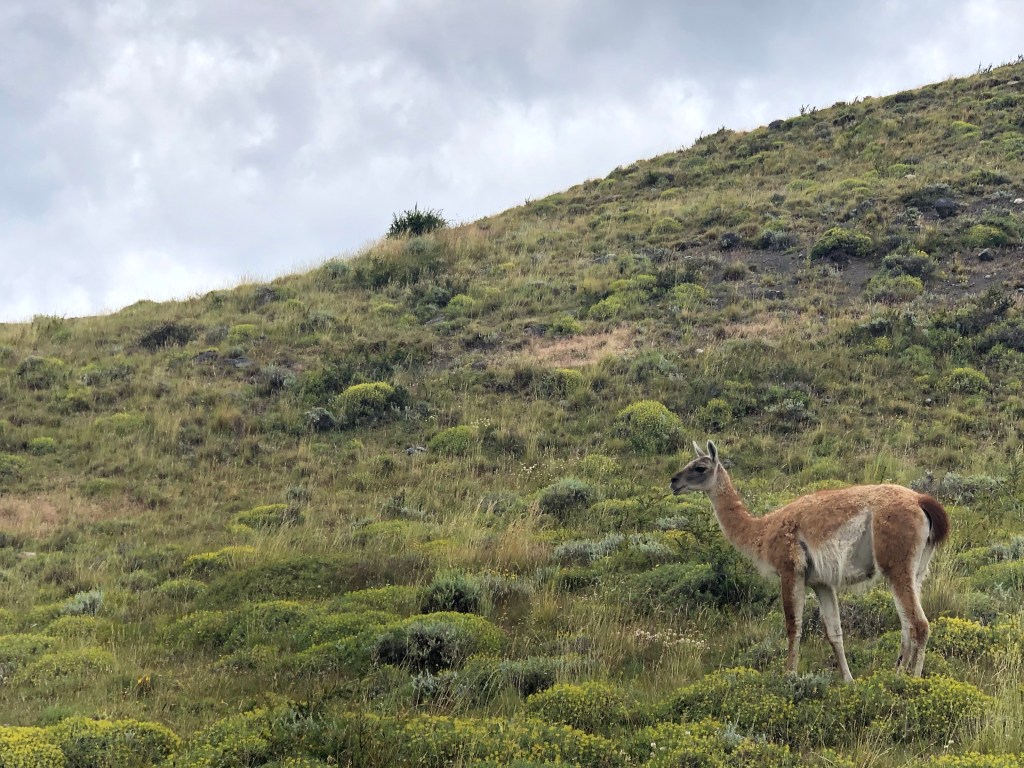
This also made it the perfect home for guanaco. We’d seen a few individuals and small groups from our van’s window as we drove to lodge but hadn’t spotted any since (yet we’d been lucky enough to see a puma the first night). Wildlife spotting, photo ops and Indigenous culture – we were in our element. As we crossed another small hill we saw our ‘first’ guanaco, then a few more and finally a few dozen all grazing peacefully together. They’re fairly tall, almost a metre and a half at the shoulder and pretty hairy. I never thought an animal with a neck that long could run quite so gracefully but they have a skip that reminds me of a deer. The less poetic element to them is that they enjoy their play fighting, which includes males attempting to rid their friends of their manhood. They move fairly quickly and could easily bound over the small wood fences the Park had at its boundaries so thankfully we didn’t get to witness any gory battles. Of course, I took my obligatory selfie with one (at a distance) and it was surprising how close you could get to them, even if you realise they don’t perceive you as a threat. Once everyone had finished jostling for the best guanaco photography positions we started the final climb to the Aonikenk cave.
Our guide explained that there had been four main tribes that occupied the National Park’s territory but over the centuries as the Spanish arrived, disease spread and assimilation occurred, only two remained. The Aonikenk have the highest rate of survival but as with many Indigenous populations, are quickly diminishing. They’re recorded as having inhabited Patagonia some 13, 000 years ago but arrived at Torres del Paine at a later date. When the Spanish arrived they were nicknamed patagones (giants) as they stood at roughly 1.8m! Each of these four Indigenous peoples were very different, some were exceptionally short, others had limbs that seemed out of proportion and the Aonikenk were very tall. The Spanish explorers weren’t all that kind when describing them, being as brutal as to name them ‘ugly’. They were typical nomadic hunter-gatherers and transformed from using stone arrowheads and guanaco tendon in their weapons to becoming skilled horsemen when the Spanish introduced their steeds. The cave paintings we gazed at were estimated to be a few thousand years old, incredible but not a scratch on Australia’s Indigenous people. There was a collection of hand prints and a few guanaco and fish. The cave was situated on the top of a small hill with a great look out over the grasslands so we snapped a few more shots.
Ancient Aonikenk handprints (left and centre) and a guanaco (right)
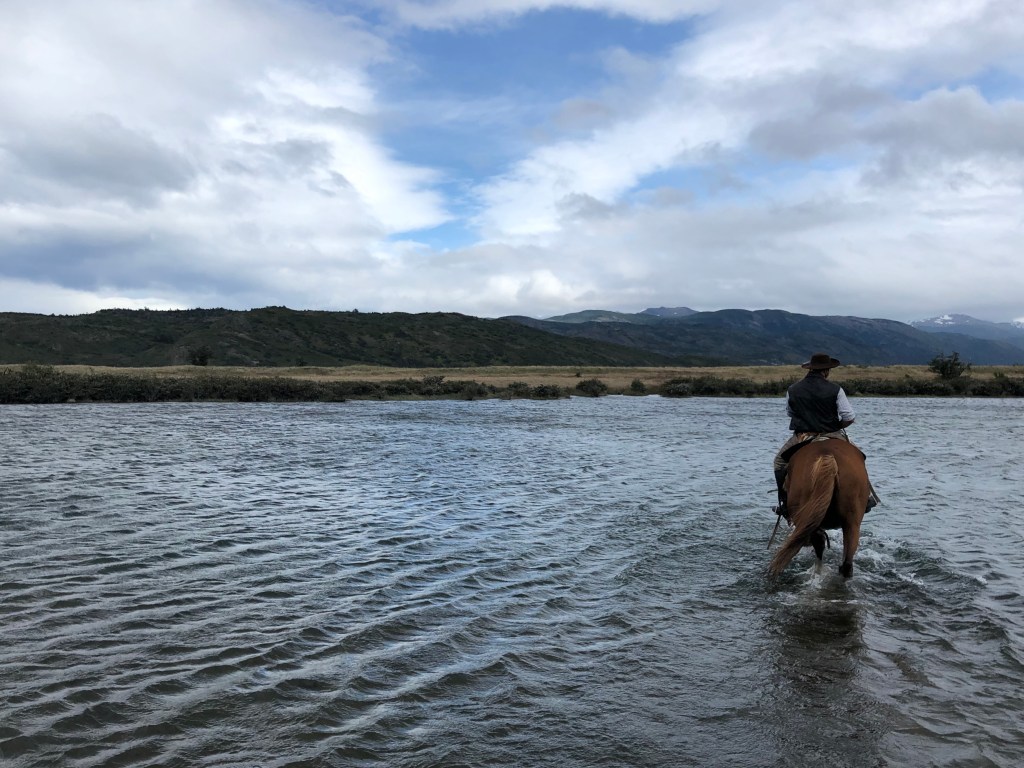
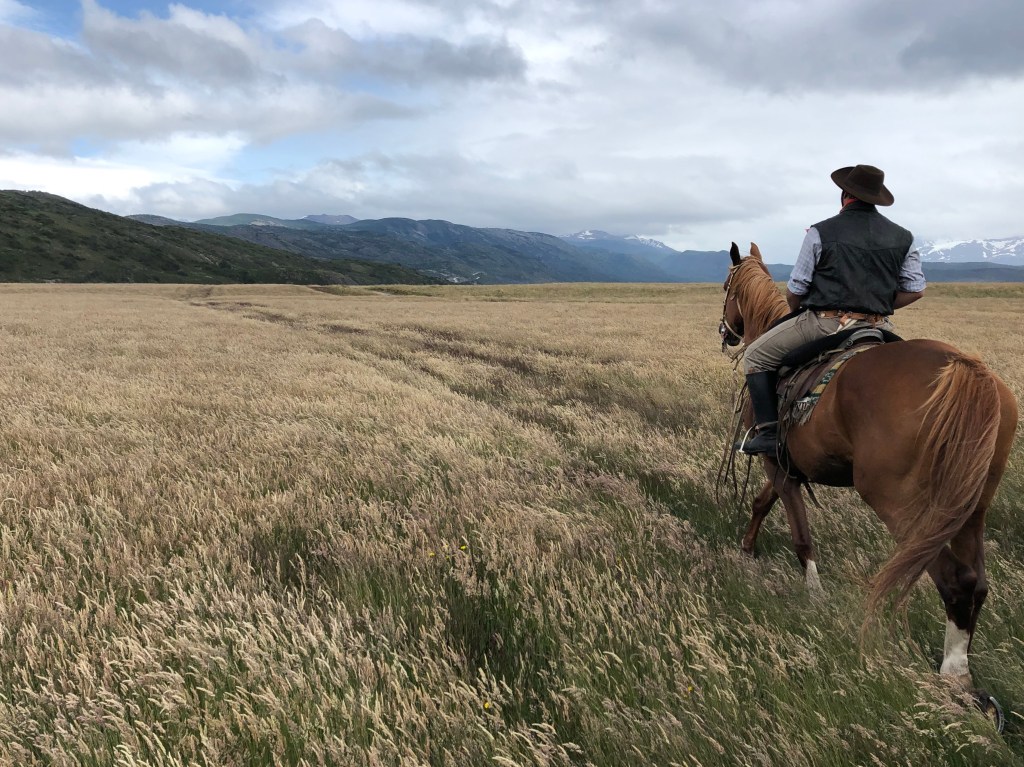
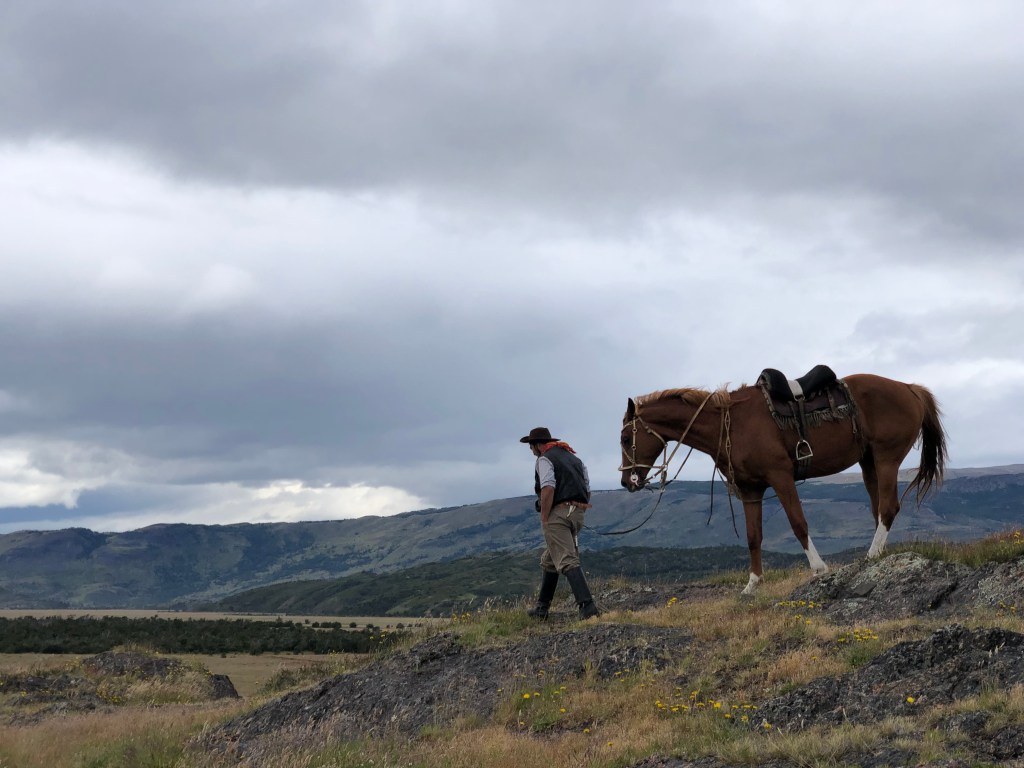
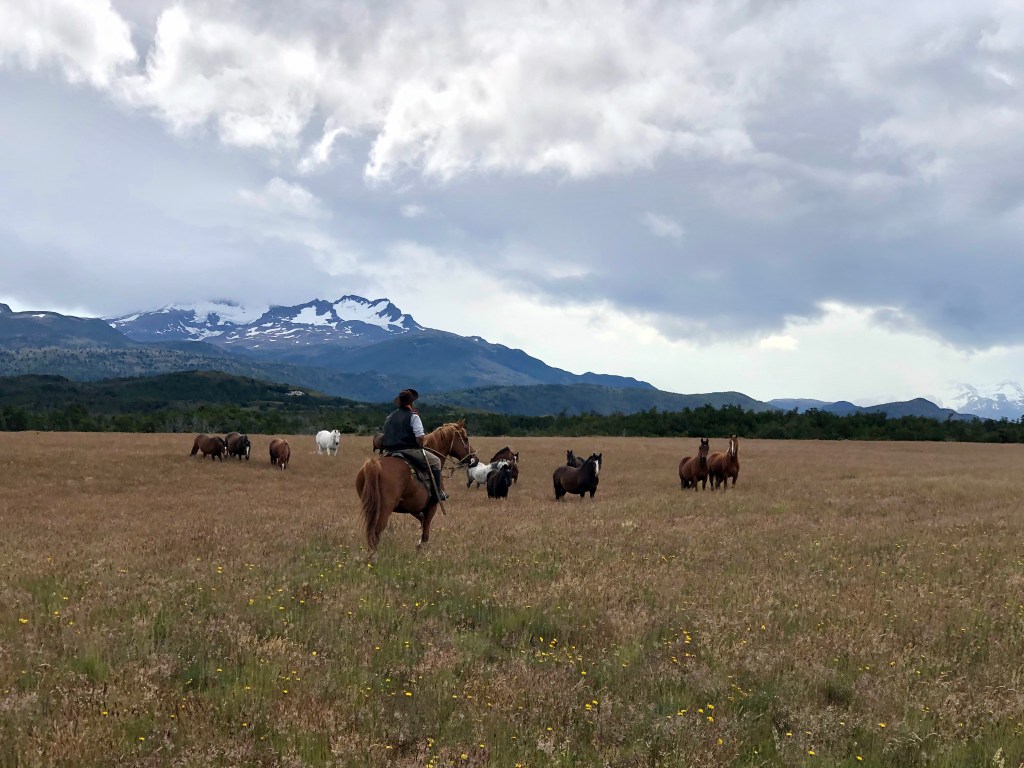
That afternoon Mum and I headed out for a horse ride with a gaucho at the lodge’s stables. We donned a big pair of chaps each and took a bumpy five minute ride cross country to reach our steeds. When we arrived there would’ve been a crew (what’s the collective noun for cowboys?) of gauchos outside with a handful of horses. They were all decked out in traditional gear, big chaps and spurs, leather vests and campero, the Patagonian akubra. Their own horses were spectacular, beautifully decorated in pressed silver and soft leather breastplates, bridles and stirrups. Their saddle clothes were all brightly woven patterns, I was having a serious moment of horse envy.
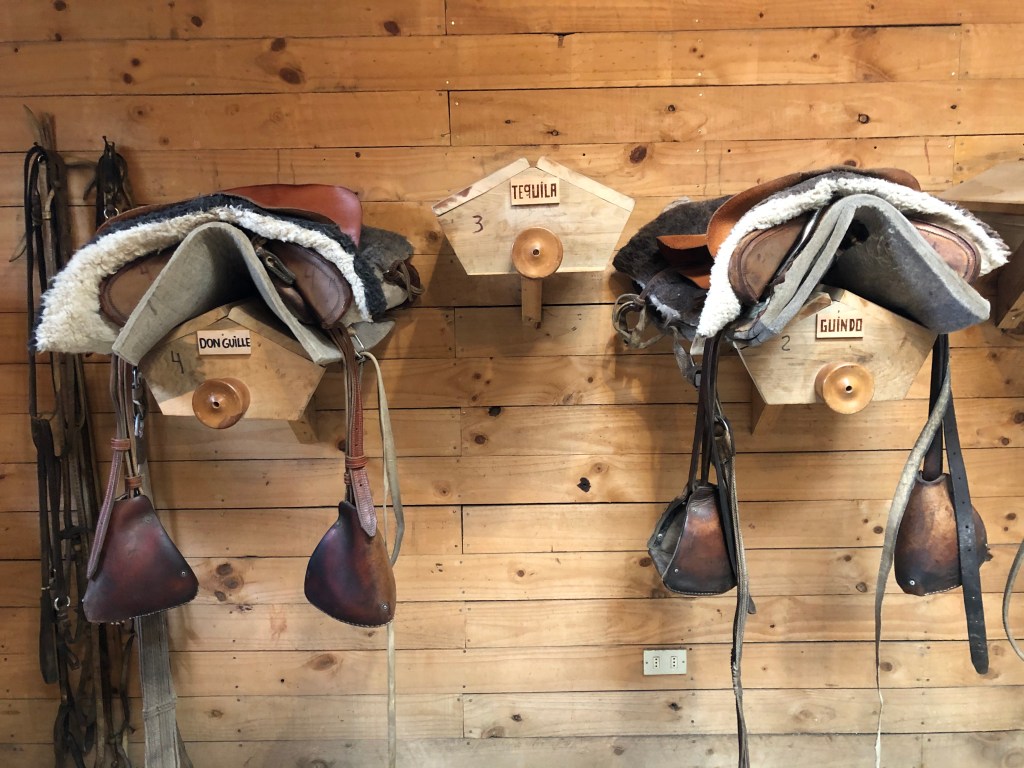
Stepping into the stable and the grandeur just extended. Clean wooden stables with each horse’s name carved into the door, a huge tack room with personalised saddle and bridle racks and a wide hallway down the middle to get tacked up at. I’ve mentioned this before but I always felt guilty going on horse rides on holiday, they felt a bit gimmicky to me but this was a big step up. Mum and I expressed that we ride our own horses at home and wanted to step above and beyond a plodding trail ride. I was matched with my steed Don Guille, who I affectionately referred to as Donkey, and saddled him up in an English saddle which is what I’m used to. Mum rode in a stock saddle but you also had the option to test a gaucho saddle which is fairly similar to a stock saddle but even deeper.
Doing a bit of translating work and Don Guille roughly means Mr Pompous!Stable envy
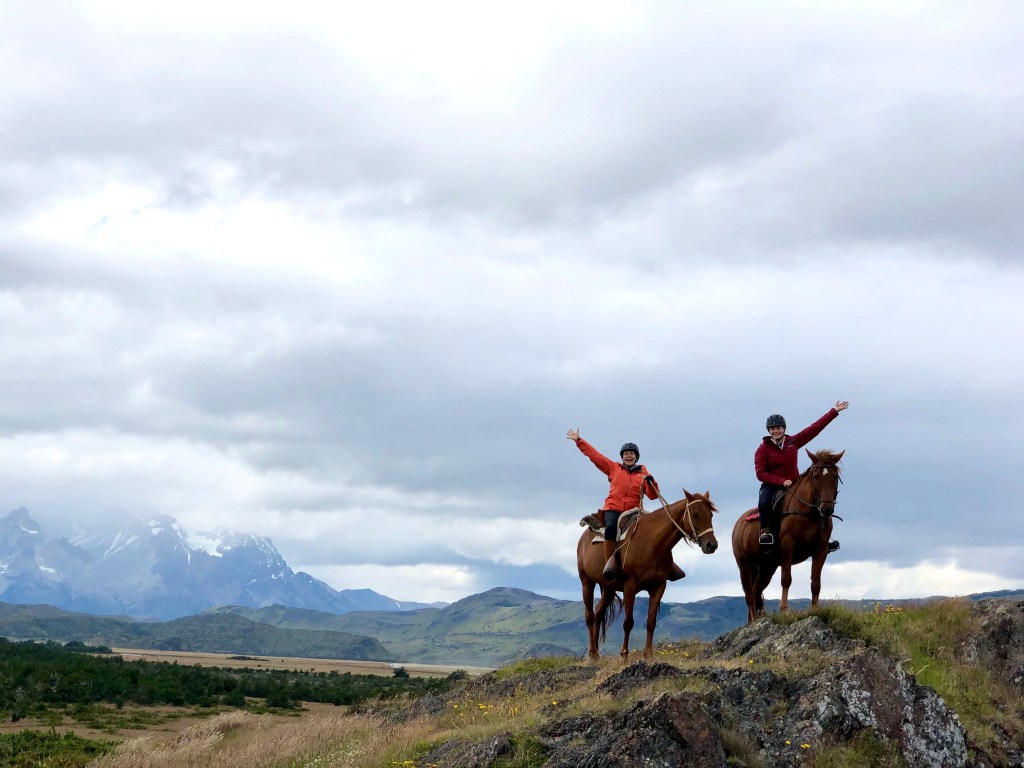
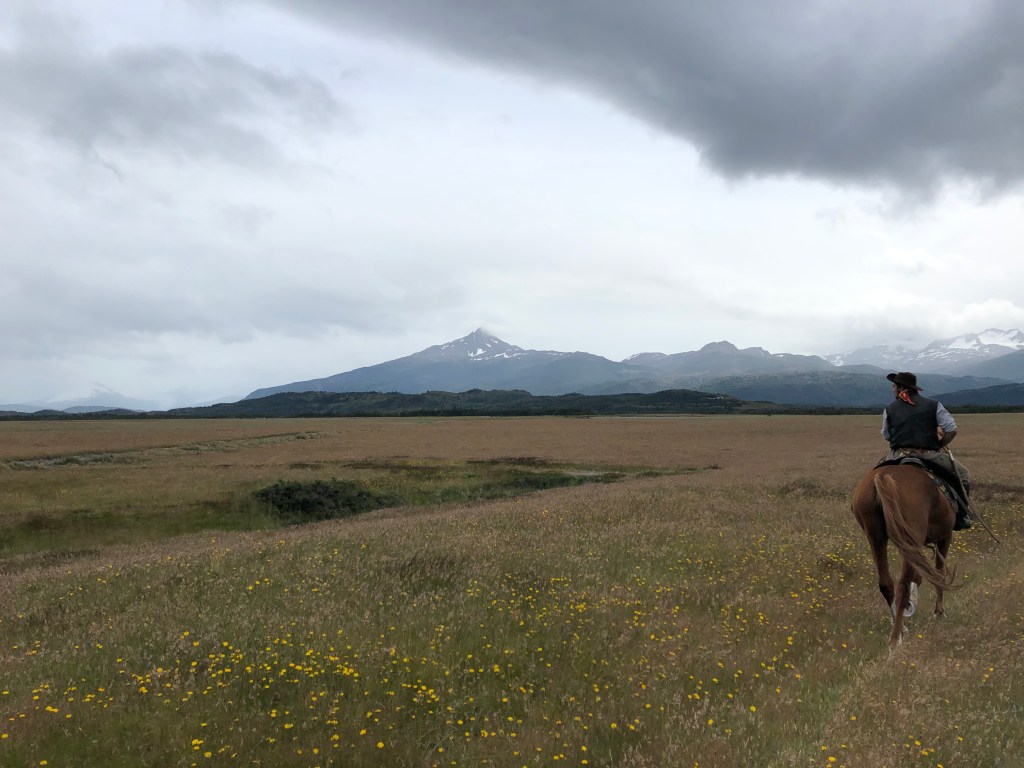
We got going and thankfully had another staff member from Explora join us to act as the translator to our gaucho. My little donkey was fairly quiet but once he picked up on the fact that I had a bit of experience under my belt he perked up quite a bit. Soon we were cantering through orchards, down roads and along narrow winding trails. But then we reached the pampas and that’s where the fun really kicked off. It was like a movie scene, with a little giddyup Donkey was off and galloping across the land with the grass brushing past my stirrups. Occasionally we’d cross a stream or come close to the road and wave at the vans going past. Our gaucho had this beautiful horse, a palomino with four big white socks and a blaze. I suspect she was pretty young because she was always chomping at the bit ready to run. It was a completely different experience gazing out across the snowy peaks as the mist came in and the sun started to set. We moved past the herd of horses belonging to the local village with many of them walking up to meet the muzzles of our ponies. Towards the end we summited a steep hill and took the obligatory photos of our steeds at the edge of the expanse.
Mum and I grinning ear to ear at the lookout
When we arrived back at the stables the horses were turned out to a small paddock and we were brought into the kitchen. The gauchos were brewing traditional mate tea (pronounced ma-teh) and handing a few gourds around the room. This was something I hadn’t ticked off my bucket list yet and I’m always keen to immerse myself in real local food when I’m overseas. Before I could take a sip I was told that I needed to understand the strict rules of how to drink it properly:
Never touch or move the bombilla (metal straw)
Always pass the gourd back to the person who served it to you, never to the person next to you
When you have had enough to drink or finish your mate, say thank you to your server
Never complain about the mate being too hot or cold or too bitter and never ask to add sugar
Breaking these rules is a huge no no. Mate is a huge part of gaucho culture but also the Chilean and Argentinean way of life. It’s very common to see families or groups of friends sharing mate in the park in the afternoon or local markets selling freshly carved gourds. Of course the souvenir shops are full of them too but I never found the courage to buy one because Australian border security is so tight and I’m not the biggest tea drinker in the first place. I think mate tasted a lot like chaff in hot water but it wasn’t completely unbearable. I think the social aspect of it is the most appealing part. Here we got to talk to half a dozen gauchos and a few other riders from Explora as well as witness the stable cat perform his signature trick: jumping through people’s arms. The stable is operated by a top breeder and has won many trophies for endurance races. But what was most alarming about the shelf they stowed their awards on was that someone’s urn was placed in the centre. It belonged to a life-long Explora and horse riding enthusiast from America who would fly over and spend a couple weeks every year at the lodge riding the same horse. In his will he wrote that he wanted his ashes to be scattered at one of the lookouts here. I think that’s the greatest testimony to the power and beauty of Patagonia and the community at Explora and their stable.
The stable cat’s favourite spot
We enjoyed our last dinner that night – no pumas – and regretfully packed our bags. That’s always the tricky thing with holidays, you settle in to a beautiful place and its hard to grasp the fact that you’re probably never going to be there again. But sometimes you’re also moving onto something exceptionally special and we were certainly heading down that track. So keep an eye out, follow this blog or subscribe to get email updates so you’re the first person to hear about our final days at the edge of the world before we leap off to Antarctica! Of course, you can always catch a sneakpeak by heading over to Instagram.
OK, I’m back to settle a few rumours. No, I did not fall overboard. No, I was not kidnapped by penguins neither did I stow away on the boat to extend my holiday of a lifetime. I did not get lost as this website suggests. In fact, I’m safely back in Australia and ready to grace this blog with the beauty of Antarctica. If you’ve been tuning into Instagram then consider yourself lucky because that’s just a sneakpeak of what’s to come in this next instalment of Gab Gets Lost.
So let the news travel along the grapevine today that a fresh post will be up in the morning. There’s a few days worth of exploring to mention before I get stuck into Antarctica but they contain just as much action. My intention when I launched GGL was to provide a day-by-day blow but I think it’ll be more informative to centre Antarctica’s post on a specific element. Our days often followed a similar schedule (which I’ll be outlining soon!) so expect posts that wholly focus on crossing the Drake Passage, our life onboard the Greg Mortimer, our kayaking trips, penguin colonies and exploring Deception Island amongst many more.
To say that our time in Antarctica was spectacular really is an understatement. It’s a tricky landscape to describe and I really couldn’t compare it to anywhere I’d travelled to before. You might be inclined to use words like ‘blue’, ‘icy’ and ‘cold’ but that doesn’t get to the heart of it so I’ll let the pictures do a fair amount of talking here!
There’s a certain irony about breathing some life back into a travel blog while most of the world is tucked inside their homes but if you’re looking to do some vicarious exploring or have been anticipating the grand finale of this trip then strap yourself in for the next couple of weeks!
Here’s a hint at what’s to come …
Horse Riding with Gauchos in Patagonia
The Wild World of El Calafate
Having a Light Dinner in Ushuaia
Heading to the End of the World
Kayaking in Antarctica
Many, Many Penguins
Seals, Whales, Krill and Other Wildlife
Some Spectacular Scenery
And How We Made Our Way Home
First blog post goes live tomorrow so if you’re looking for a fantastic way to kickstart your Monday or add a little flare to your self isolation then be sure to follow this blog and subscribe to email updates!
I’ll briefly interrupt my usual string of exciting posts and recaps to deliver a quick public service announcement. If you’ve been following my travels on Instagram then you’ll notice that there’s a few days leg between the destinations I’m writing about and where I actually am (I suspected that might be the case before I even left Australia).
Right now I’m sitting in a coffee shop in Ushuaia, accurately referred to as the end of the world. I’m sipping on a coffee and eating a meringue in the shape of a penguin – it seemed appropriate – trying to write up a few posts. In a few hours my family and I will be boarding our boat to Antarctica, the Greg Mortimer with Aurora Expeditions.
Coffee shop writing before I board the boat!
It’s going to be an awesome ten days or so traversing the unpredictable Drake Passage, kayaking around icebergs and visiting penguin colonies. Unfortunately because penguins, whales and seals haven’t installed their own Wifi on the ice and humans haven’t been brave enough to establish fully functioning towns there, I’m not too certain if I’ll be able to update Gab Gets Lost at all. The website may go into a bit of a dormant period but don’t fret, I probably haven’t fallen overboard or been abducted into the depths of the penguin colonies. I’ll write them up all the same and publish them as soon as I’m back!
Wish me well and keep an eye out for some fantastic photos, I can’t wait to be there!
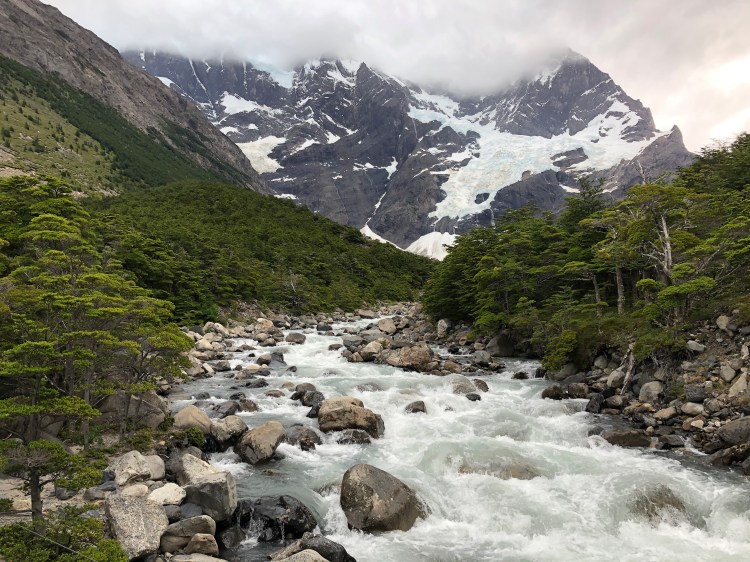
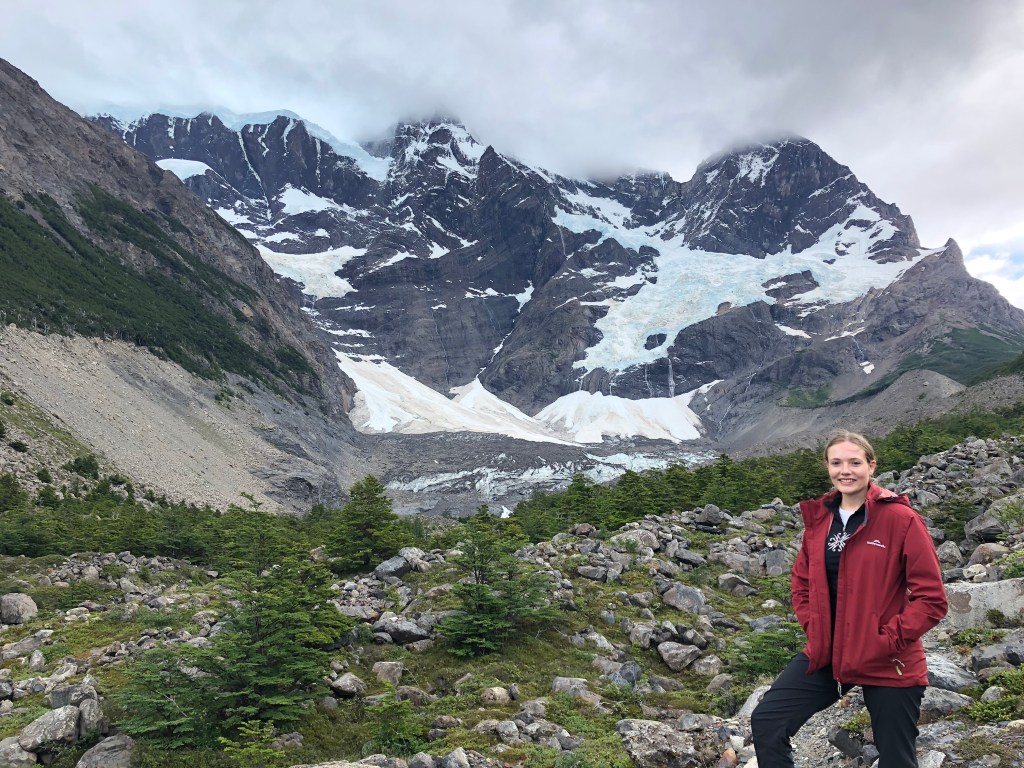
Today we left Explora armed with trekking poles and the mindset that a full day hike would help keep the holiday kilos at bay. We’d committed ourselves to a full day adventure that would take us along twenty kilometres of the famous W trek to the French Valley. Our backpacks were heavy with wet weather gear, it was 7:30AM and we were ready to hike through the mountains to the base of the glaciers.
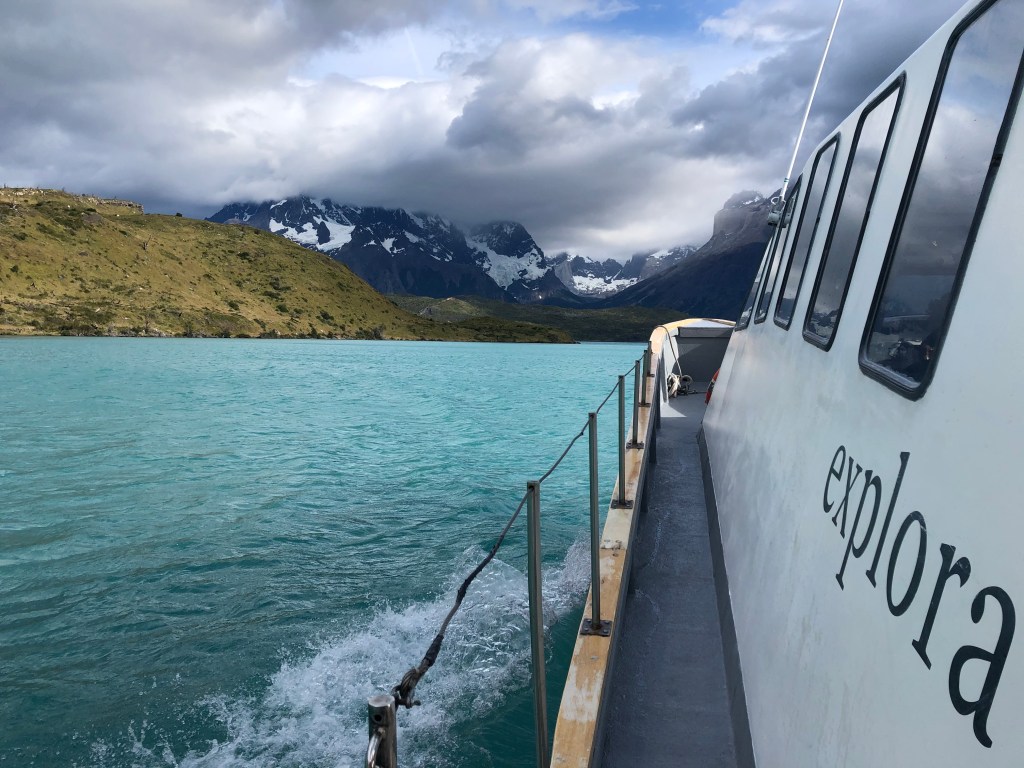
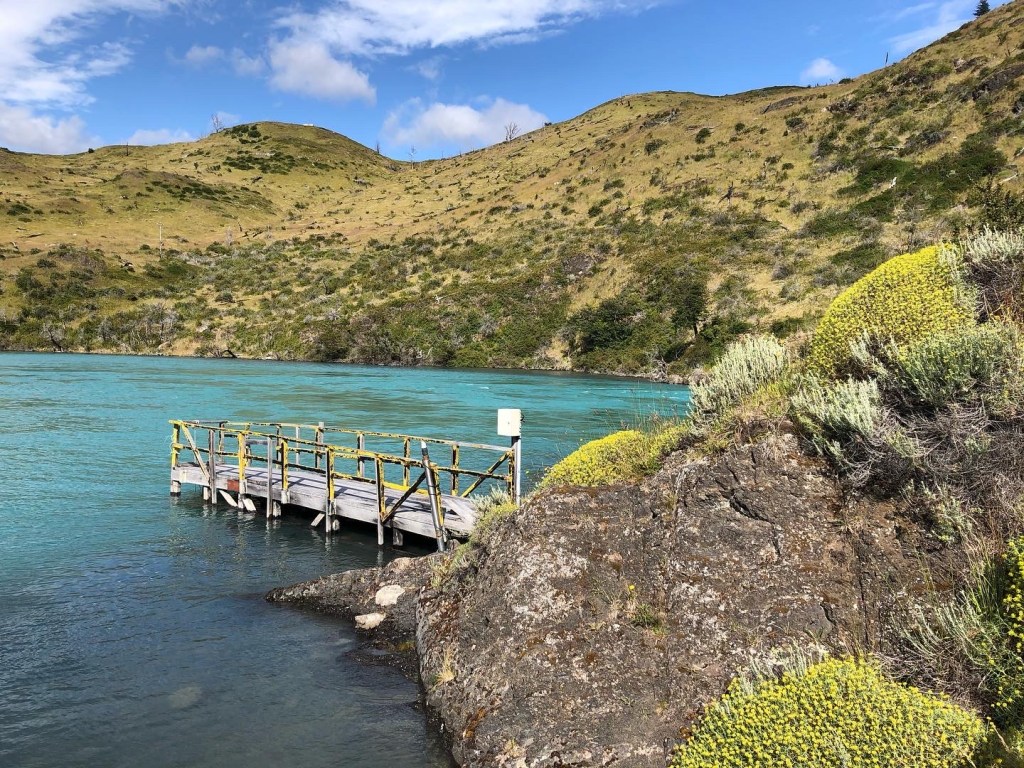
The first leg of our journey was crossing Lake Pehoé. Anyone would’ve thought that this would be a beautiful trip zipping over the bright blue water and marvelling at the fast approach of the Paine Grande – at least we did. But we forgot about Patagonia’s strong winds and the freezing melted glacial water. We all stepped outside in our little orange life jackets to grab some photos and were confronted by the elements. Needless to say we were back inside before the swell grew much larger.
A chilly start to a day of hiking!
When we pulled into the small wooden jetty we were lucky to be met by two caracaras, a type of falcon. This pair had grown so used to tourists that they relied on food left by them instead of hunting for themselves. Despite the fact that it was early in the morning, there were a couple of large hiking groups arriving at the same time we were. The W trek is a huge draw card for many Patagonian tourists so we expected it to be a lot busier than most of the walks we had done at Explora. But the public boat only lands twice in the morning so as long as you give these groups a few minutes head start then it will feel a lot more like you have the track to yourself.
The hike to the French Valley can be broken into a few different segments. The first of these was through the hills that sheltered Lake Pehoé. We wound our way through plenty of valleys and got some great views of the turquoise water as well as non-glacial lakes that were a deeper blue.
Our guide Hugo at the first leg of our climb
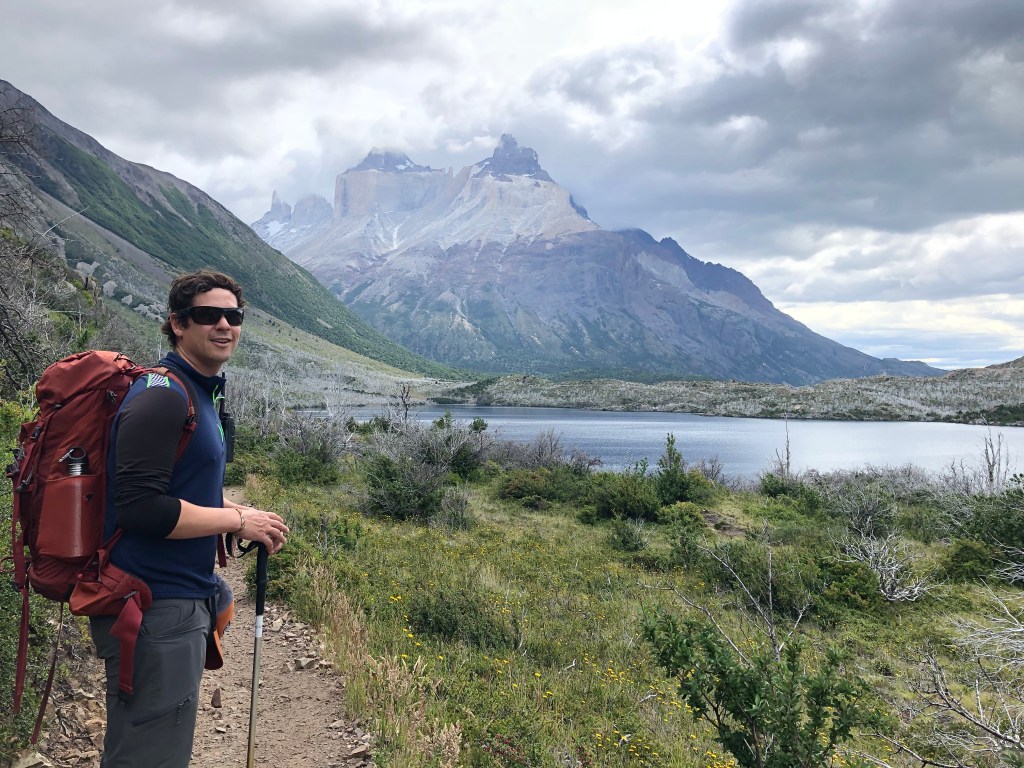
Then we arrived at what should have been a lenga forest. Nine years ago a huge fire tore through Torres del Paine National Park. A tourist who was trying to burn his toilet paper accidentally let it fly out of his hand. Patagonia’s dry summers and signature winds made for the perfect storm: almost eighteen thousand hectares (seven per cent of the national park) were burnt. Fireballs were jumping the lakes and starting new fronts. The mountainous landscape made it difficult for fire crews to get involved, leaving the fire to burn out of control for several weeks. It did irreversible damage to the area as many of the plants and trees here take two hundred years to reach maturity. It reminded me a lot of Australia, a very different but equally important cautionary tale of the need to protect our natural world. The white skeletons of the trees were beautiful in parts but I would have loved to have seen the forest.
Indigo wandering through the skeleton forest of lenga trees
We started to climb again and began to regret the number of layers we’d packed (again). It was a glorious clear day, the wind was virtually non existent, the sun was shining and the birds were chirping. We picked plenty of Calafate berries, as well as chowra berries (Diddle-Dee berry) and blackcurrants. There was a couple of small waterfalls we stopped at to fill our drink bottles up with glacial water which was pretty fun. It was certainly refreshing while we were sweltering in our thermals and polar fleece.
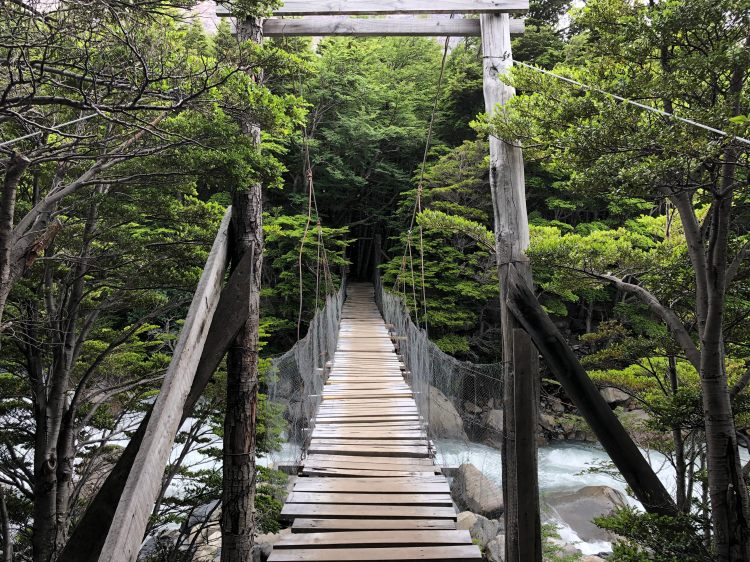
Before we reached the Italian Camp (Campamento Italiano) we had to brave a pretty simple wooden bridge. Rocks, pieces of wire and some shifty planks of wood kept us from falling into the rapids and being carried down the mountain on a stretcher. Only one person was allowed to cross at one time and once you reached the middle the whole bridge started to bounce. I imagine it felt fairly similar to walking on the moon.
So with an extra spring in our step we arrived at the Italian Camp. It was a simple affair, with plenty of tents set up in amongst the trees. It’d been drilled into me at every school camp that we should never erect camp near a tree in case it falls on us. Every tent here was at risk from at least a dozen long trunks – you were probably in greater danger when you were asleep than when you were actually hiking! The camp had been moved several times over the years due to flooding risks but it was settled in the forest.
Moving past the cold damp tents at the Italian Camp, we hiked for an extra half an hour and arrived at a beautiful lookout just in time for lunch. We had a front row seat gazing at the mountains and many of the glaciers that slowly transformed the landscape. Every now and then we could see a huge sheet of ice carving off the glacier and tumbling down to the valley. The crashing boom it made rumbled all around us. We’d packed a canister of cold pasta with us for lunch and were pretty content with that. But little did we know that Hugo had been carrying a whole smorgasbord in his pack. He pulled out fresh smoked salmon, soup, bread, sweet nutty slices and a selection of teas and coffee! It was extraordinary – very unexpected but delicious all the same. It probably extended our lunch a little bit but with a view like this we weren’t in the position to complain!
Eating smoked salmon and watching glacial avalanches over lunch
By the end of lunch the weather began to shift again, giving us a smattering of ‘romantic rain’, as Hugo put it. It was enough to convince us to pack up camp and head back down the mountain. We collected plenty more berries, glacial water and spotted a pygmy owl which is probably a third of the size of a regular owl in Australia. The cool change meant our photos looked completely different on the return trip, definitely a reminder of the four-seasons-in-a-day scenario. We met up with another group from Explora who’d hiked a different trail that day and we chatted about our adventures on the boat trip back (inside of course).
We had a puma sighting free dinner and organised the events for our last day at the lodge. Look out for the final instalment recapping Explora or peruse the photos I’ve already released of the day’s events here! I’ll be bringing plenty of information about the Indigenous peoples of the area and my experience galloping across the pampas on a wild little Argentinean pony.
We went to breakfast that morning still buzzing with the excitement of seeing a puma the night before. Luckily Franchita the deer had survived but she’d clearly had a sleepless night and dozed in the same spot for the rest of our stay. As we suspected, the puma was nowhere to be seen. This was a blessing and a curse because they’re such beautiful animals but we would also be spending most of the day walking in their territory. For more photos from our first day in Torres del Paine National Park, click here.
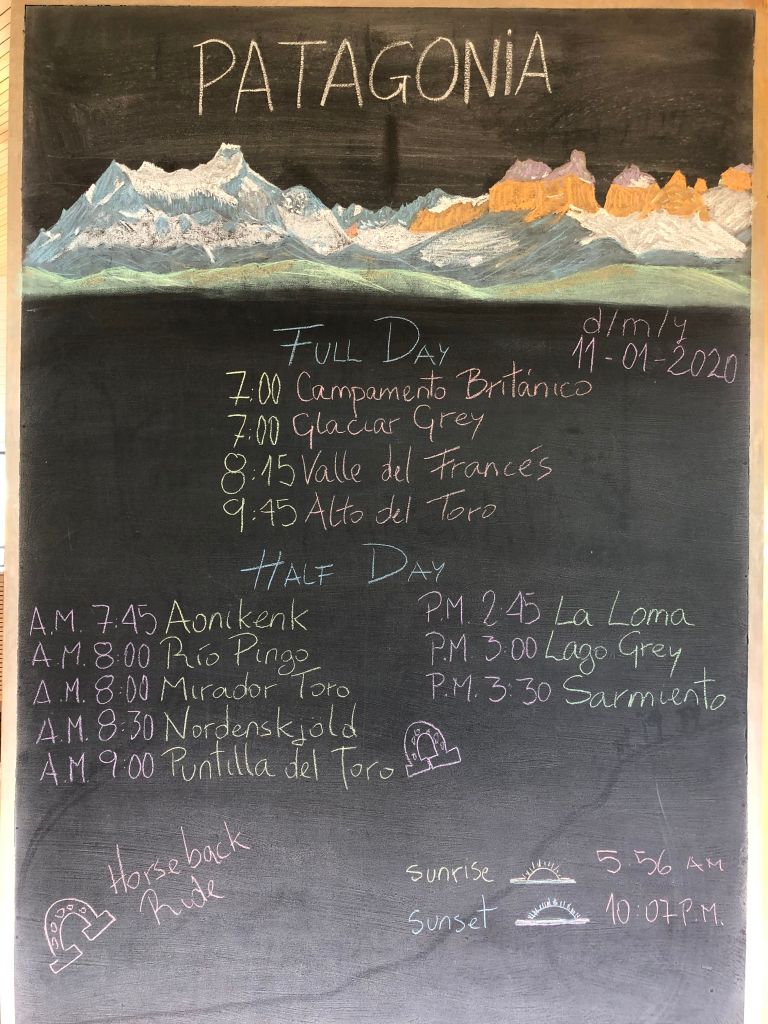
Explora’s approach to trekking is personalised to each individual and group but there’s also plenty of opportunities to meet fellow adventurers. At the end of each day one guide will sit down with every group and plan their hikes for the following day. They might be half day trips, full day treks, horseback rides or boat or car tours. Explora offers over forty seperate adventures – which is pretty overwhelming – but we had a quick look at them all before we arrived. The guides were great at suggesting hikes in areas we wanted to visit, that were great for wildlife and also matched our fitness levels. We’d already been on holiday for ten days so we weren’t quite prepared to run a marathon or summit Everest. At the start of the day a huge blackboard is hung in the central meeting room with the departure times for everyone’s activities. Some left as early as 7AM – we generally avoided those ones! It wasn’t uncommon to trek with another family or couple but the groups were always smaller than ten people. This kind of set up gave us the opportunity to meet other people who were also keen to explore the bottom of the world.
The daily activity blackboard – no excuses to be late!
Because the national park is so large, you have to jump in a van or boat to reach your starting point. This is when it was handy to be staying at Explora (the only hotel inside the park) because that cut about two hours of travelling we’d need to be doing every day. It was just the same line of thinking from when we were staying at Iguazú. Explora also has its own boat to take you across the lake to the W treks which is fantastic because the public boat only stops by a couple of times a day.
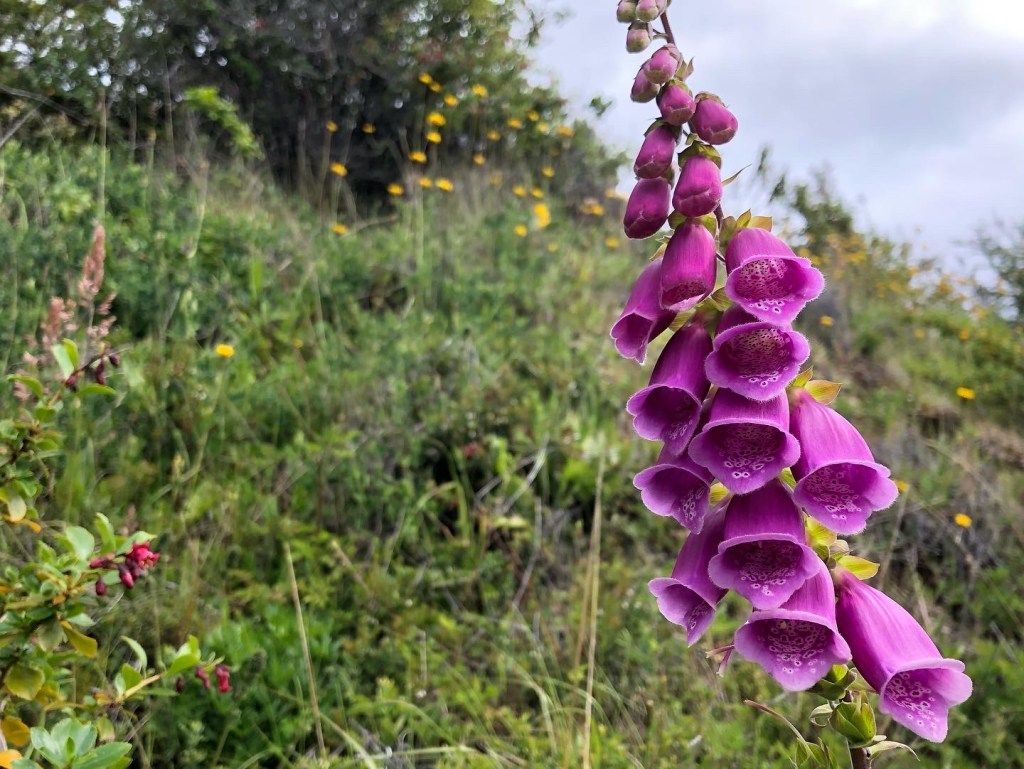
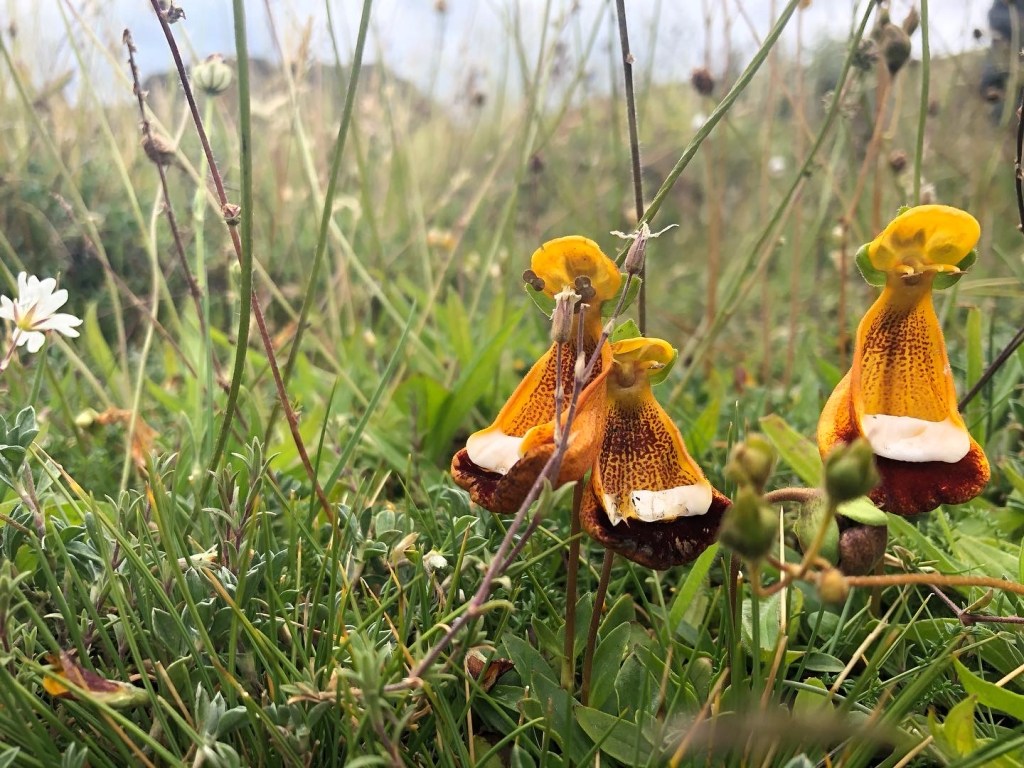
We slept in and met our guide Dani at 8AM to visit a lookout close by. It was only a short hike but the scenery is so beautiful here its hard to get bored. Just like EOLO, Lake Pehoé is fed by glaciers and its clay sediment gives the water a vibrant turquoise colour. We could also see tall snow-capped mountains at EOLO, but the real step up when we reached Explora was that we had been placed right in the middle of the action. The lake was right outside, the Paine Grande is a short boat trip away and there was thick luscious vegetation everywhere. At least ten different species of orchids bloom here as well as other pretty little wildflowers.
Flowers of Patagonia: Foxgloves, orchids and sweet baby peas
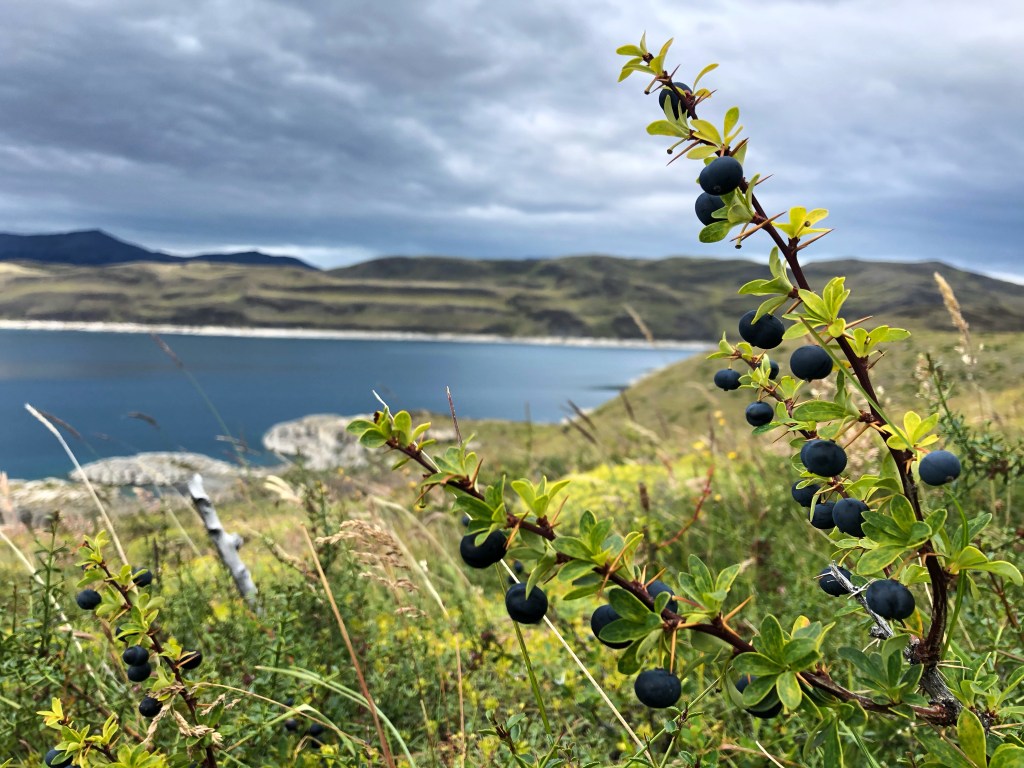
Dani showed us a few different wild berries that we all got to eat. One in particular was the Calafate berry, a slightly smaller version of a blueberry but with plenty of seeds. It’s such an icon that it’s been dubbed the ‘dulce de calafate’, a take on dulce de leche and is made into jams and packed into pastries. Legend has it that once you eat the Calafate berry you will return to Patagonia – sounds like the perfect superstition to me! They were pretty bitter-sweet but it was fun to be able to pick a few as we walked along. I can’t say that they filled me up but I felt a bit like Bear Grylls being resourceful in the world’s harshest places.
The legendary Calafate berry
That afternoon we set off on a longer hike around Lake Sarmiento which was a much deeper blue. Patagonia is often said to experience four seasons in a day. I’m not sure what basis this has in science but there’s quite a bit of truth behind it. We’d been lucky with beautiful clear blue skies earlier but today had become progressively cloudy, windy, dark and stormy. We always felt a bit discombobulated because the guides suggested we shouldn’t follow the weather reports too closely. So our backpacks were stuffed with thermals, polar fleeces, puffer jackets (Kathmandu of course), wind breakers, waterproof pants, hiking pants, gloves, neck warmers, beanies and caps … it was a lot and in the end the weather was fairly warm so we were constantly shedding layers until the cool wind picked up again.
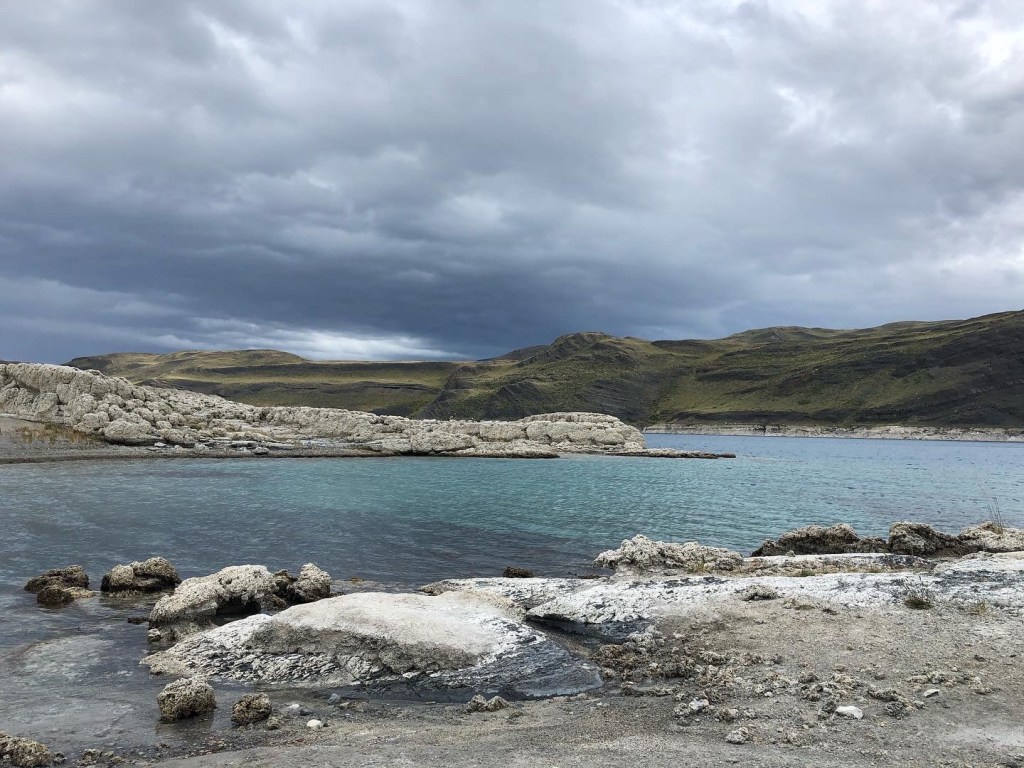
We arrived at Lake Sarmiento and Dani helped explain the odd white mounds surrounding the water. Cyanobacteria in the water helps create calcium carbonate (the same structure that coral reefs like the Great Barrier Reef are made from) and as the water evaporates and the lake shrinks, a growing white ring is revealed. These lakes can be hundreds of metres deep so when the water recedes the calcium carbonate looks like a maze. This is another dangerous scenario for a girl without a sense of direction. I was also told that pumas like to hide their cubs in the caves here and the carcasses of their prey. This was definitely an incentive to make sure I stuck with the group! Somehow I made it out alive and I was almost happy to admit that I didn’t see a puma because I don’t like my chances against them!
Stromatolites at Lake Sarmiento
There’s a secret internal challenge at Explora and that is to run off the jetty and jump into a freezing lake full of glacial water. Not in the least bit competitive, I headed straight down to the water as soon as we returned from our hike. A group before us had gone in four times so the only logical move would be for me to jump in five. The water was five degrees cold and it really smacked the breath out of you as soon as you hit it. The ordeal was all over in a few minutes but I certainly needed the half hour in the spa afterwards with a glass of champagne to recuperate.
A trial run for the polar plunge in Antarctica
That evening we planned a full day hike for the following day. A different guide would take us up to an area in the Paine Grande called the French Valley (actually named after a Belgian). We were looking forward to having lunch out in the wild and hiking part of the famous W trek, certainly a bucket list item. Look out for my next post as I cover another spectacular day in Patagonia!
We were still in awe of the magic of Patagonia, from the sweeping pampas to the lakes, mountains and wildlife but it was time to pack up camp and move on. The majority of Day Nine was spent in a van crossing the border into Chile but there was never a moment of boredom. Here’s how we teleported from the grassy plains of Argentina to the foot of the Andes’ glaciers in the Torres Del Paine National Park. Not sure which location is better? Check out the Instagram!
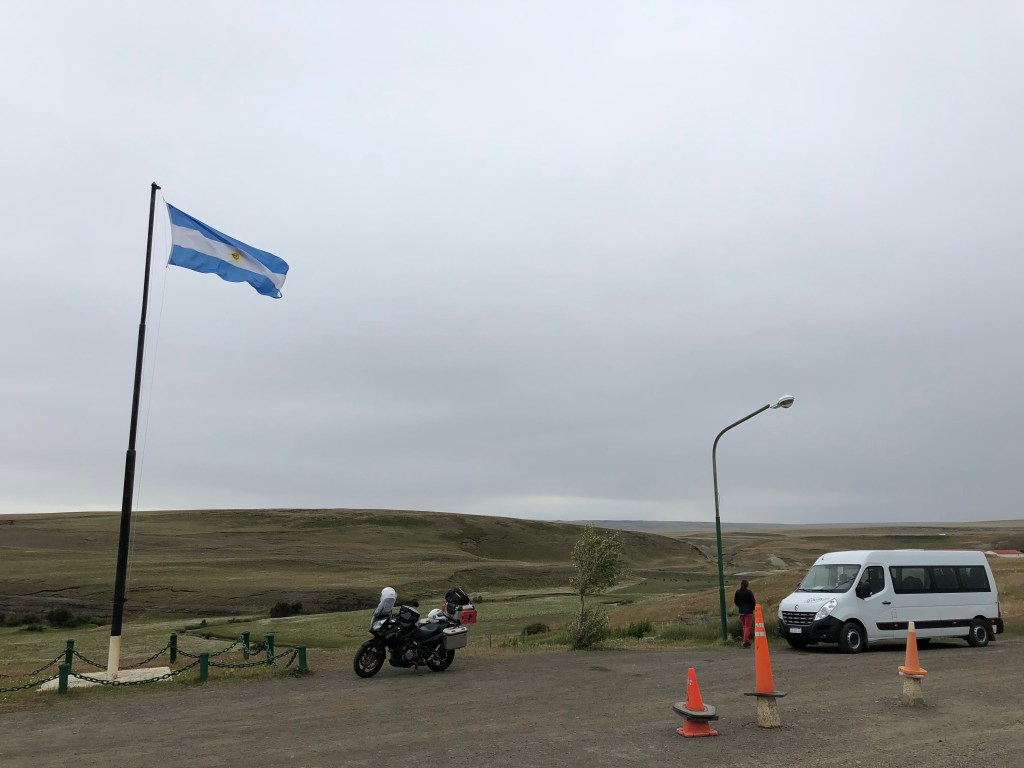
It was very early in the morning on Day Nine of our trip when we loaded ourselves into the van that would take us to our lodge in Chilean Patagonia. We were bleary eyed and ready for a quick power nap but little did we know that our driver did not speak any English. We did not speak any Spanish (my Duolingo is certainly not sufficient to hold a conversation). This established a bit of a dilemma from the get-go and transformed our trip into a game of charades with some experimental Spanglish. We were all patient with each other and found the situation hilarious but it did become a bit frustrating when we reached the borders.
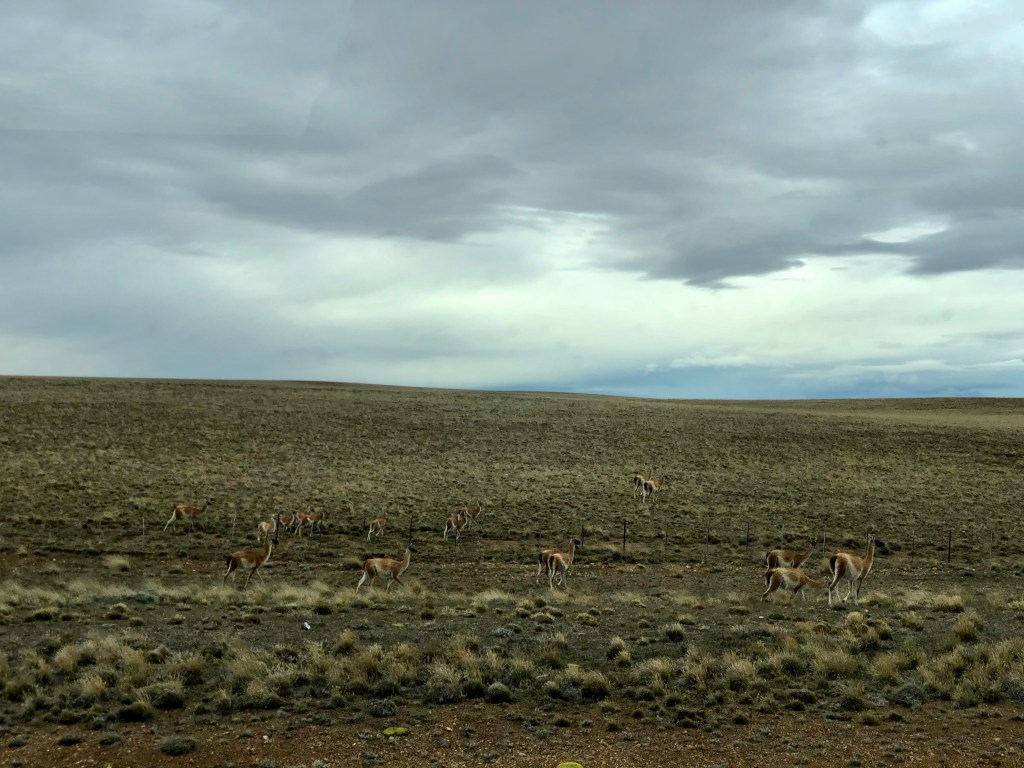
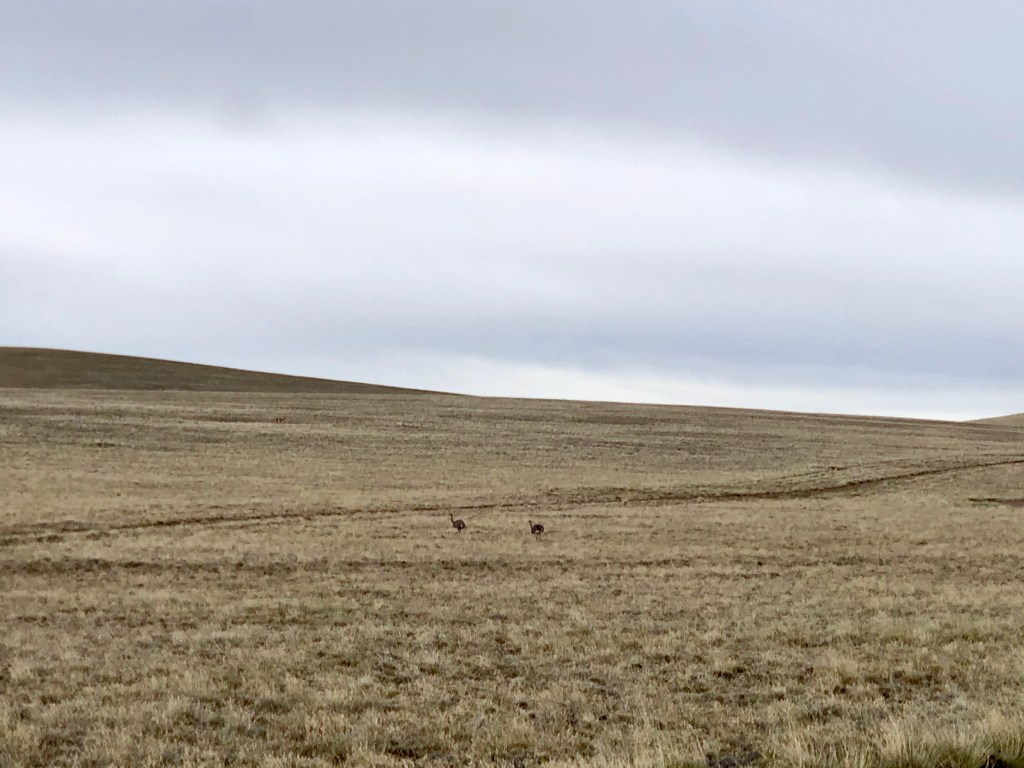
Guanacos and rheas (from afar) – better photos to come!
On the way we saw plenty of guanacos on the side of the road, completely ambivalent to the vehicles rushing past them. We managed to persuade our driver to pull over for a quick photo of our first sighting but we saw several dozen over the course of the drive that they became part of the landscape. South America’s flightless bird, the rhea, was also in flocks of about five but were far less common. They’re a similar and texture to an emu but about half the size. They were often grazing in the paddocks of estancias near the guanacos as both of them could jump the fences. We were also lucky to see a few condors soaring through the skies and realised these guys seriously dwarfed just about any eagle or hawk you could imagine. In fact, they rarely flap their wings when they fly as it requires too much energy to lift their bodies any higher.
Our van bumped over the dirt road fairly viciously however no one suffered any fractured bones. Road rules were even more relaxed here than Buenos Aires and we were lucky to stick to our side of the road for more than half the trip. In our driver’s defence however, the road was littered with potholes and one small error would send you careering over the edge of the cliff.
Before we reached the border we pulled over for a quick coffee in Esperanza – certainly not in the same league as Australian coffee. This place was smack bang in the middle of the pampas with no other buildings in sight. It was a tiny town with a petrol station, cafe, small hotel and a few shipping containers. I’m not certain where the containers came from but they added a bit of character to the place. There was a small yellow caravan blasting Jonny Cash and Bill Halley and His Comets from the parking lot across from the petrol station. There was a line of bikies outside it and it appeared to serve empanadas, coffee, mate and other snacks. Some gauchos had left their steeds behind and headed in for a snack – dressed head to toe in traditional chaps, leather and campero hats . It started to rain so we pressed on – unfortunately I didn’t take any photos of this crazy joint.
As complicated as international borders get in South America
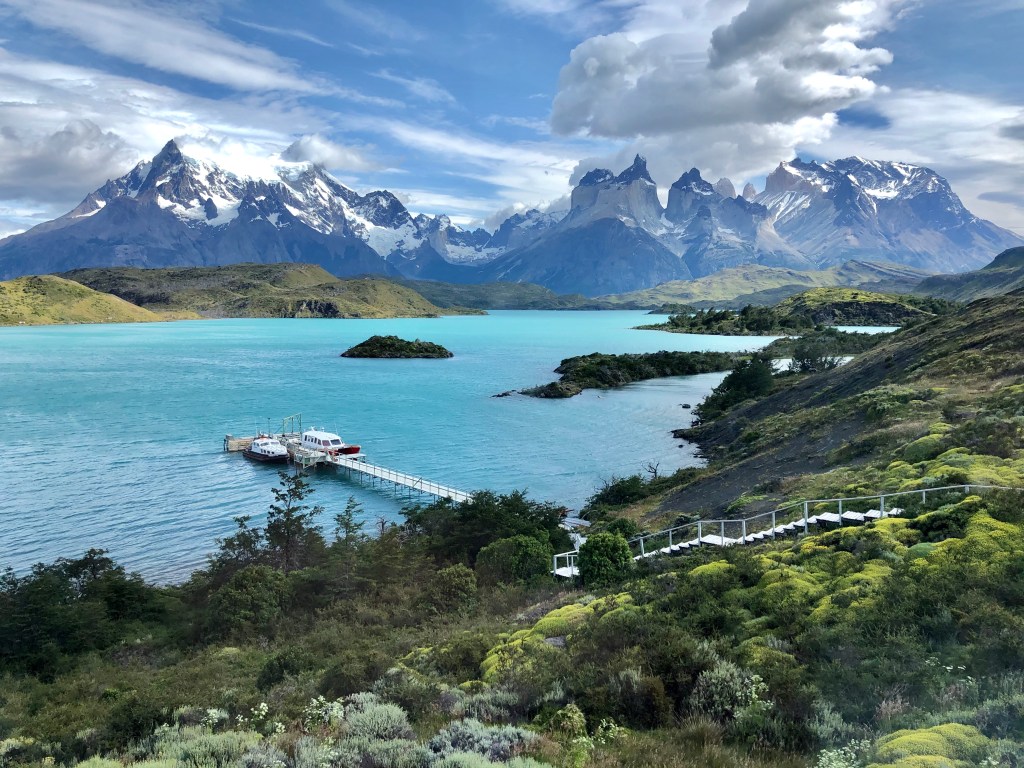
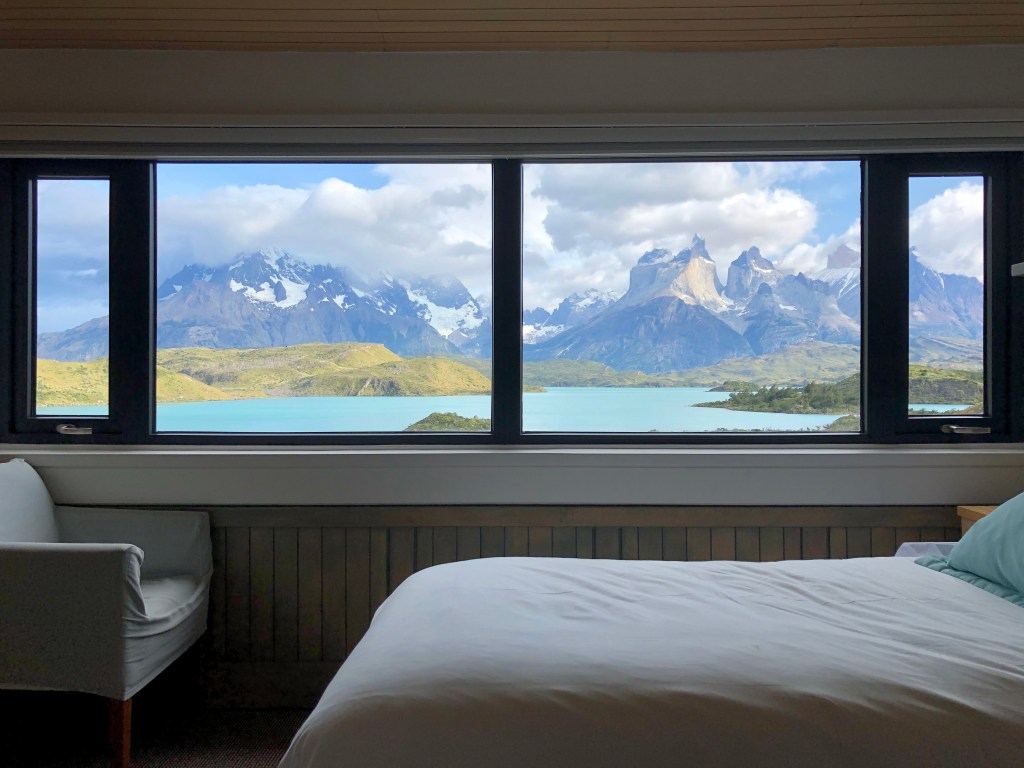
A few hours later we had arrived at our new lodge, Explora Patagonia. This was by the far the most beautiful place we had stayed. The architecture was fairly simple and allowed the long timber boards to follow the shape of a ship. What really exceeded our expectation was the landscape. We had crystal clear views of the Cordillera Paine and Lake Pehoé. Similar to our experience in the Argentinean half, the lakes were fed by glaciers that gave them a vibrant blue colour. But our eight hour trip had definitely transported us to a new landscape. The pampas did exist here but were typically smaller and included plenty of little hills and shrubby bushes. It was significantly greener here but I was quickly overwhelmed by the quantity of plant life here. I felt like I was walking through the fields in the Sound of Music or the meadows in Bambi. Wildflowers, orchids, grasses, trees, mosses, berries – within a square metre you could always spot a handful of these plants. With the purple, snow-capped mountains and glaciers in the background it was an absolute dream to photograph. In fact you really didn’t need any tactic at all, just point and shoot and you’ve captured something that would qualify as an Apple screensaver.
Postcard views from Explora
That afternoon we relaxed in our room, overwhelmed by all of this extraordinary beauty. We valiantly braced ourselves against the wind and followed a few short boardwalks close to the hotel to some lookouts. Explora’s ‘pet’ deer Franchita was grazing close by and little sparrows flittered here and there. It really did feel like life couldn’t be better right now. I had basically transformed myself into Snow White.
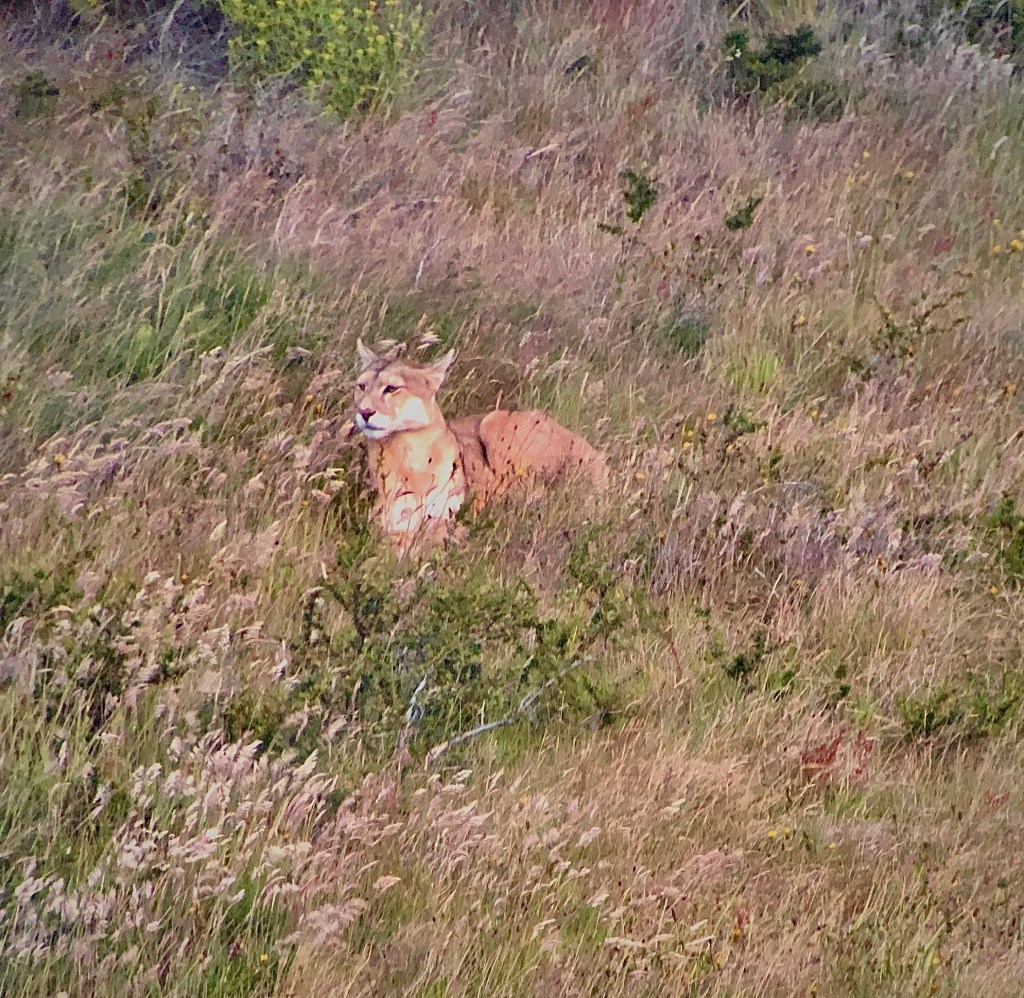
At dinner that night we were patiently waiting for dessert when one of the guides sprinted down the hall and raced outside with the telescope. We seemed to be the only table that picked up on this but we weren’t exactly going to be sly about it. We jumped up from our seats and ran out of the restaurant – the waiters thought we were exceptionally odd because the meals were all included! But it was all for a good cause, perhaps the greatest cause of any Patagonian adventurer … a puma! Right outside Explora a puma sat twitching its tale, perturbed we’d spoiled its hiding spot. It had been stalking Franchita the deer but had given up and let us admire it for a while before it slunk off. It was freezing outside but no one was game enough to leave and grab a jacket. I did manage to take some photos through the telescope but none of particularly high quality so I turned my attention to really just watching this animal. We all hoped Franchita would make it through the night and that the puma would at least return to see us the following day. It’s fairly rare to spot one, they blend in particularly well and there are only about fifty in the National Park. We spoke to the manager and she admitted that she’d been here for five months and this was her first puma.
We saw a puma on our first night in Chilean Patagonia – I’m never going to forget that.
Our puma through the telescope, particularly tricky to photograph in the distance with low light.
We were quickly reacquainting ourselves with the adventure lifestyle but knew we needed to up the ante to really say we’d visited Patagonia. Without any second thoughts we comfortably settled on climbing a glacier, as you do. If we were abandoning the Australian summer then we needed to swing right to the other extreme: a gigantic piece of ice. This day was all about glaciers, crevasses, water and whisky – don’t believe the last bit? The proof is on Instagram! Settle in for a chilling recap of Gab Getting Lost on a glacier.
We met our guide Ignacio and set off in our car towards the boat that would deliver us to the Perito Moreno glacier. Patagonian roads are a whole seperate experience. For starters, they’re typically only one and a half cars wide which makes for some exceptionally hairy manoeuvres to dodge certain death. But somehow these tourist vans are able to miss each other by – literally – a few centimetres at speeds of 80km/hr. The dirt roads are very twisty so I was often holding my breath when we turned corners waiting for another car to come hurtling towards us. They were also quite bumpy, a bit like Patagonia’s own alarm clock that would shake the van and jostle your bones early in the morning before any activity. One side was open to the cliff which was fairly alarming because it was a very sheer drop and the vans often skidded around the corners. But if we didn’t survive this then how could we contemplate summiting a glacier? So we manned up.
The boat trip over: our driver is drinking the popular South American tea mate
We arrived at the wharf and caught glimpses of the glacier across the water while we waited for the boat. It was quite windy so everyone was wearing about four layers of clothes, beanies, neck warmers and sunglasses for the ice glare. I think I went through a whole stick of lip balm that day! Most people decided to sit inside in the warm for the half hour trip over but we spent most of our time outside on the upper deck. It was a great spot to get pictures – the wake of the boat, the water, clouds and mist, snowy mountains and one the largest glaciers I have ever seen. The Perito Moreno glacier is more than thirty kilometres long and one of almost fifty glaciers fed by the Andes. This glacial basin here in the Los Glaciares National Park is the third largest in the world after Alaska and Greenland. I’ve visited the Alaskan glaciers and I’ll admit that they’re just as impressive as these ones. Perhaps I’m just biased, I didn’t get to climb one there.
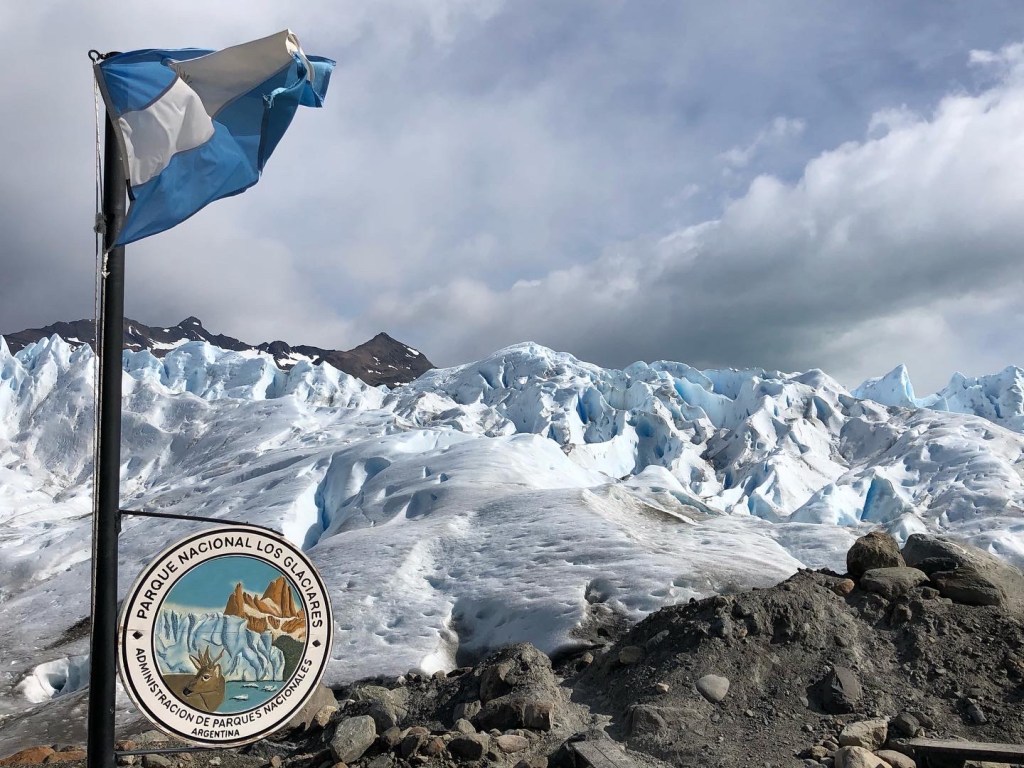
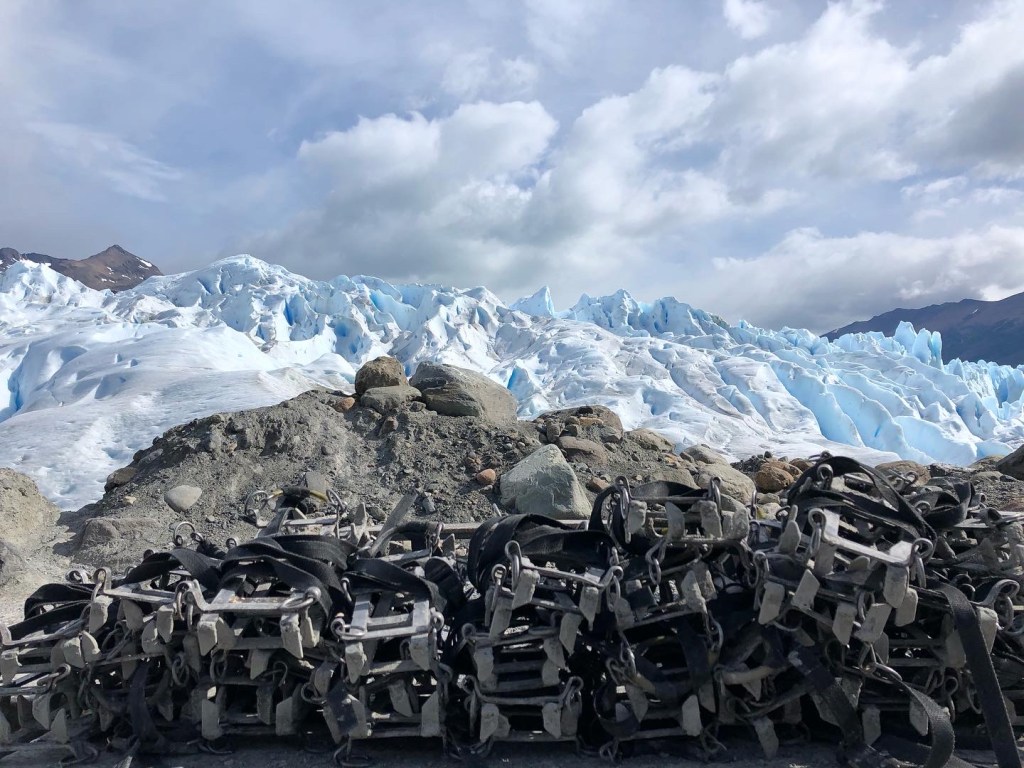
Everyone on the boat disembarked and shuffled up the mountain like Teletubbies in our bulky winter clothes. We were given a pair of crampons each, a glorified snow shoe with metal spikes that dig into the ice to prevent you from falling. These shoes were fairly simply attached to our hiking boots with a strap of synthetic material but that seemed to do the job. We were given a quick tutorial on the new walking style we’d have to adopt and off we went.
Ready, set, go for glacier summit day: Top Right: Crampons
Perito Moreno glacier moves about two metres a day, meaning new trekking paths need to be cut every two weeks as the old ones change and disappear. One guide remained at the front with an ice pick and would slash large chunks blocking our supposed path. The other remained at the back to keep an eye on the stragglers, or more often my mother who is a keen photographer. We walked for about an hour and a half and successfully tackled the steep ascents and descents of the glacier. The colours were beautiful. For anyone who has ever thought snow or ice is ‘white’, you’re largely incorrect. There were fantastic turquoise hues in the crevasses and the water that flowed through small streams. This blue is a result of snow compaction and light refraction, meaning the glacier looks to be a deeper blue at its base. These
Before we reached our summit we filled our drink bottles with melted glacial water that flowed down small streams across the ice. Our guides told us that the most reliable studies indicate that the water in our bottles had been frozen for four hundred years and had been cycling through the glacier for millions of years. It was now sitting in the stomach of an Australian.
I had been taking pictures of the amazing ice formations throughout our climb but nothing compared to the view we had at the summit. Of course there was the glowing turquoise ice, but that could have been anywhere. Only in Patagonia could you see the snow-topped mountains of the Andes, vibrant glacial-fed lakes, thick forest and the glacier itself. We could get all of this in one picture! This was a really special experience and I’m doubtful I could climb a glacier anywhere else in the world with the exceptionally little mountaineering experience I have. To top it all off, while the tourists were busy doing their thing and snapping away on their camera, our guides had magically pulled out a small table from the ice and a large bottle of whisky. They scooped up handfuls of ice from the glacier and split it across the glasses. Forget whisky on the rocks, this was whisky on the glacier! Thank goodness we only had time for one drink so everyone made it safely down! That was a really special touch and is kept a surprise for all the groups that pass through.
Celebrations at the summit – I did not get lost!
Reluctantly we stomped back onto dry land and handed over our crampons. We had a quick lunch in a log cabin there and caught the boat back over (sitting inside this time). We jumped back in the van with Ignacio and continued down the road to a series of glacial lookouts. I think was a great idea as we’d already experienced the glacier up close and now we could really understand just how expansive it is. It’s about five hundred metres tall all the way across and is constantly chasing the land. On the occasions that it does meet the shore, the pressure of the water will erode the ice to create a bridge. This bridge will only last a few days before it collapses. Unfortunately we’d arrived just in time to see the aftermath, but we did see smaller chunks of ice carving off the glacier.
What surprised me was just how much later the sound would reach us. It would be several seconds after we saw a piece hitting the water that we could hear the echoing boom, crash and splash. That was pretty interesting and it gave me a better idea of how exactly a glacier can ‘move’. There are plenty of boardwalks here and they are split across three main levels: birds eye view, eye level and base level. We walked around further to see the curve of the glacier and met our van there.
An hour later we had arrived back at EOLO and everyone had snuck in a quick power nap on the way. You do feel a bit guilty about missing out on the scenery but what can you do. We filled up on a big dinner of hare and gaucho style spit roasted lamb and re-packed our suitcases ready for the long drive to Torres del Paine National Park. I’m currently writing this a few days later and I am prepared to say that these next few posts will recap the best days of our trip so far. Stay tuned for pumas, guanaco steaks and plenty of hiking.


































 Gab Gets Lost