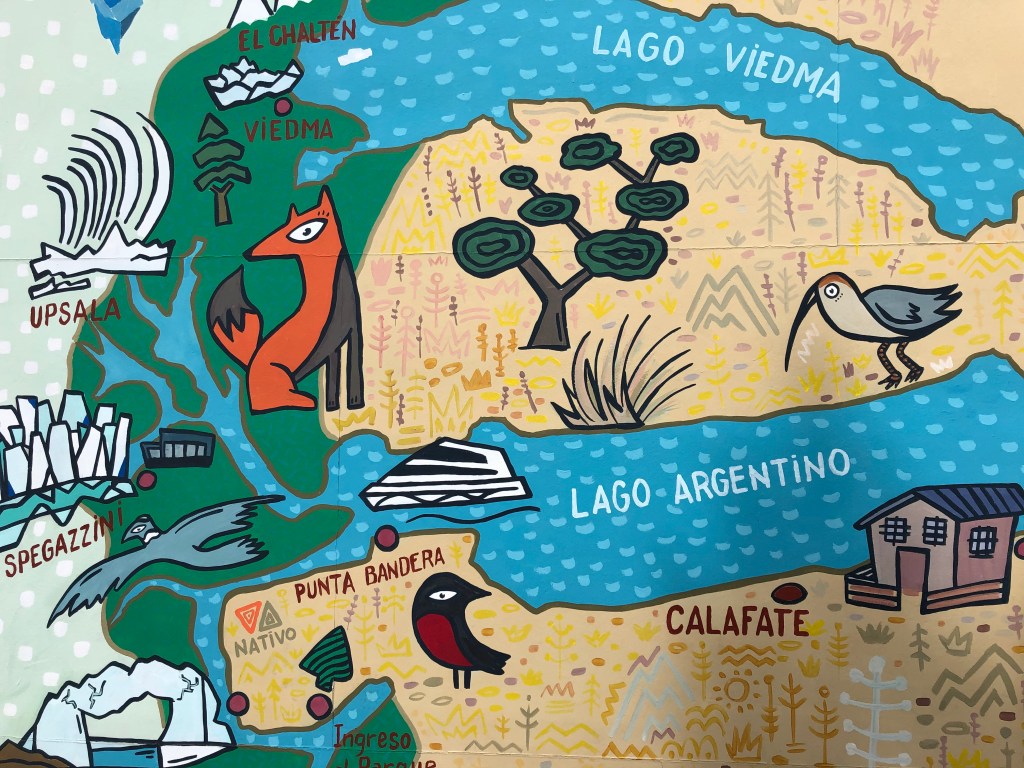
Here’s where the concrete day-by-day blow structure I’ve had running starts to dissipate. This post is going to encompass four days – brace yourselves! They were certainly busy but there was a good deal of travelling, souvenir browsing and coffee shop hopping done. If you’ve been following along on Instagram you may also recall that there was some local beer drinking too. At this point we were leaving Patagonia behind and travelling further South to Ushuaia where we’d board our boat to Antarctica. We were a little tentative about rushing our trip there as some South American airlines aren’t all that reliable and the weather can change fairly quickly. Nevertheless, it actually worked in our favour because we got an extra day to unwind before heading out to sea.
Safe to say we were pretty sad to leave Patagonia and the team at Explora behind, I really can’t stress just how fabulous our time there was. But we grabbed our little packed sandwiches and loaded our suitcases into the van that would take us to El Calafate. Suddenly we found ourselves in the same predicament as when we had arrived at Explora: our driver could not speak any English. He really did try very hard throughout to trip to check if we were happy (thumbs up, thumbs down, big smile or frown) and when we drove past flocks of rhea and herds of guanaco. If you want to read more about the scenery of this five or six hour drive or our trials and tribulations of crossing Argentinean and Chilean borders, head over to this post. There were a few cool moments along our drive though. When we’d emerged from the mountains and drove back along the plains we spotted a real (!) gaucho moving his sheep down the road. I just couldn’t believe that you’d have the courage to wear that if it was just a normal day, there’d definitely be a lot of upkeep. He gave us a big wave and we pressed on.

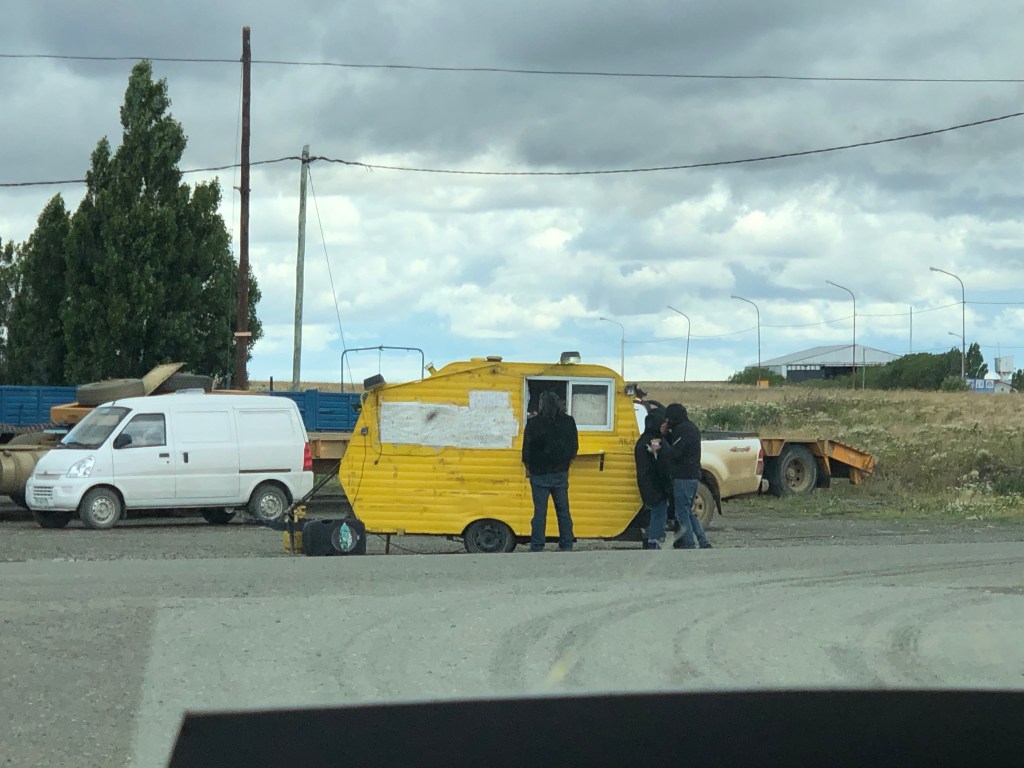
You’d expect that if you were driving along a flat plain that you could easily anticipate the weather. So did I, but I was wrong. Within five minutes the sky had transformed from perfectly clear, to very dark and it started to snow quite heavily. Ten minutes later and we came out from underneath that cloud and I could’ve drawn a straight line in the dirt where the snow stopped and started. The funny little village we pulled into for lunch was still exceptionally odd, lots of bikies and a small caravan blasting music and selling food next to the servo. Remarkable.
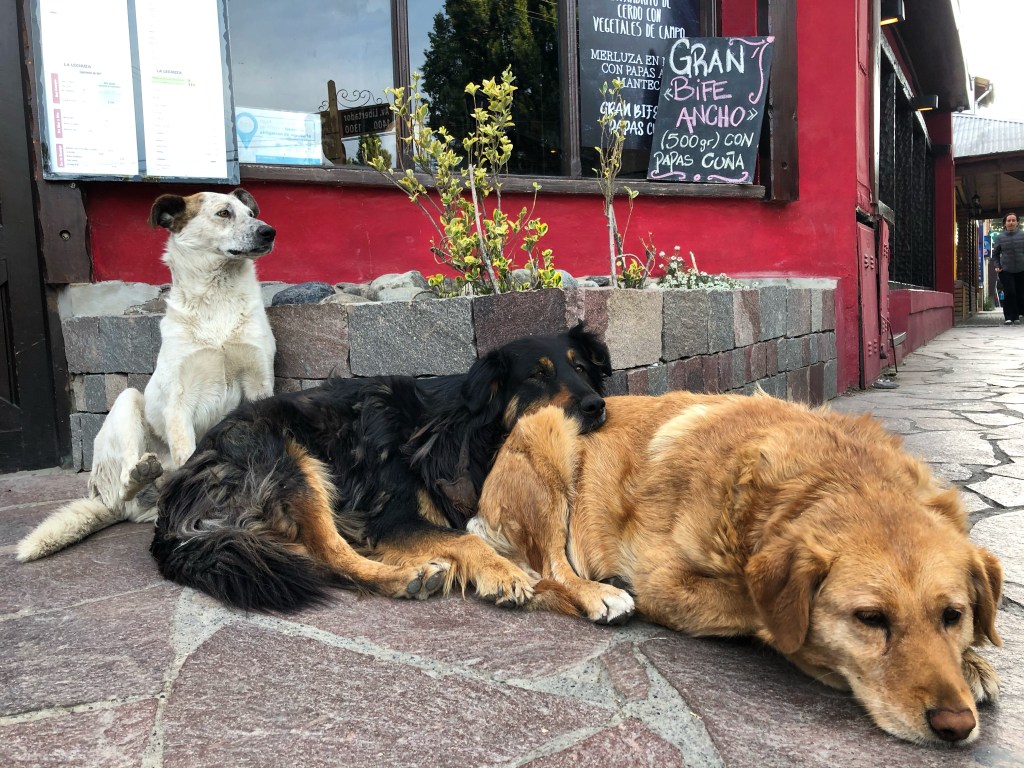
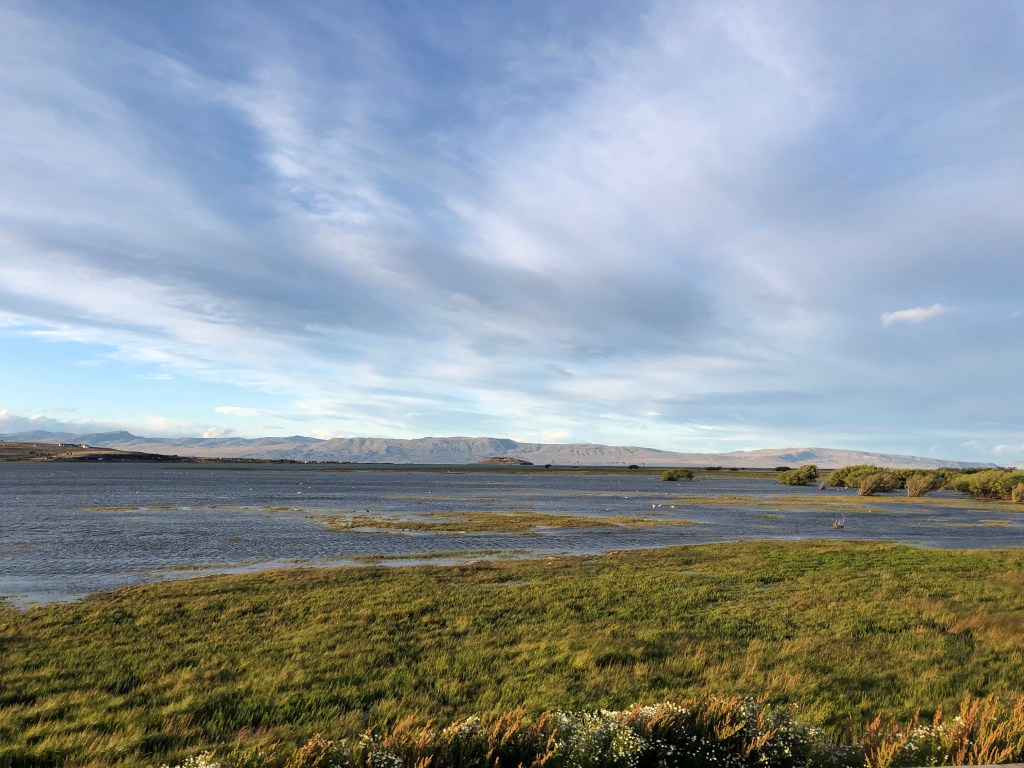
We arrived at El Calafate that afternoon and took ourselves for a walk around town. Our hotel was about a twenty minute walk from the main street so that was a good excuse to get some exercise in the brisk air. El Calafate sits on the Southern border of Lago Argentino, a lake so large that it could surely pass as an inland sea. Walking along there we spotted quite a large flock of flamingos who seemed totally out of place to me. The town is a key destination for fit young backpackers and adventure travellers who are heading to Patagonia for the W trek or working their way down to Ushuaia. Unfortunately this means the town has lost most of its original charm in order to line its streets with major Western brands. It felt pretty similar to a ski town (without the snow) with all of its alpine trees and stone cobbling. There were a lot of stray dogs too and not just little scruffy things, but mixes of big breeds like St Bernards, Labradors and German Shepherds. Apparently the town has an unspoken rule to look after them where restaurants will throw them their scraps. They were always in packs of about three. Often they’d be sitting outside of a restaurant for half an hour, and then for no obvious reason, jump up barking at a certain car or motorbike. These ‘attacks’ were always very persistent, they were never afraid of being run over and would hold up the traffic for ten minutes at a time. It was really bizarre, I’m not sure if it was out of boredom or they were expecting food.

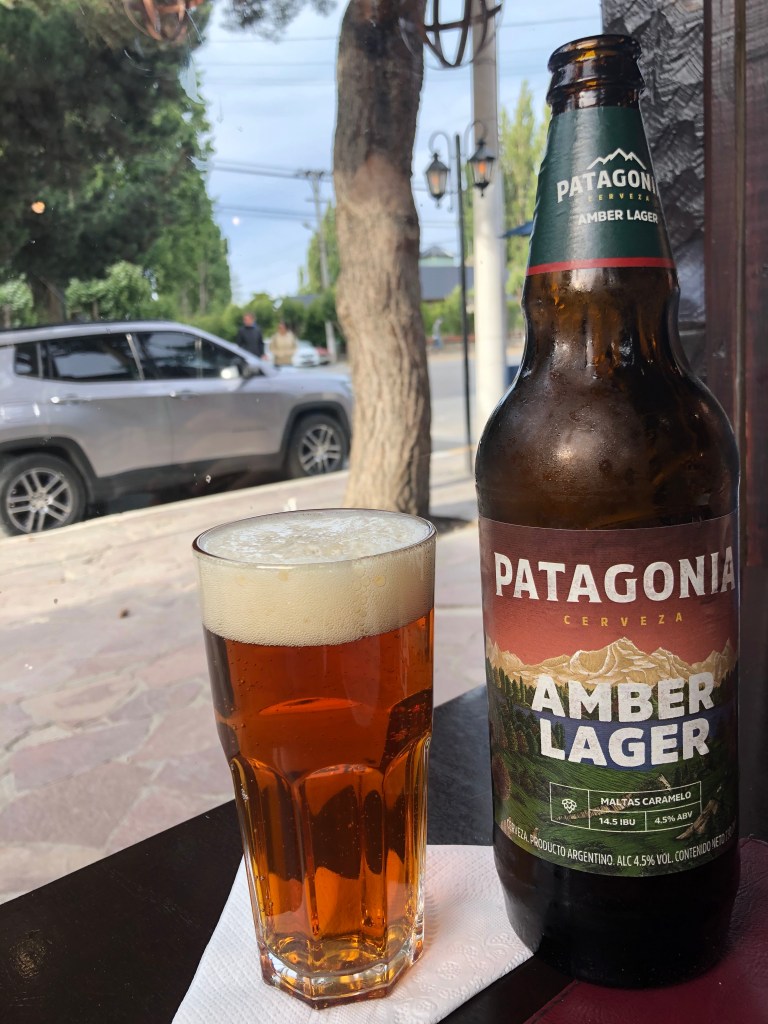
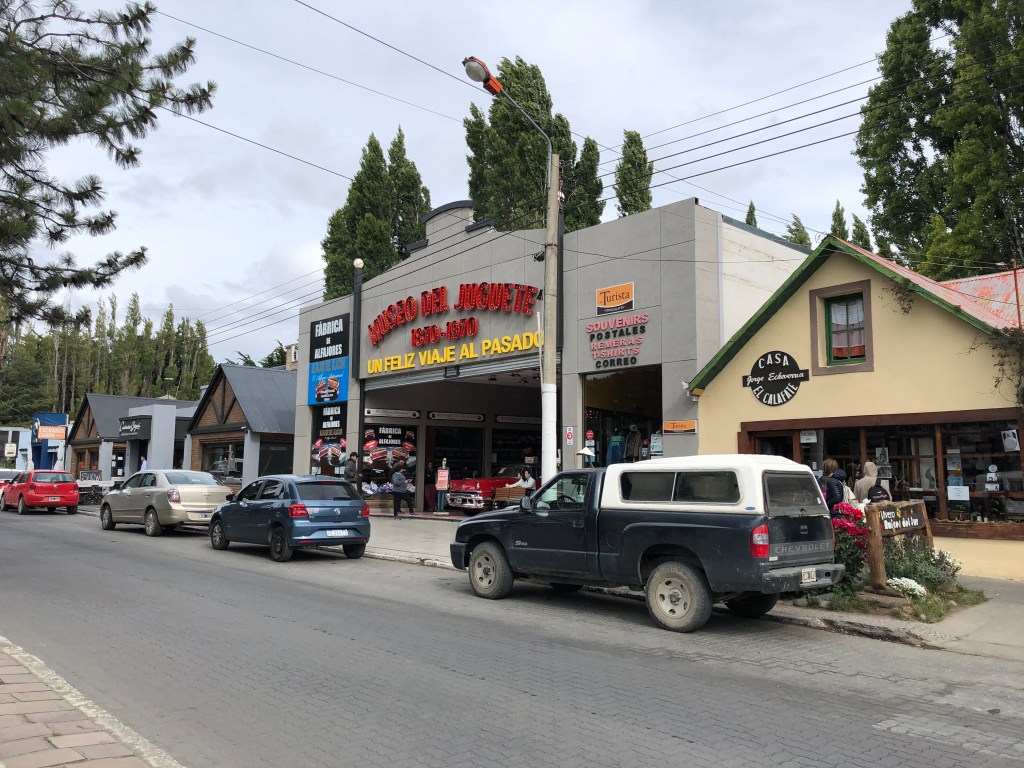
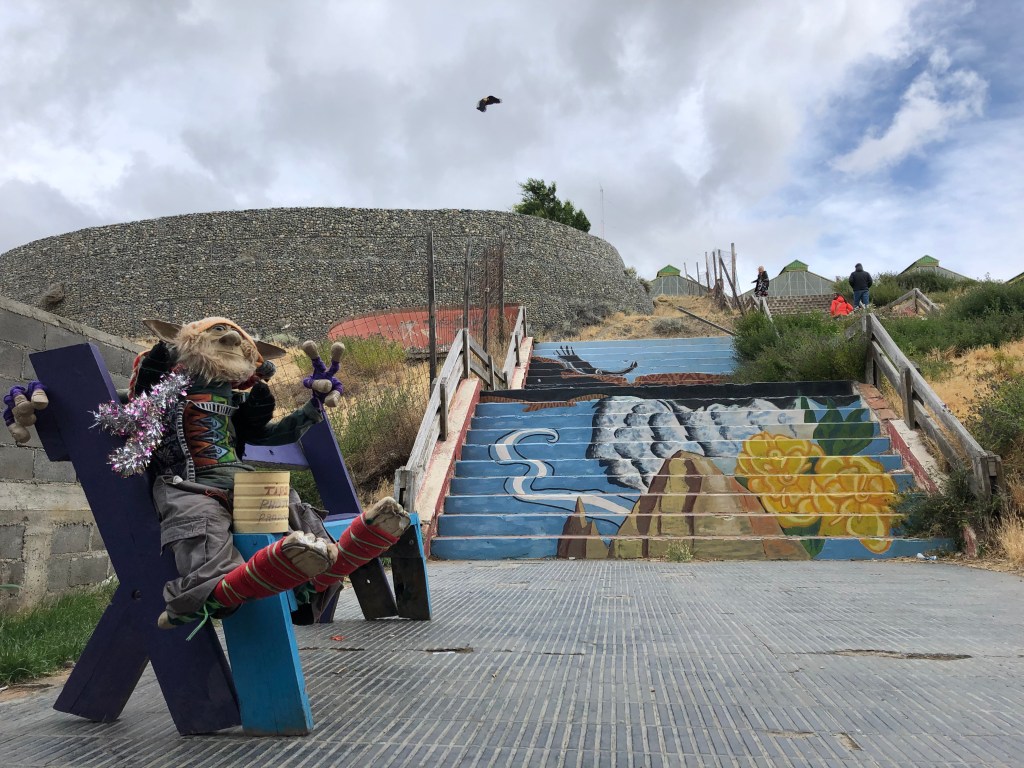
We explored the local markets as well and I seriously contemplated buying a real gourd. I came to my senses eventually and realised I’d probably never use it. What was a little odd were the dolls or gremlins stationed everywhere. If I recall correctly, they’re attached to old superstition and they warn off bad spirits. That evening we grabbed a beer at the Patagonia brewery, a very popular beer here. The major difference between your ‘typical’ Australian beverage and the South American variety is that they often like to add honey for sweetness and you can buy a bottle two to three times the size of a regular one. We tucked into some pizza, pushed past the dogs on the way out and got ready for our flight out the next morning.
Domestic flights in South America still require you to be at the airport a couple of hours early and with their haphazard scheduling, delaying and cancelling we thought we’d stick to our usual routine of getting there no later than required. We were booked for a 9:30am flight. Here’s what the airport looked like at 7:30am …
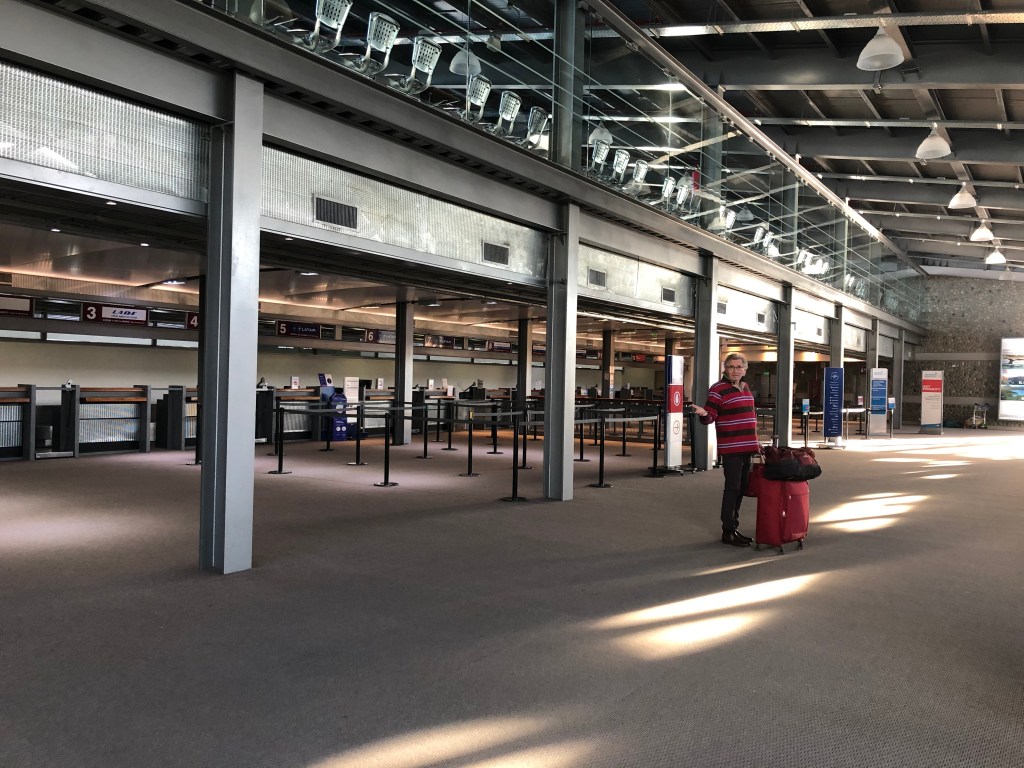
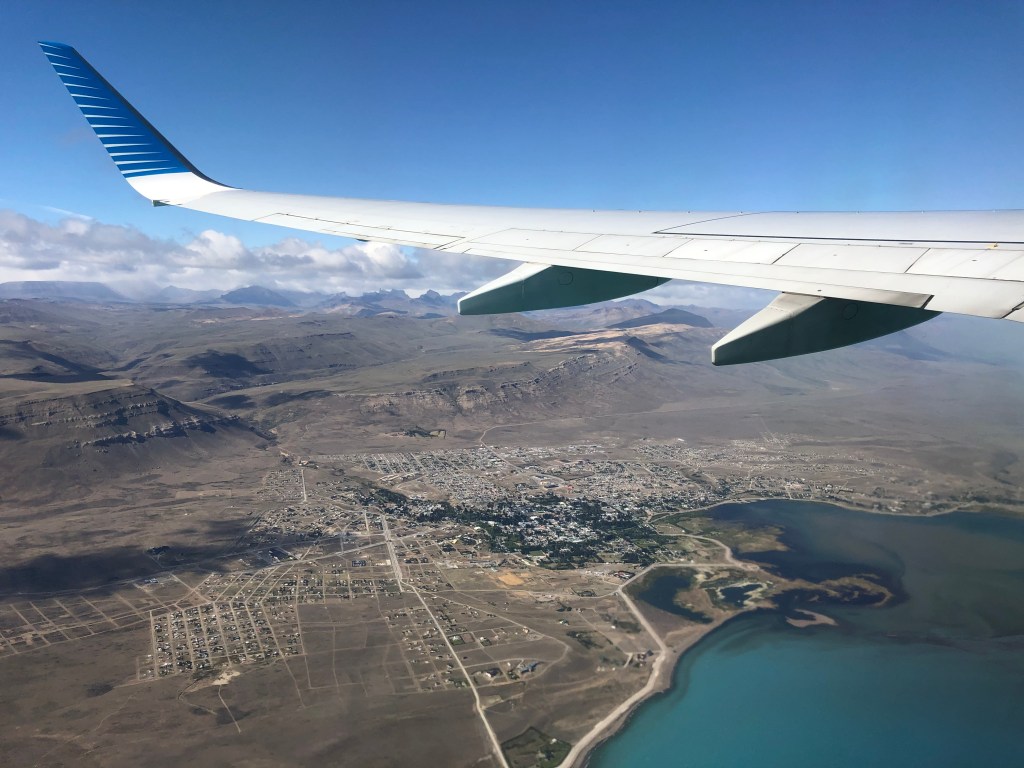
No queues of passengers checking in, no airport staff, no security … we (and a backpacker sleeping in the corner) were the only people around. By 8 o’clock the first check in chick had walked in and started prepping her station. By 8:30 we were ready to go and the crowds were getting larger. We were pretty chuffed with being at the head of the line but that failed when our hostess’ computer took half an hour to process our tickets and we had to find someone who spoke a bit of English. While we waited there was a very funny custom that appeared. The baggage handlers, who were all male, were very relaxed about their job with a new assistant turning up every ten minutes. He’d arrive, kiss girl number one, kiss girl number two, kiss girl number three – all five or so of them – then shook each of their friends hands. The girls didn’t look too pleased about it, it disrupted their chain of work and the boys seemed to spend the vast majority of their time talking anyway. Eventually we made it onto the plane and flew out over Lago Argentino before landing in Ushuaia. When we landed it was pouring with rain, our suitcases were soaked and we ran through the parking lot with a crazy Dutch man who’d take us to our hotel.
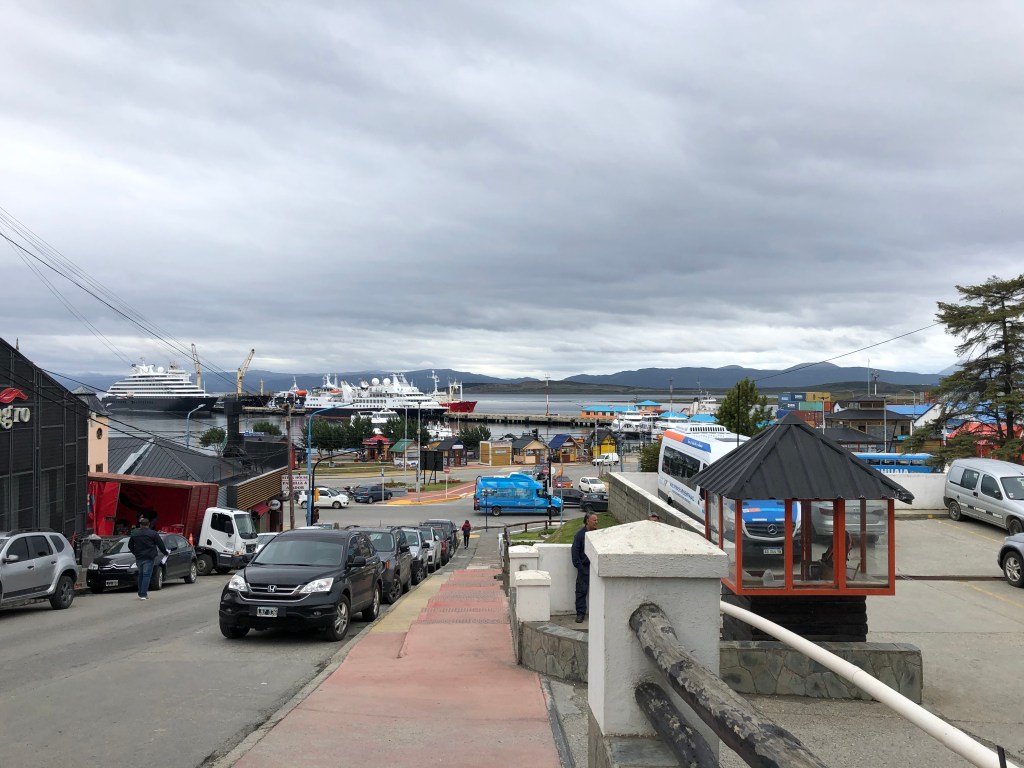
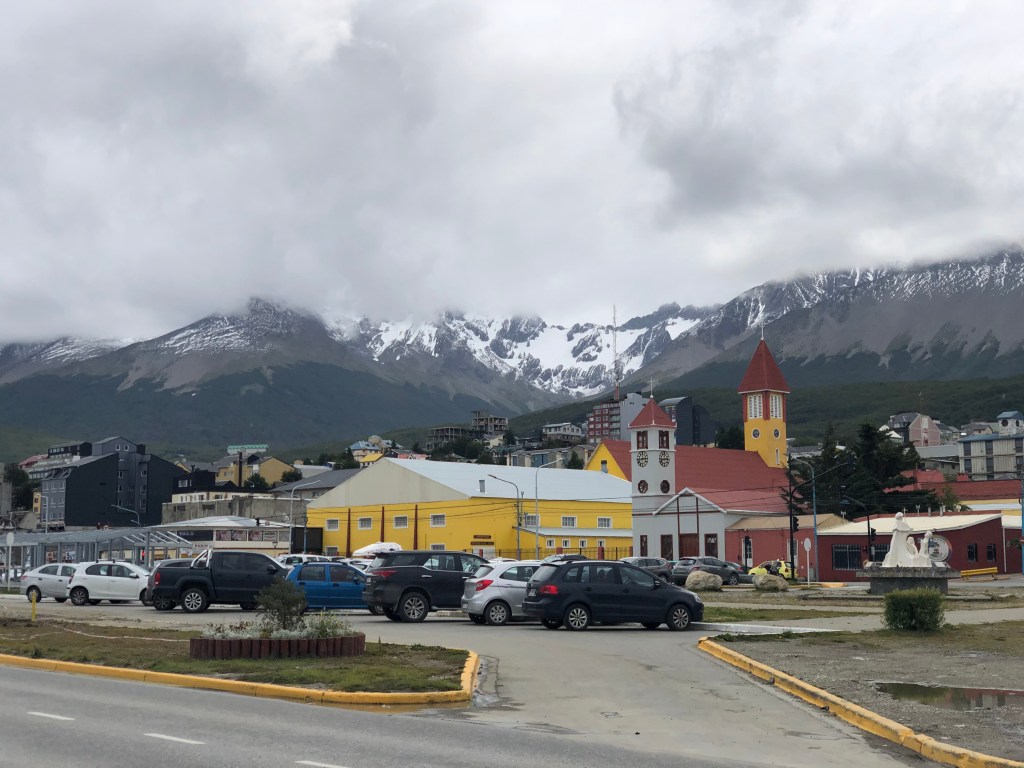
Aurora has been booking people into the Albatross Hotel for at least the last twenty years (my parents stayed there before their Antarctic trip) because it only takes a couple minutes to wheel your luggage down to the dock. We had an extra day in Ushuaia before we’d meet up with the rest of our passengers and get on board the Greg Mortimer so there was plenty of time to explore. It had a similar ski village feel to El Calafate with all the same adventure and hiking shops and bars and restaurants, but on a much larger scale and with the gate to Antarctica at the edge of the town. We found a small arcade with a few lunch spots inside so we ordered what we thought would certainly be our last empanadas. They definitely weren’t in the same league as our first ones in San Telmo but they’re always delicious. We gave in to the fact that we were tourists and spent most of the afternoon taking pictures of the streets and buying souvenirs. I like to collect sew on patches of countries and unique places I’ve been to so I’m always on the look out for a new addition to add to my denim jacket.


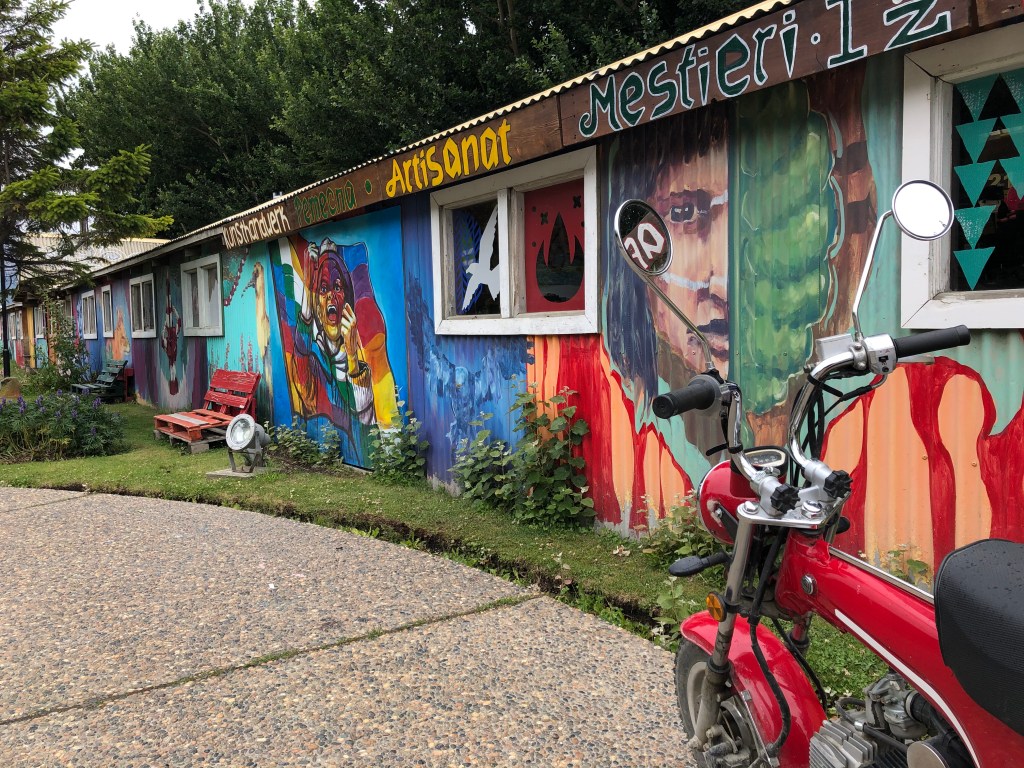
Dinner that night was certainly not what we’d expected. We found a very well hidden local bar called Kründ which always had live bands playing and plenty of craft beer. It was fairly new in town so I’m not entirely sure if we were intruding as tourists but we only stayed for one drink. It was a pretty cool place so if you’re a young backpacker I’d suggest going along and staying for one of their events. Given Ushuaia is a coastal town, they’re known for their seafood, especially their King Crab. We wanted to put this to the taste test so we walked in and got a table at a joint near the port. Our waiter didn’t speak English and the menu was all in Spanish so we had a hilarious time trying to play charades guessing what our meals were going to be and trying to figure out if anyone had ordered the crab. What was even more bizarre was the lobster costume that sat empty at the table behind us. I asked a member of staff if they could put it on and I could get a photo of it because it really did look strange and they were more than happy to comply. I later learnt that some poor employee has to stand outside the restaurant every day in this suit trying to convince people to come inside. The food was fantastic so I’m not entirely sure why they’d need to be pushing more people through their doors.


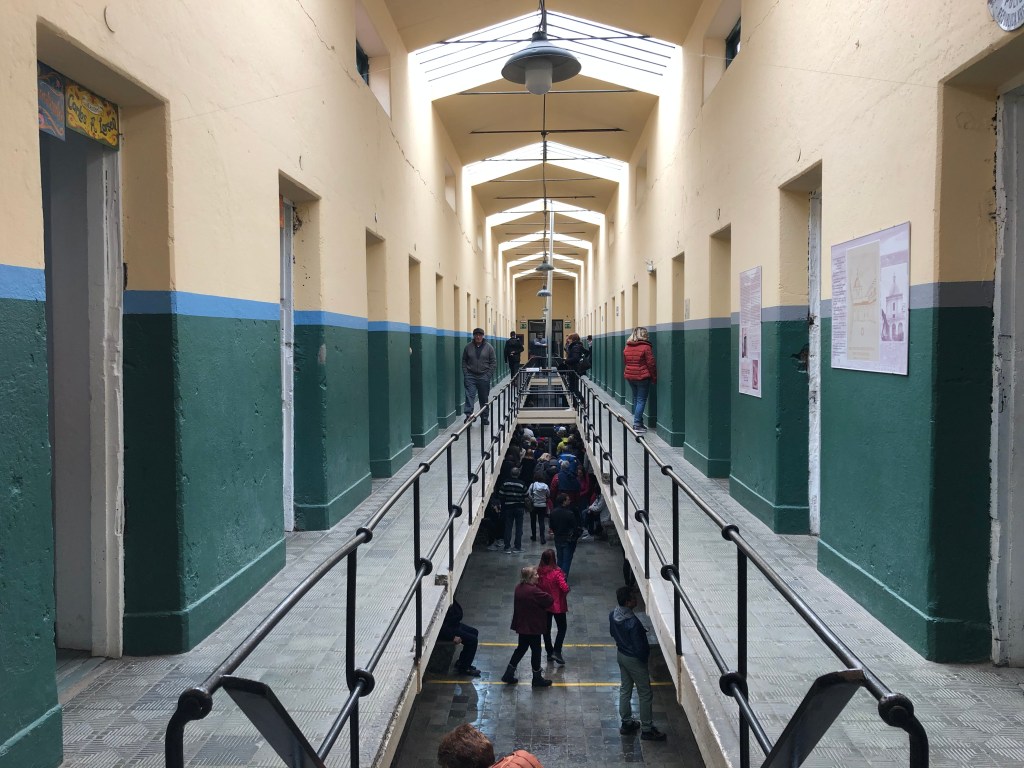
The following morning we visited the Maritime museum in the old prison and learnt all about the history of Ushuaia, its prisoners and the number of successful and doomed boats that made the trip down to Antarctica. It’s certainly a good idea to visit as you get a better idea of how a town right at the edge of the world could really exist and just how brutal the Beagle Channel and the Drake Passage crossing would be. The museum is only about a ten or fifteen minute walk from the centre of Ushuaia and there is so much information there that you can renew your ticket free of charge for a second day. Its a big cold concrete building so inmates there certainly didn’t have it easy. Argentina established Ushuaia as a penal colony in 1896 and transported many of their most dangerous criminals there. They were responsible not only for building the town’s basic infrastructure but also their own prison. Eventually there were so many inmates here that they began to move their families over and they established their own economic system. The prison was designed in the panopticon fashion, with guards being able to watch over everyone from a central location without being overt as to where they were looking. In many ways it reminded me of Australia’s own penal colonies but I don’t think our convicts would’ve come close to experiencing the freezing temperatures in Ushuaia.
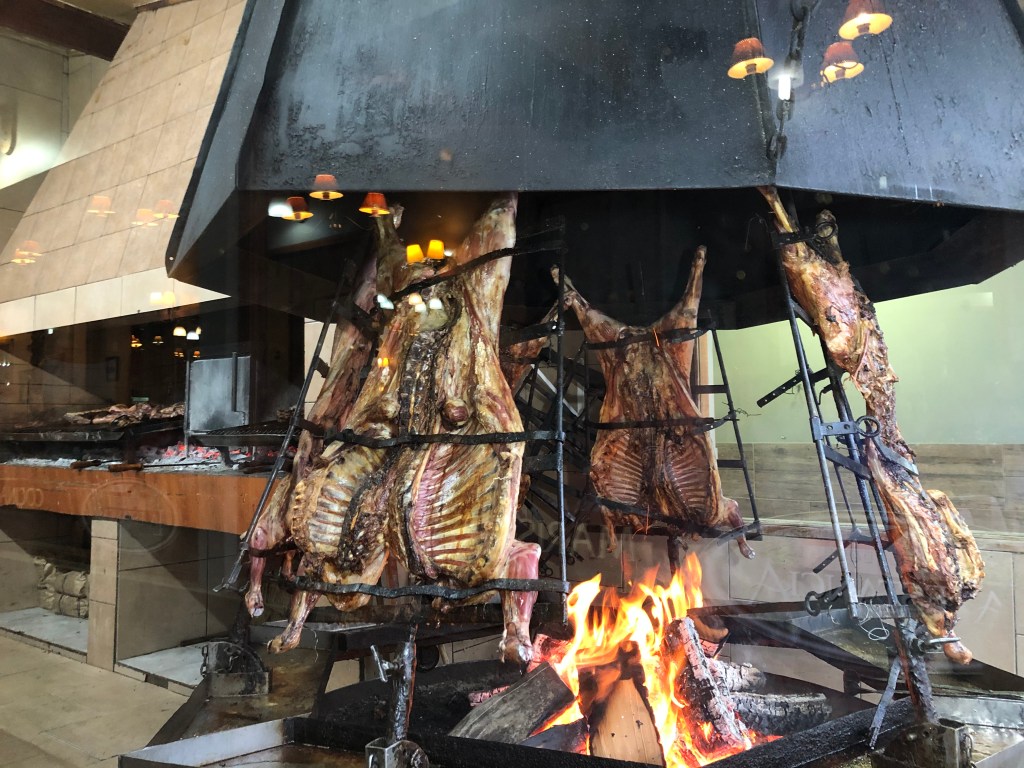
We tucked into a big dinner that night because we were still hunting for the perfect parilla, a restaurant that slow cooks its meat over the coals for several hours and delivers unimaginable portions to your table. Take a look at the photo here and you’ll see that we were in luck, I even got invited in to grab a photo with the lamb! Our meal that night certainly didn’t disappoint, we ordered what we were told was enough for four people but I don’t think we got through even half of it. The previous evening we had an accordion player come through the restaurant busking for some money and tonight the same guy appeared again, which he found hilarious, and he’d brought his friend along to film his performance. It was just a great atmosphere and got us that more excited to get on the boat the following afternoon.

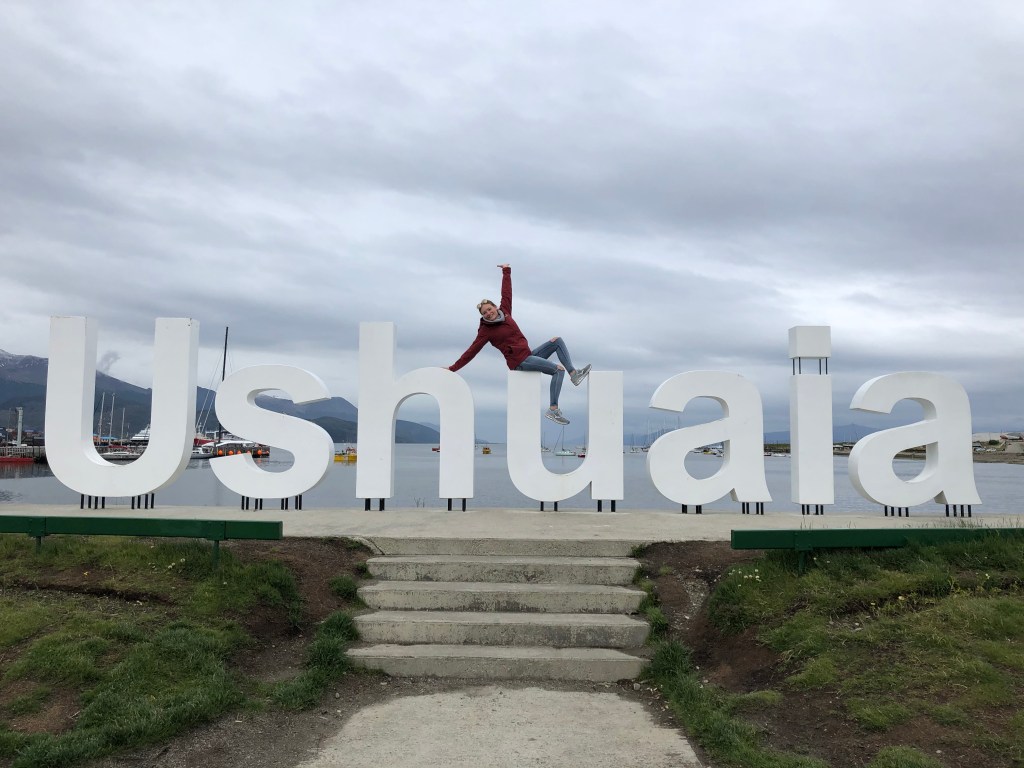
That morning we definitely had a sleep in and took some last photos of Ushuaia in between coffee shops. I tried a popular drink, a submarine, where you’re presented with a hot glass of milk and a chocolate in the shape of its namesake to swirl in the milk. It was definitely creamy and something I hadn’t seen before (it was listed on every coffee shop menu) but I think you’re better off ordering a normal hot chocolate and saving yourself the hassle.
I’ll save that afternoon for my next post: the first instalment of Antarctica! Its been a long time coming, I’m looking forward to reliving the little things I’ve had in the back of my mind the last couple months and sharing some fantastic stories and photos with you. I’m in the process of downloading photos I’ve taken on my little camera as well as collecting the many memory cards from my mother’s big Canon. There’s a good chance that after I reach the end of the Antarctica chronicles I’ll need a seperate post or page with our top shots. If you’ve reached the end of this post, congratulations, and keep an eye out for the next one!
 Gab Gets Lost