
Today we left Explora armed with trekking poles and the mindset that a full day hike would help keep the holiday kilos at bay. We’d committed ourselves to a full day adventure that would take us along twenty kilometres of the famous W trek to the French Valley. Our backpacks were heavy with wet weather gear, it was 7:30AM and we were ready to hike through the mountains to the base of the glaciers.
The first leg of our journey was crossing Lake Pehoé. Anyone would’ve thought that this would be a beautiful trip zipping over the bright blue water and marvelling at the fast approach of the Paine Grande – at least we did. But we forgot about Patagonia’s strong winds and the freezing melted glacial water. We all stepped outside in our little orange life jackets to grab some photos and were confronted by the elements. Needless to say we were back inside before the swell grew much larger.

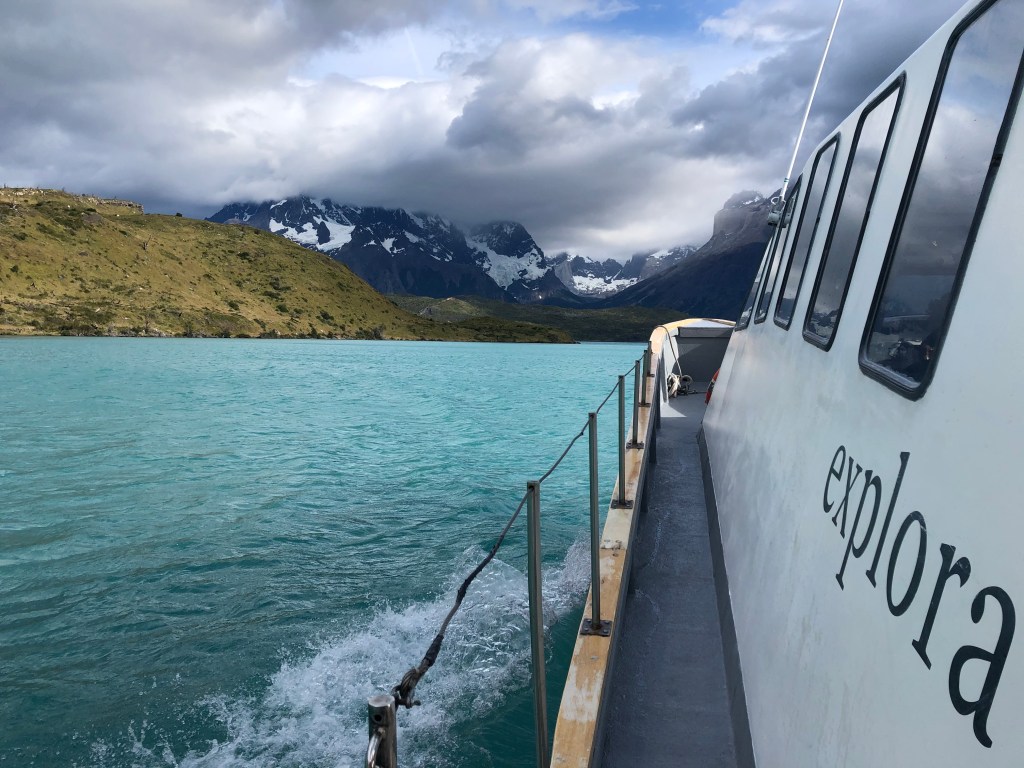
When we pulled into the small wooden jetty we were lucky to be met by two caracaras, a type of falcon. This pair had grown so used to tourists that they relied on food left by them instead of hunting for themselves. Despite the fact that it was early in the morning, there were a couple of large hiking groups arriving at the same time we were. The W trek is a huge draw card for many Patagonian tourists so we expected it to be a lot busier than most of the walks we had done at Explora. But the public boat only lands twice in the morning so as long as you give these groups a few minutes head start then it will feel a lot more like you have the track to yourself.
The hike to the French Valley can be broken into a few different segments. The first of these was through the hills that sheltered Lake Pehoé. We wound our way through plenty of valleys and got some great views of the turquoise water as well as non-glacial lakes that were a deeper blue.
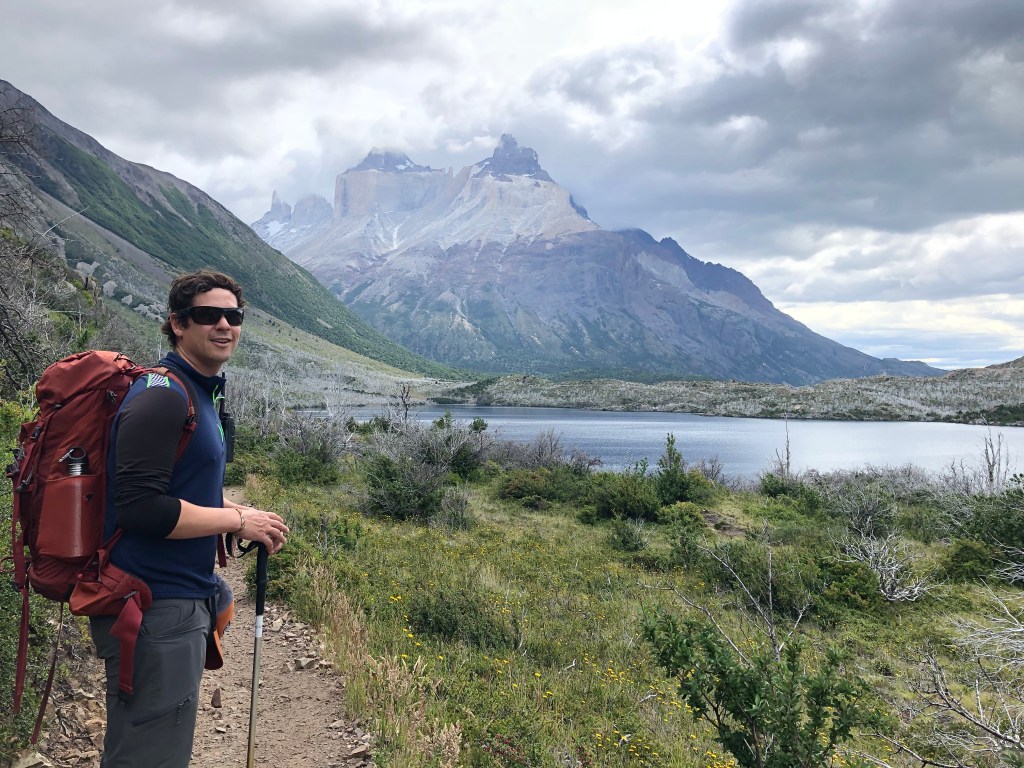
Then we arrived at what should have been a lenga forest. Nine years ago a huge fire tore through Torres del Paine National Park. A tourist who was trying to burn his toilet paper accidentally let it fly out of his hand. Patagonia’s dry summers and signature winds made for the perfect storm: almost eighteen thousand hectares (seven per cent of the national park) were burnt. Fireballs were jumping the lakes and starting new fronts. The mountainous landscape made it difficult for fire crews to get involved, leaving the fire to burn out of control for several weeks. It did irreversible damage to the area as many of the plants and trees here take two hundred years to reach maturity. It reminded me a lot of Australia, a very different but equally important cautionary tale of the need to protect our natural world. The white skeletons of the trees were beautiful in parts but I would have loved to have seen the forest.

We started to climb again and began to regret the number of layers we’d packed (again). It was a glorious clear day, the wind was virtually non existent, the sun was shining and the birds were chirping. We picked plenty of Calafate berries, as well as chowra berries (Diddle-Dee berry) and blackcurrants. There was a couple of small waterfalls we stopped at to fill our drink bottles up with glacial water which was pretty fun. It was certainly refreshing while we were sweltering in our thermals and polar fleece.
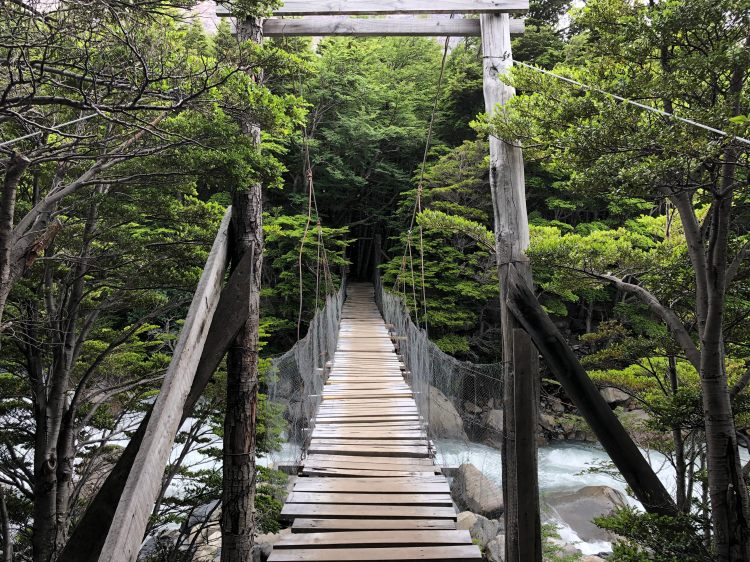
Before we reached the Italian Camp (Campamento Italiano) we had to brave a pretty simple wooden bridge. Rocks, pieces of wire and some shifty planks of wood kept us from falling into the rapids and being carried down the mountain on a stretcher. Only one person was allowed to cross at one time and once you reached the middle the whole bridge started to bounce. I imagine it felt fairly similar to walking on the moon.
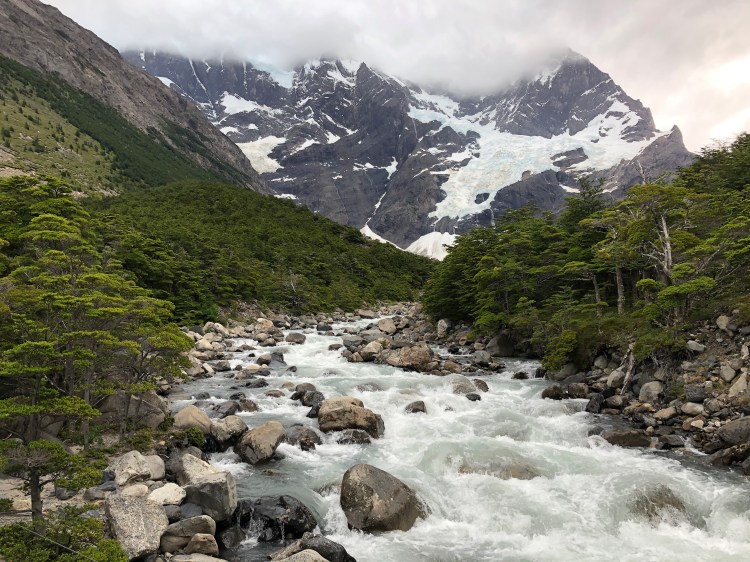

So with an extra spring in our step we arrived at the Italian Camp. It was a simple affair, with plenty of tents set up in amongst the trees. It’d been drilled into me at every school camp that we should never erect camp near a tree in case it falls on us. Every tent here was at risk from at least a dozen long trunks – you were probably in greater danger when you were asleep than when you were actually hiking! The camp had been moved several times over the years due to flooding risks but it was settled in the forest.
Moving past the cold damp tents at the Italian Camp, we hiked for an extra half an hour and arrived at a beautiful lookout just in time for lunch. We had a front row seat gazing at the mountains and many of the glaciers that slowly transformed the landscape. Every now and then we could see a huge sheet of ice carving off the glacier and tumbling down to the valley. The crashing boom it made rumbled all around us. We’d packed a canister of cold pasta with us for lunch and were pretty content with that. But little did we know that Hugo had been carrying a whole smorgasbord in his pack. He pulled out fresh smoked salmon, soup, bread, sweet nutty slices and a selection of teas and coffee! It was extraordinary – very unexpected but delicious all the same. It probably extended our lunch a little bit but with a view like this we weren’t in the position to complain!
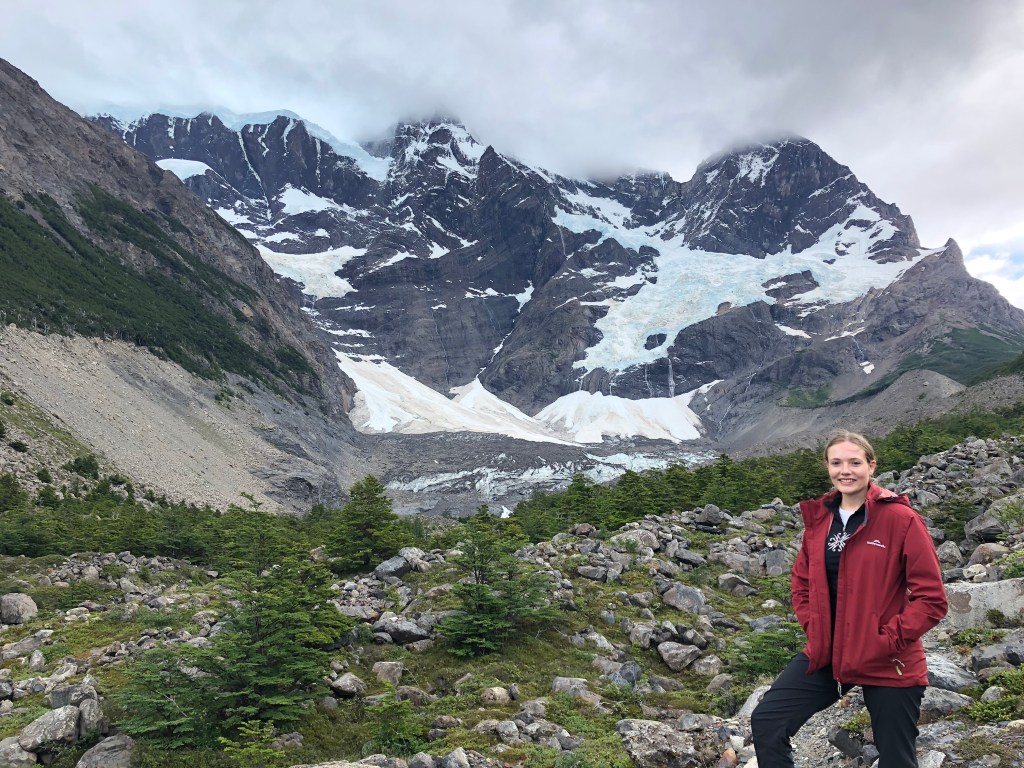
By the end of lunch the weather began to shift again, giving us a smattering of ‘romantic rain’, as Hugo put it. It was enough to convince us to pack up camp and head back down the mountain. We collected plenty more berries, glacial water and spotted a pygmy owl which is probably a third of the size of a regular owl in Australia. The cool change meant our photos looked completely different on the return trip, definitely a reminder of the four-seasons-in-a-day scenario. We met up with another group from Explora who’d hiked a different trail that day and we chatted about our adventures on the boat trip back (inside of course).
We had a puma sighting free dinner and organised the events for our last day at the lodge. Look out for the final instalment recapping Explora or peruse the photos I’ve already released of the day’s events here! I’ll be bringing plenty of information about the Indigenous peoples of the area and my experience galloping across the pampas on a wild little Argentinean pony.
 Gab Gets Lost