
In the build up to this trip we wondered if we were cutting our time in Buenos Aires short as we had scaled back our days there from four to three. Despite the fact we are away for a whole month we stuck to our adventure travel roots and prioritised our time in Patagonia and Antarctica – coming soon and likely earlier on Instagram than here! That being said I think we spent our three days extremely well and haven’t come away feeling like we have missed out. Buenos Aires is such a dynamic city its pretty hard to complain.
The key to travelling anywhere as a tourist is to anticipate the movements of other foreigners and do the opposite. Most people like to sleep in and have a relaxed breakfast at the hotel – we prefer to get up early and beat the crowds and the heat. On our last morning we headed to Recoleta Cemetery, a few minutes walk from our hotel.
Not many cemeteries are top drawcards for tourists or locals but Recoleta seemed to be the dead centre of town. I don’t think I’ve ever visited a cemetery with a bustling market just outside the gates and tour guides hovering to show you around the best graves in the city. Recoleta is home to the mausoleums of some of Buenos Aires’ most wealthy citizens, many of which have been buried there for generations since its opening in 1822. In fact, people are still laid to rest there which I found surprising as its flooded with tourists every day. Some of the inhabitants may have moved in fairly recently but the designs of each mausoleum are generally quite traditional and reaffirm that likening to Paris. There are innumerable rows of graves, all of which are quite tall and transformed the place into a giant maze. With my lack of a sense of direction I’ll admit I did get lost a couple of times once I’d left the main drag. But, I reminded myself, don’t worry if you get lost, people are dying to get in here. Enough puns.

Many sites were beautifully decorated with inscriptions, carved angels and crosses. If they hold a family there was often a set of stairs from inside the tombs that led to a crypt underground. This also prevents any chance of grave robbing. A few men were busy scrubbing their facades and carrying out general maintenance work. I’m not a religious person but it was a very reflective space. Recoleta may be another display of wealth in Buenos Aires but also of faith and their approach to mortality. Families are willing to fork out tens or even hundreds of thousands of dollars to secure a place to lay their family members to rest. As a tourist I often found myself searching for the grandest grave for the best picture. I had to stop myself a few times and remember each of these corresponds to at least one real person who had their own life. Recoleta was more a space for cultural education than impressive sightseeing for me.


The pinnacle of this came with a group of American tourists. Our family had reached the tomb of Eva Peron, President’s wife at the time and a famous political figure in her own right who I have written more about here. The Americans had organised a tour guide who announced which mausoleum Eva was buried at. One group member turned around and asked “Who is that? Is she famous?” After Eva passed away from cancer in 1952 her remains were displayed across Argentina and abroad for two decades before she was buried with her family. With much quiet laughter on our end we continued our morning stroll through Recoleta. We saw graves of past Presidents, army and navy generals, members of Napoleon Bonaparte’s family and Nobel Prize winners.
I highly recommend visiting Recoleta Cemetery, of course it is a photo opportunity because of the overwhelming grandeur of the place but its also a chance to consider Argentinean culture. We didn’t organise a guide but we did research some of the sites beforehand. Although if you are visiting I would recommend joining a tour as they can give you the most relevant information and ensure you see the ‘most important’ graves at Recoleta.

After a rather sobering morning we stepped outside the cemetery gates and into the Recoleta market which are held every Saturday. The stalls were a real mix that appealed to tourists as well as locals. You could find anything from classical fridge magnet souvenirs to handmade leather belts right up to expensive silver jewellery embedded with Inca rose, Argentina’s national stone. The stalls snaked around the park – there must have about one hundred of them – and plenty of lcoals sat out on the grass with a thermos filled with maté, a very very popular bitter tea drunk from a gourd. Smaller clusters of tents sold fresh produce or artworks. This was a perfect opportunity to find many of the souvenirs and presents we had been planning to buy. Buenos Aires was our only real chance for shopping on our trip because I’m fairly sceptical of any shops existing in Antarctica.
We had lunch at a pizza joint in Palermo, the largest suburb in Buenos Aires. In fact its divided into smaller neighbourhoods such as where we were in Palermo Soho. If I could liken it to an area in Sydney it would be Paddington’s Queen Street. Both areas are filled with sycamore trees and exclusive boutiques. However Palermo Soho has a bit of Melbourne in it too with plenty of shops, streets and back alleys decorated in bright street art. We decided to take a break from eating empanadas and finally found a pizzeria. We’d heard Argentinean pizza was heavy on the cheese and that was pretty accurate. Like drinking maté and eating crumbed steak, I think its something I’ll only be eating once!
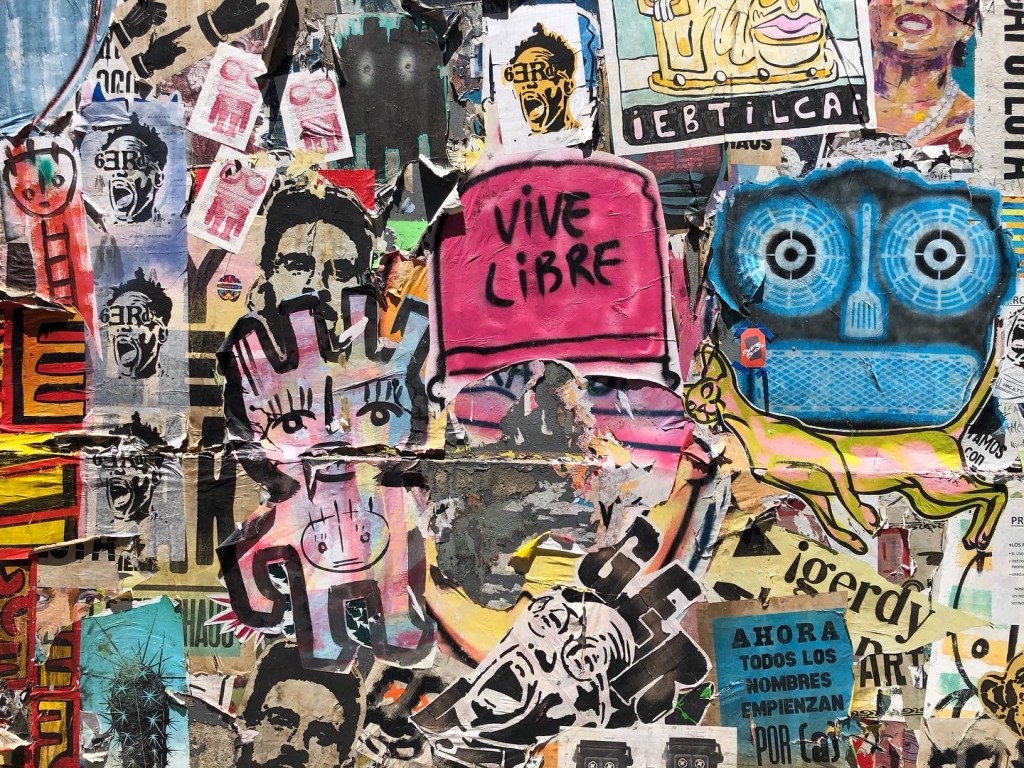
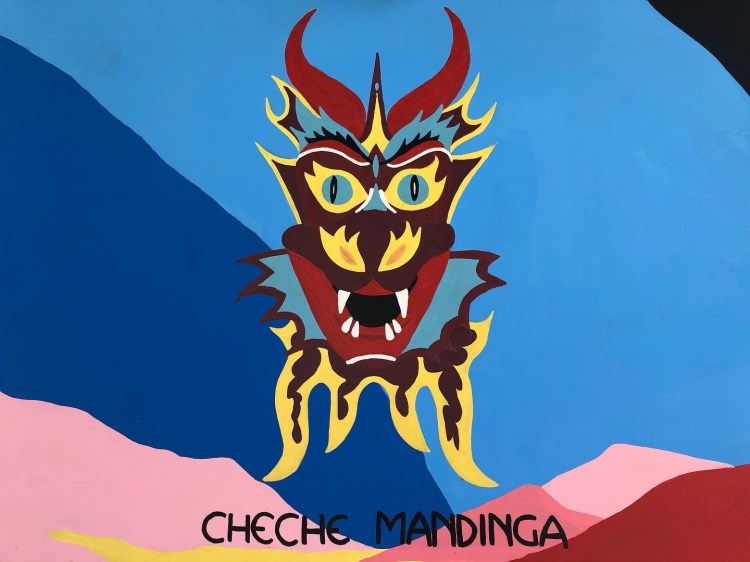
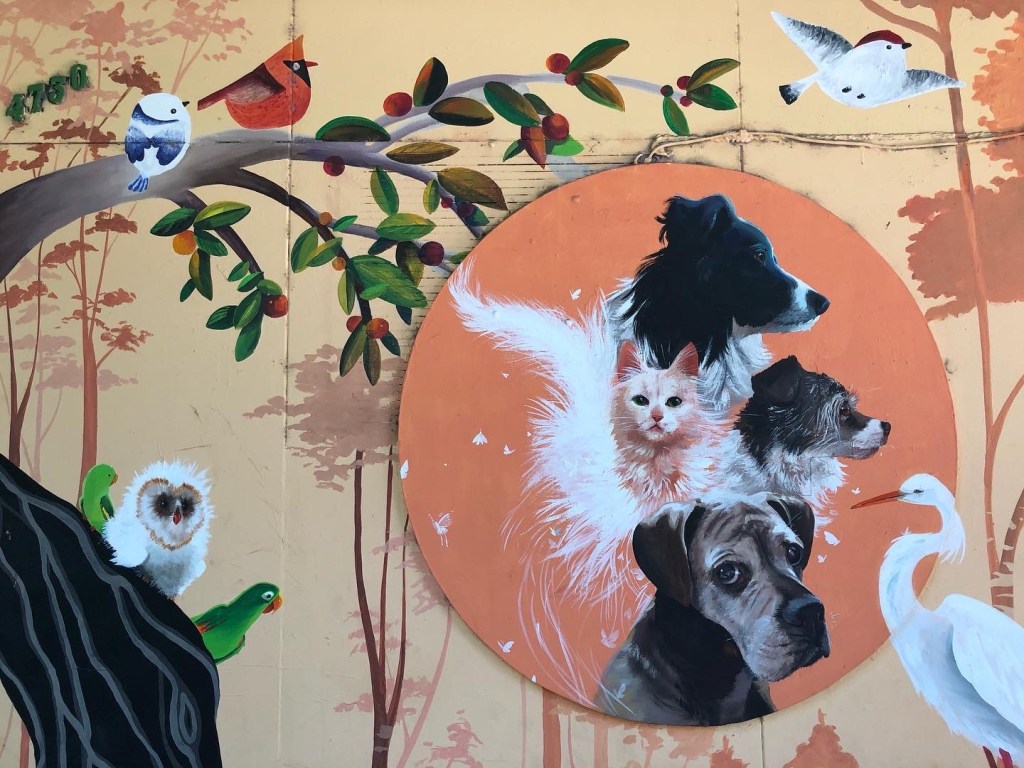
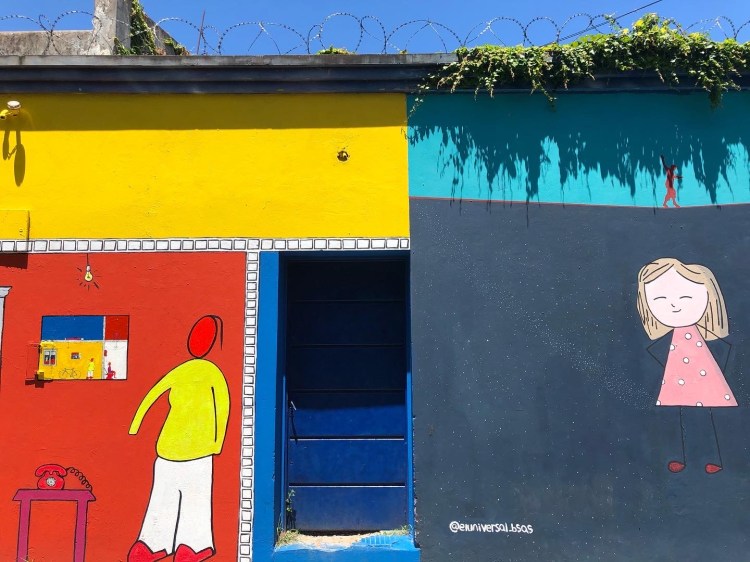

In an attempt to work off all that pizza we walked around Palermo for a little longer before we jumped in a taxi back to the hotel. Mum and I made a last minute visit to the San Telmo antique markets to buy a penguino – arguably our best souvenir because it holds wine – and a Fileteado style sign. As we walked back to the hotel we swung by Cafe Tortoni, famous as it was popular with top tango dancers. The line to get in was far too long and I expect it always is.
Our last dinner in Buenos Aires was at the hotel’s restaurant Alvear Grill. We had a drink at the bar downstairs which is framed by decadent marble pillars and gold detailing then headed in for steak like true Argentineans. It was a certainly a full three days but we did it comfortably. I definitely could have looked around for another day or two and visited an estancica in the countryside, the Sunday markets in San Telmo or the colourful houses of La Boca but as is the traveller’s way, we must move on.
 Gab Gets Lost