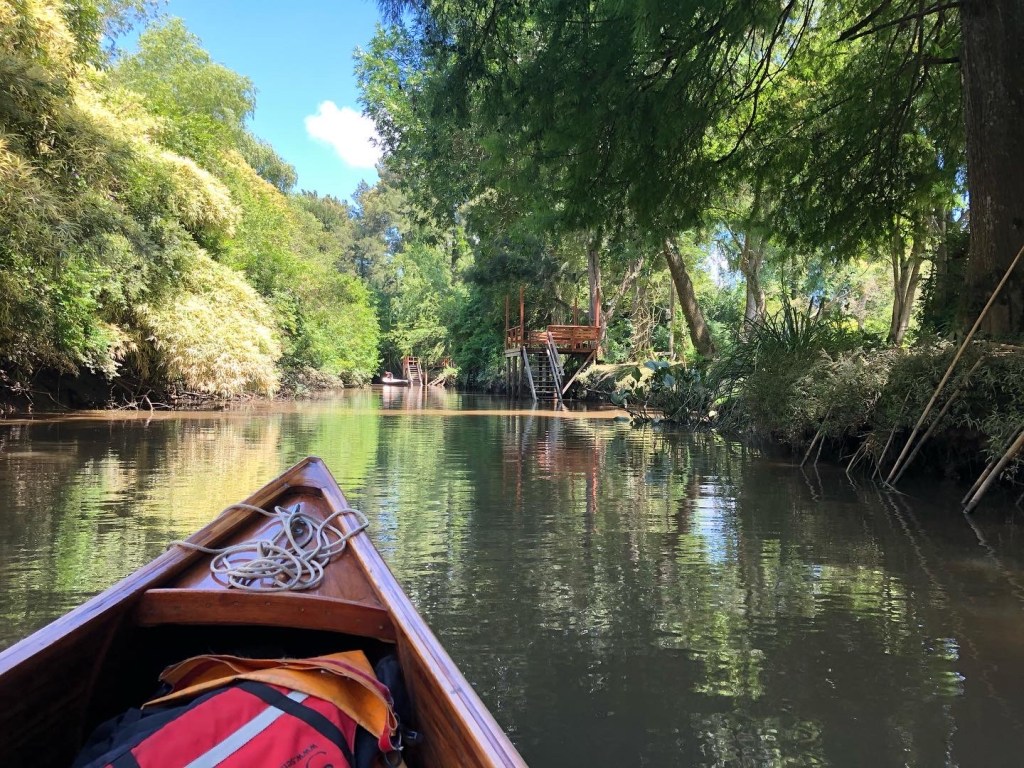
By Day Two we felt pretty acquainted with the bustling city so we decided to step it up a notch and explore the islands nearby. We’d managed to see most of the major sites the previous day so we jumped in a car with our guide and headed out to the Tigre Islands. Safe to say that it was fairly relieving to ditch the chaotic traffic and step into a canoe!
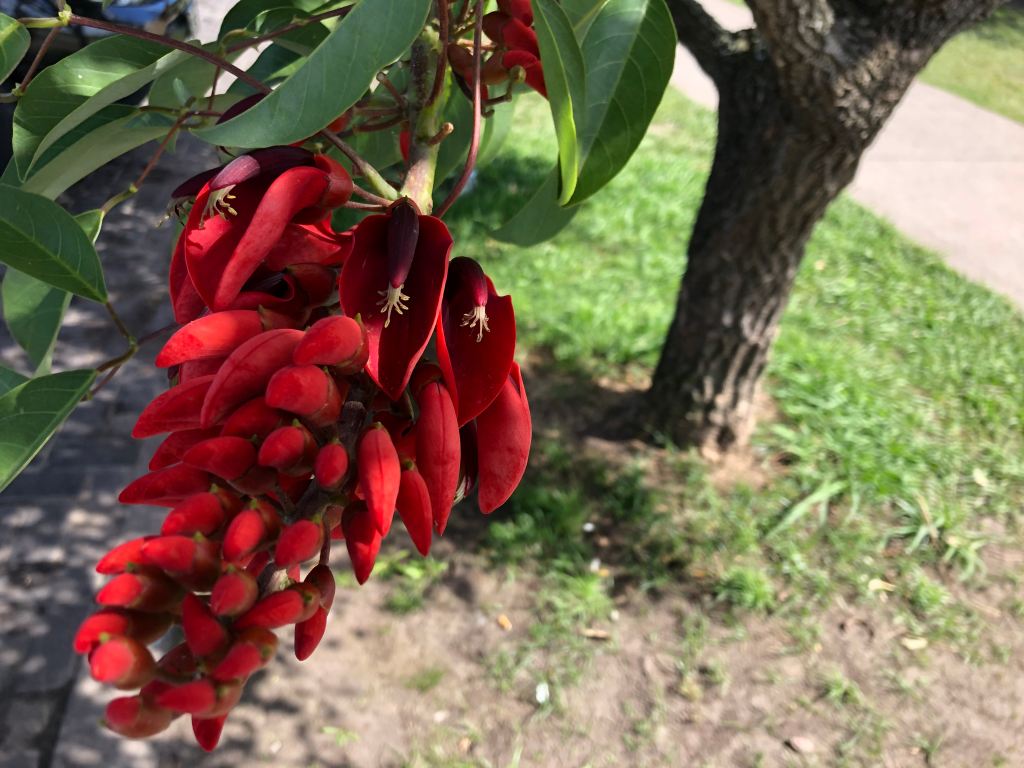
Leaving Greater Buenos Aires (the city) behind, we drove for an hour to Tigre which is part of the Buenos Aires Province. Along the way we stopped to grab some photos of the Río de la Plata, a river with an identity crisis. It does flow with freshwater but in parts its wider than two hundred kilometres so you’re unable to see the other side. I think makes it a pretty strong contender to be reclassified as an ocean. The park here was filled with sable trees whose red flowers are the national flower of Argentina.
We regrouped in our little car and drove through streets lined with old mansions, many of which are weekend and holiday houses. At the other end of the spectrum are the smaller simpler houses of permanent residents. The disparity in wealth here was pretty apparent and it wasn’t unusual for a whole street to hire security guards with watch towers outside.
When we finally pulled into Tigre we learnt a couple of things:
- ‘Tigre’ was the name given by the Spanish who actually saw a jaguar – zero relevance to tigers at all.
- Australian rowing sheds are behind the eight ball in terms of architecture.
The streets here and across the water primarily contained rowing sheds and a few fancy restaurants. What was most surprising was that each rowing club was perfectly housed in its own mansion or palace along the main boulevard and were all established social hubs. I don’t know much about Argentinean rowing but it would be tough to think of a better place to be. By the time we had arrived most of the slick competitive boats had left the water and we entertained ourselves by gawking at a few archaic models challenging the boats and their wash.


Our canoe had been handcrafted from wood and painted with an indigenous design – absolutely beautiful. We quickly found our groove and paddled dragon-boat style away from the port and towards the islands. When we asked our guide Romeo how many islands we were approaching he laughed at us, “Too many! Impossible!”. It was only when we arrived that we realised that it would be entirely impractical to count them as most houses were on their own island and separated from their neighbours by a tiny stream.
Many of these houses operated as weekenders too but were far less extravagant. The permanent residents operated boats that sold groceries door-to-door, collected garbage hung on bamboo poles from the riverbank and even a floating ambulance. Some houses had a small whirring generator but most went without. Living there would be a never ending adventure I’m sure. I’m not quite certain if I could pull that off full-time – the phrase ‘alternate lifestyle’ was mentioned fairly often – but it was a great day trip!
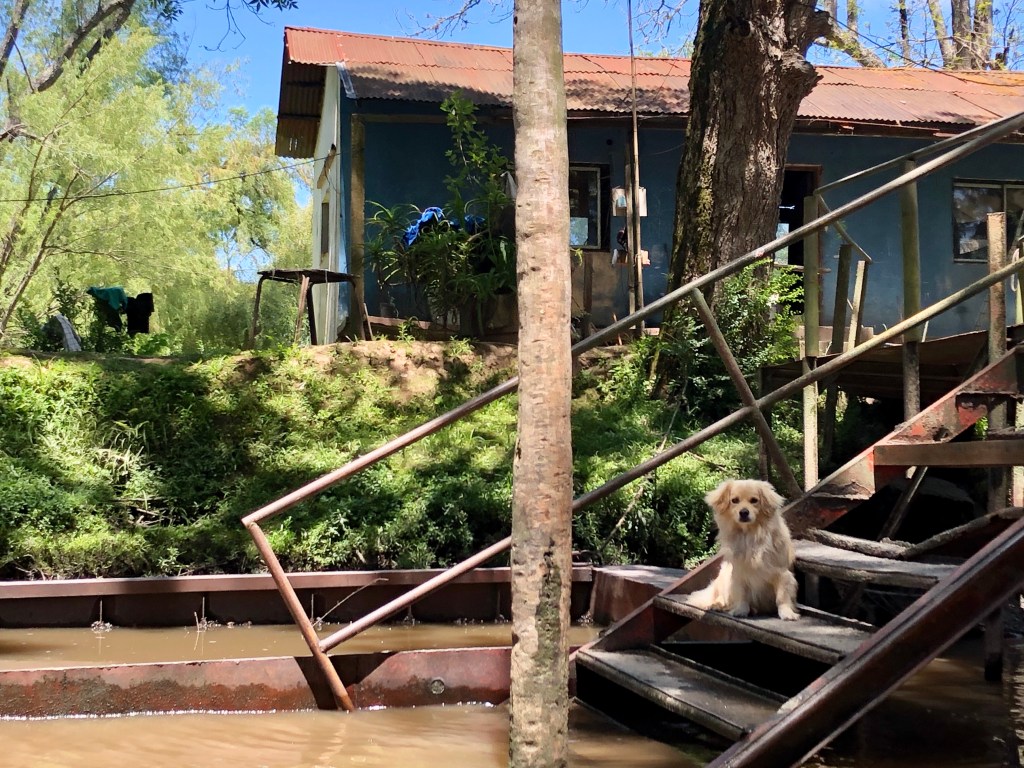
On the upside, the islands are free from any nasty animals like caiman, snakes and wild cats – very surprising to any Australian and anyone who has ever imagined what dangerous creatures roam the jungle. Small island size and apparent safety meant many families left their dogs at the islands and either relied on the neighbour to feed them or for the dog’s hunting instincts to kick in. It was a hot and humid day with plenty of boats on the water so we were very happy to see lots of dogs wagging their tales at us from their jetties.
A couple hours of paddling had passed and I could sense the mounting sunburn on my nose so we pulled in for a quick refresher at the canoe craftsman’s house. We learnt it took two months to construct one boat which sounded fairly fast to me. Each paddle was also handmade and a small shed housed all the surplus canoes and equipment.

Romeo directed us through a shortcut back to Tigre and it was quick trip from the port to our hotel. We had dinner at a local joint with wine barrels strapped to the ceiling and small leather booths. While my Spanish may not have lived up to the expectations of the local waiters, it was great to escape the major restaurants and dine with the Argentinians – we are in their country after all. One ‘delicacy’ or popular dish here is Milanesa or breaded steak. The best way I could describe it is to imagine a typical Australian parmigiana but filled with steak. It was definitely a mouthful but I always make sure I’m ordering what the locals enjoy wherever I travel.
Travelling beyond the city limits was refreshing and exposed us to seperate ways of living here that could not be possible in metropolitan areas around the globe. I really enjoyed having two such distinct days back to back as the variety held my interest. My next post ‘Day Three in Buenos Aires’ was packed with unique experiences again – Recoleta Cemetery, Palermo’s boutiques on the edge of the city and artisanal markets in Recoleta and San Telmo.
 Gab Gets Lost
Fantastic blog Gab! Looking forward to reading more 🙂 xx
LikeLiked by 1 person